
Why Chairs Were Once Symbols of Authority
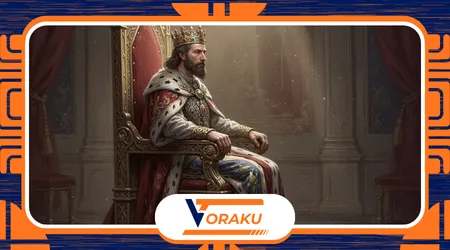
Picture this: Cairo, 1922. Howard Carter has just cracked open Tutankhamun’s tomb.
Among the first objects that catch the lamplight is a small golden throne, its backrest carved with the young king’s silhouette protected by winged deities.
The boy-pharaoh is shown seated, calm, eternal. Servants and priests would have approached him on their knees or standing lower still.
That chair wasn’t built for lounging. It was built to remind everyone exactly who sat above whom.
Chairs were once symbols of authority long before they became furniture.
The moment someone sat higher than the rest of the room, the social script changed.
Continue reading the text and learn more!
Summary of Article Topics
- Opening scene: Tutankhamun’s throne and the birth of vertical hierarchy
- Ancient precedents: Egypt, Greece, Rome and the economics of privilege
- Medieval solidification: Feudal halls, cathedras and portable power
- Slow democratization: Renaissance merchants, Reformation simplicity, colonial imposition
- Industrial tipping point: Thonet, mass production and the persistence of status
- Living echoes: Corporate suites, courtrooms, family armchairs and cultural metaphors
- Closing reflection: What future seats might still demand deference
How Did Chairs First Become Tools of Hierarchy?
In the Nile Valley wood was scarce and imported timber a royal monopoly.
A chair required cedar logs floated down from Lebanon, craftsmen who knew how to join mortise and tenon without iron nails, plus inlays of faience, gold leaf, ivory.
Ordinary people sat on mats or low stools.
The pharaoh’s seat therefore carried a double message: divine favor and control of trade routes.
Sit there and you literally rose above the floodplain.
Greece refined the performance. The klismos chair, elegant and unstable-looking with its saber legs, shows up on red-figure vases mostly in symposium scenes.
Hosts and honored guests took them; everyone else sprawled on klinai or stood.
The asymmetry was the point. Roman magistrates went further with the sella curulis — a backless, armless folding stool.
Its portability mattered: power had to travel with the officeholder into the Forum or onto campaign.
Fold it up, carry it out, unfold it again — the ritual itself reinforced imperium.
What’s seldom said aloud is how much anxiety surrounded these objects.
Lose your curule chair to political disgrace and you lost the visible proof of rank. The furniture was the rank.
++ The Cultural Evolution of Personal Hygiene
Why Did Medieval Europe Double Down on Elevated Seating?
Walk into any surviving great hall from the 13th century — Penshurst Place in Kent is a good surviving example — and the spatial logic hits you immediately.
The high table stands on a dais.
The lord’s chair, tall-backed and canopied, dominates the axis of the room.
Everyone else stands, kneels or perches on benches along the sides. Height wasn’t comfort; it was geometry of obedience.
Bishops borrowed the same vocabulary.
The cathedra — literally “seat” — gave us the word cathedral because the bishop’s chair marked the center of spiritual jurisdiction.
When a new pope was enthroned, the act was called intronizatio.
The verb tells you everything: installation begins with sitting.
Edward I understood the symbolism perfectly when he commissioned the Coronation Chair in 1296.
He didn’t just want a seat; he wanted a trophy that swallowed the Stone of Scone and with it Scottish legitimacy.
Conquerors have always liked stealing thrones. It’s quicker than rewriting genealogies.
++ The Forgotten Revolts That Nearly Changed History
What Quiet Forces Began to Erode Chair Privilege?
The long unraveling started unevenly. After the Black Death labor shortages gave artisans bargaining power; more people could afford joined furniture.
Renaissance merchants in Florence and Venice commissioned cassoni and sgabelli that mimicked aristocratic forms but on smaller budgets.
Still, the truly grand pieces — walnut thrones with grotesque masks and intarsia — stayed with the titled.
Then came the Reformation’s suspicion of ornament.
In Zurich and Geneva carved chairs could look too much like Catholic excess. Plain oak benches spread instead.
Yet elders and magistrates kept the best seats. Authority didn’t vanish; it simply wore plainer clothes.
Colonial encounters exported the European logic.
Spanish encomenderos in the Andes placed themselves on thrones while indigenous caciques were offered stools.
British Residents in Indian princely states insisted on chairs while local rulers sometimes preferred floor cushions — until protocol forced everyone upright.
The chair became an instrument of cultural overwriting.
++ How Online Anonymity Reshapes Social Norms
When Did Comfort Finally Outrun Symbolism?
Michael Thonet’s steam-bent beechwood chair No. 14 (1859) sold in the millions because cafés and middle-class parlors could finally buy something that didn’t scream inherited wealth.
Mass production didn’t kill status; it pushed the boundary markers higher.
Now you needed not just a chair, but an upholstered swivel model, or later a Herman Miller Aeron with adjustable lumbar support.
Even so, the old grammar survives. Boardroom tables still place the biggest, tallest-backed chair at the head. Judges rise above everyone in oak-paneled courtrooms.
Airlines charge extra for the wider, higher seat.
And in countless living rooms the recliner by the television remains Dad’s throne — a domestic coronation chair that teenagers learn to navigate around.
There is something quietly unsettling about that continuity.
We tell ourselves we’ve democratized comfort, yet we still arrange bodies in space according to rank.
What Do Chairs Still Tell Us About Power?
Look at literature and the metaphor never quite dies.
Shakespeare’s usurpers “sit upon the throne”; Beckett strands his characters on rocks precisely because a chair would imply order.
In news photographs world leaders are photographed mid-gesture from the exact angle that makes their chair look monumental.
Imagine a young woman in 1970s São Paulo entering her first corporate office.
The men have leather executive chairs; she gets a metal-frame model with cracked vinyl.
Thirty years later her daughter walks into a tech startup where everyone has the same standing desk — except the founder, whose glass-walled office contains the only proper chair left in the building.
The scenery changes. The vertical logic stays.
FAQ
Why weren’t chairs common in the ancient world? Wood and skilled labor were expensive; most people had no need for elevation when daily life happened closer to the ground.
Did every culture use chairs as status symbols?
Not uniformly. Some preferred stools, mats or low benches. Elevated single seats tended to appear where strong centralized hierarchies already existed.
++ Slightly Chaotic History of the Chair
Do office chairs really echo ancient thrones?
In function, yes. The person with the biggest, most adjustable, most cushioned seat usually holds the most decision-making power — even if nobody says it out loud.
Why did mass production change things so slowly?
Affordability arrived first for the middle classes. True democratization — everyone having equal access to dignity in seating — is still uneven across the globe.
++ ‘Seats of Power’: Chairs as a status symbol
Are there places where traditional “power seats” remain untouched?
Yes — royal thrones in ceremonial use, certain tribal stools in West Africa, the papal chair in Vatican ritual. Tradition protects them from everyday wear.
How has remote work affected chair symbolism?
It scattered the physical hierarchy. Now the person whose video tile appears largest on screen, or whose background includes bookshelves and good lighting, often claims the symbolic high ground.
Final Reflection
Chairs stopped being rare long ago.
They never stopped being political.
We’ve mass-produced them, upholstered them, made them spin and recline, but we still feel the faint gravitational pull when someone takes the head position.
Perhaps that’s the real inheritance: not the object, but the instinct to notice who sits higher and what it means.
