
How Digital Rituals Are Replacing Physical Traditions

The digital rituals of our age often begin not with a bang, but with the soft, haptic vibration of a smartphone against a mahogany nightstand.
I remember standing in a candlelit cathedral in Florence a few years ago, watching a young couple celebrate their anniversary.
Historically, this moment would have been anchored by the sensory: the smell of beeswax, the cool dampness of stone, the hushed whispers directed toward the heavens.
Instead, they spent four minutes adjusting the framing of a smartphone camera, seeking the exact angle where the light hit the altar.
The prayer was replaced by a post; the communion was found in the immediate dopamine hit of a notification.
We are witnessing a silent migration of the soul, moving from the physical architecture of our ancestors into the glowing, ethereal structures of the cloud.
Why are we trading old stones for new screens?
To understand why digital rituals have gained such a foothold, we have to look back at what a ritual actually is.
For centuries, traditions were the “social glue” that kept us from drifting apart. They were rhythmic, physical, and localized.
If you lived in a village in the 1800s, your sense of time was dictated by the church bell or the harvest festival.
These events required “bodily co-presence”—you had to be there, breathing the same air as your neighbor, for the magic to work.
What changed, quite silently, was our tolerance for friction. Physical traditions are, by nature, inconvenient.
They require travel, physical effort, and the messiness of face-to-face negotiation.
The digital pivot didn’t happen because we suddenly stopped being spiritual or social; it happened because we found a way to strip the “cost” away from the connection.
When we trade a family dinner for a synchronized Netflix watch party, or a funeral wake for a Facebook memorial page, we are choosing efficiency over tactile presence.
But as any historian of culture will tell you, when you remove the friction, you often remove the heat that forges long-term memory. It’s a clean exchange, but a cold one.
+ The Unexpected History of Everyday Table Manners
What happened to the “Sacred Space” in our homes?
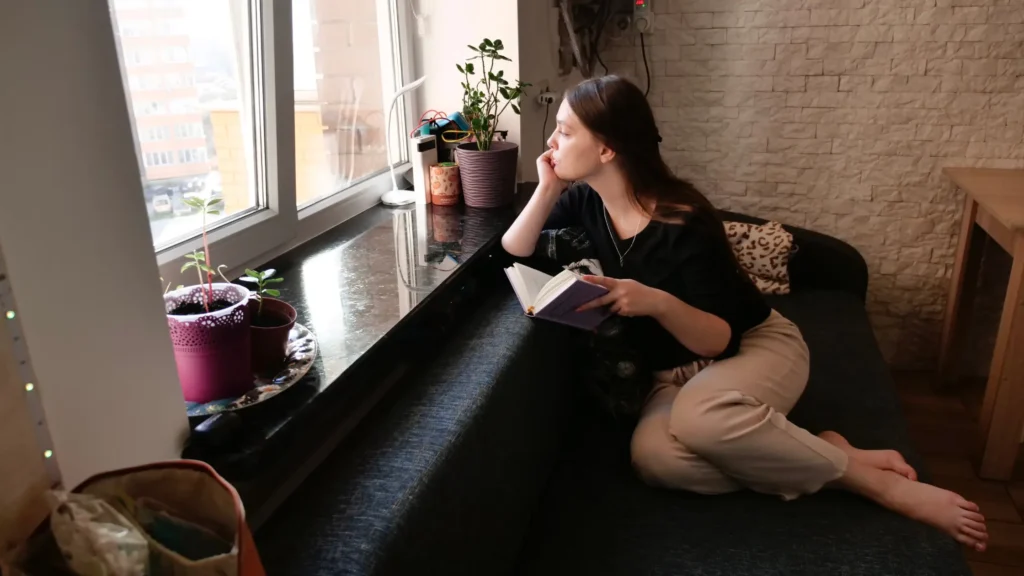
There is a historical detail that often passes unnoticed: the disappearance of the domestic altar.
Whether it was the lararium in Roman homes or the Victorian mantlepiece crowded with family heirlooms and mourning jewelry, humans have always designated a physical “holy of holies” within their living space.
These were the sites of our daily traditions, fixed points in a spinning world.
Today, that space has been flattened into the six-inch glass rectangle in your pocket. The smartphone is the modern altar, but it is one without a fixed location.
On my analysis, this has led to a “de-localization” of meaning. When your digital rituals—checking the news, mourning a celebrity, or celebrating a birthday—happen in the same device where you check your work emails and pay your taxes, the boundary between the sacred and the profane dissolves.
We no longer go to a ritual; the ritual follows us, interrupting our lunch and vibrating in our pockets during moments of intimacy.
There is something fundamentally unsettling about a wedding toast and a spam email occupying the same physical territory.
How did the “Like” button become our new “Amen”?

If you had told a 19th-century laborer in London that he could receive instantaneous validation from five hundred people by simply shouting his opinion into a void, he wouldn’t have called it technology; he would have called it magic, or perhaps a haunting.
The “Like” button is perhaps the most successful digital rituals mechanism ever engineered. It mimics the psychological feedback of a nod or a handshake in a physical gathering, but it scales it to a level that our evolutionary biology isn’t quite equipped to handle.
| Element of Tradition | Physical Era (Pre-2000) | Digital Era (2026) |
|---|---|---|
| Medium | Bread, Wine, Stone, Touch | Pixels, Data, Algorithms |
| Feedback Loop | Eye contact, Shared silence | Likes, Shares, Comments |
| Duration | Days or Weeks (Harvest, Lent) | Seconds (Viral cycles) |
| Memory Storage | Oral history, Printed photos | Cloud servers, “Memories” tabs |
What changed after the mass adoption of these micro-rituals? We moved from “deep play” to “thin connection.”
In a traditional ritual, the goal is often to lose oneself in the collective. In the digital version, the goal is often to perform the self for the collective.
We aren’t participating in the ritual to change ourselves; we are participating to signal who we are to an audience we may never meet. It’s a shift from being a member of a group to being the protagonist of a feed.
Is the “Digital Wake” a valid way to mourn?
When a public figure or a beloved member of a community passes away now, the mourning process begins almost instantly on X or Instagram.
This is one of the most fascinating digital rituals to observe because it fills a void left by the decline of organized religion.
In the past, death was handled through rigid, communal protocols—black veils, specific mourning periods, and physical gatherings at the graveside.
These were boundaries that helped us process the impossible.
Now, we see the rise of the “Digital Wake.” People post screenshots of old conversations, share iconic photos, and use hashtags to aggregate grief.
There is something deeply human and moving about this; it democratizes mourning. However, there is a catch that rarely gets discussed: the permanence of the digital ghost.
In physical traditions, there is a “closure” marked by the burial. In the digital realm, the profile remains, the algorithm occasionally surfaces a “memory” of the deceased on their birthday, and the ritual of mourning becomes a haunting, cyclical loop rather than a linear path toward healing.
We have lost the art of saying goodbye because the internet never truly lets anyone leave.
When we look closer, the pattern of “The Great Flattening” repeats
I’ve spent years tracking how technology eats culture, and the pattern is always the same: we trade depth for reach.
The digital rituals we’ve adopted allow us to feel connected to people across the globe, which is a miracle of the 21st century.
I can “attend” a wedding in Tokyo from my living room in New York. But the reading most honest of this phenomenon suggests that while our reach has expanded to the horizon, our roots have become dangerously shallow.
The Victorian era was obsessed with the “language of flowers“—a complex ritual of sending specific blooms to convey hidden meanings.
It was slow, nuanced, and private. Our modern equivalent is the emoji. It’s faster, sure. It’s universal. But does a heart emoji carry the same weight as a hand-delivered bouquet of dark crimson roses?
The ritual has been flattened to a single character of Unicode. We are communicating more than ever, but I wonder if we are saying less.
The texture of our interactions is being sanded down until everything feels—and looks—the same.
Can these digital habits ever feel “real”?
The skepticism I feel isn’t just a nostalgic pining for the “good old days.” It’s a concern about the biological cost of our transition.
Humans are “obligate gregarious” creatures—we need the pheromones, the micro-expressions, and the shared physical rhythm to truly synchronize our nervous systems.
Digital rituals provide a psychological approximation of this, but they don’t always provide the physiological payoff.
Imagine a young person today. Their milestones—graduation, first job, engagement—are all mediated through a screen.
Their “traditions” involve Spotify Wrapped at the end of the year or the ritualistic checking of a fitness app to see if they’ve “earned” their rest.
These are rituals of the self, not the community. They are feedback loops between a human and an algorithm.
There is a real reason to question this narrative that digital is a perfect substitute for the physical; we are essentially trying to run 200,000-year-old hardware (our brains) on a brand-new, glitchy operating system.
What changed after the shift to Digital Rituals?
- The Death of “The Season”: Traditions used to be seasonal. Now, because of the 24/7 nature of the internet, rituals are constant and, frankly, exhausting.
- From Community to Audience: We no longer look for “neighbors” to join us; we look for “followers” to witness us.
- The Loss of Sensory Anchors: We have traded the smell of incense and the feel of old paper for the blue light of a screen, leading to “context collapse” where all memories feel the same.
- The Rise of Personal Mythology: We use digital tools to curate a version of our lives that looks like a tradition, even if the reality is fragmented.
The most profound digital rituals of the future might not be the ones that keep us glued to our screens, but the ones that use technology to push us back into the world.
I’ve seen apps that encourage “digital sabbaticals” or groups that use GPS to coordinate massive, silent gatherings in public parks. These are hybrid traditions—using the digital to facilitate the physical.
The transition is far from over. We are currently in the “incunabula” phase of digital culture—the awkward, messy period where the old ways are dying and the new ways haven’t quite found their soul.
We aren’t just replacing physical traditions; we are trying to figure out what it means to be human in a world where the “place” no longer matters.
The challenge for the next generation won’t be how to use the technology, but how to put it down long enough to remember why we needed the rituals in the first place.
FAQ Editorial
Are digital rituals making us more lonely?
It’s complicated. They provide a thin layer of connection that prevents total isolation but often lacks the “nourishment” of physical presence. You can have 5,000 digital interactions a day and still go to bed feeling unseen.
Can an online ceremony ever feel as “official” as a physical one?
Legally, yes. Emotionally? It lacks the sensory “anchors”—the specific smells, the weight of the air in a room, the physical touch—that help the brain categorize an event as a major life milestone.
What is the biggest risk of replacing physical traditions?
Context collapse. When we use the same device for work, play, and prayer, the emotional distinction between those activities begins to blur. Everything starts to feel like just another task on a screen.
Will physical traditions ever make a comeback?
We’re already seeing it. The surge in vinyl records, the return to film photography, and the rise of “unplugged” events suggest a deep, collective hunger for things that are tangible, imperfect, and permanent.
