
The Unexpected History of Everyday Table Manners
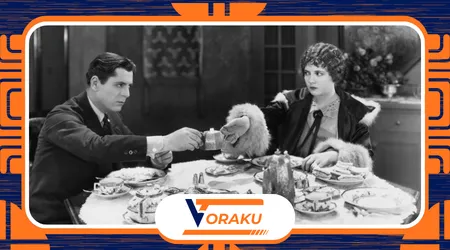
The history of everyday table manners begins not with a silver spoon, but with a blood-stained knife and a desperate, unspoken need to keep the person sitting across from you from using it.
Picture a 13th-century banquet hall in Burgundy: the air is thick, a heavy soup of roasted boar, unwashed wool, and woodsmoke.
There are no forks. Men reach into communal bowls with greasy fingers, and the wine circulates in a single, heavy chalice.
But look closer at the man at the end of the trestle table. He wipes his blade on the tablecloth before passing it. He doesn’t spit across the board; he spits under it.
This isn’t “politeness” in the way we think of it. It’s a survival strategy. In a world where every guest is effectively armed, the way you handle your food is a signal of your potential for violence—or your willingness to suppress it.
We often dismiss etiquette as a superficial layer of “fanciness” shellacked onto life by Victorian snobs, but that’s a fundamental misunderstanding of our social DNA. It’s far more primal than that.
Why did we start caring about how we eat in the first place?
To understand why your grandmother still insists on you keeping your elbows off the table, we have to look at the messy transition from the medieval “free-for-all” to the “civilizing process” of the Renaissance.
For centuries, eating was a communal, almost tribal act. You shared a bowl, you shared a cup, and you shared the bacteria of everyone in the room.
There was an intimacy to it that would likely make a modern diner faint.
The shift began when the elite realized that physical distance was the ultimate luxury. What is rarely discussed is that the history of everyday table manners is actually a history of human atomization.
We moved from the “great bowl” to the “individual plate” not because of hygiene—germ theory was still a distant dream—but because of ego.
To have your own plate was to be an individual, a sovereign entity separate from the mass.
By the time Erasmus wrote De Civilitate Morum Puerilium (On Civility in Children) in 1530, the focus had shifted to the body as a private vessel.
Erasmus wasn’t just telling kids not to pick their noses at dinner; he was teaching them that the body must be controlled.
If you couldn’t master your impulses at the table, how could you be trusted to lead an army or manage an estate? It was the birth of the “poker face” for the dinner table.
+ Why Social Norms Exist Even in Highly Individualistic Societies
How did the fork become the ultimate tool of social exclusion?
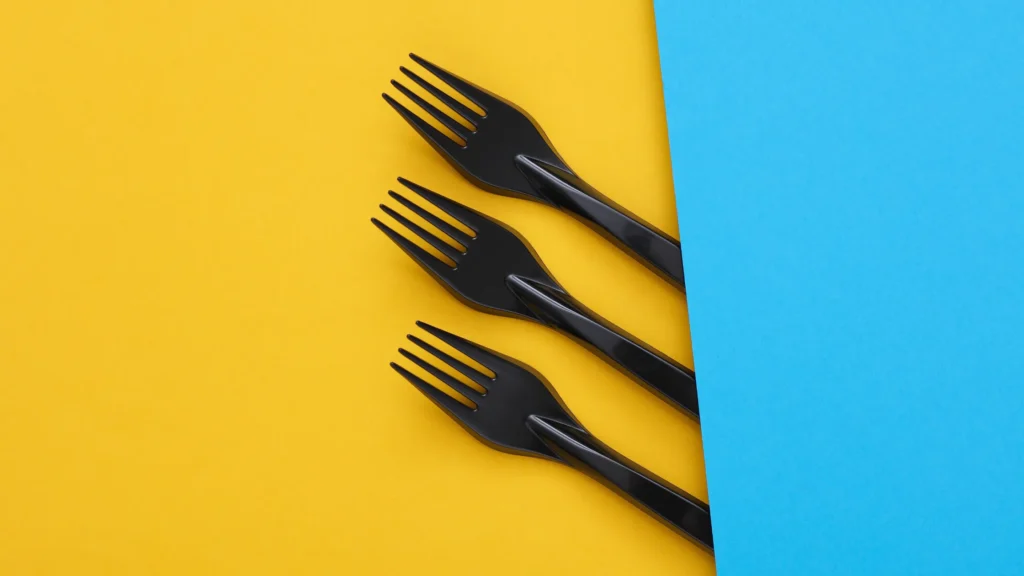
There is a historical detail that often goes ignored: the fork was originally seen as an effeminate, almost scandalous Italian affectation.
When Thomas Coryat brought forks back to England from Italy in the early 17th century, he was mocked mercilessly.
Why would a “real man” need a tiny gold pitchfork when God gave him perfectly good fingers?
But the fork changed everything because it created a mechanical barrier between the human and the beast.
Before the fork, you touched your food. You felt the texture, the heat, the grease. The fork introduced a sterile distance.
It allowed the aristocracy to dine without ever actually coming into contact with the biological reality of their meal.
It’s a bit unsettling when you realize the history of everyday table manners is essentially a long-term project to pretend that we aren’t eating dead animals.
When we look with more attention, the pattern repeats: every new utensil was a new hurdle. The 19th-century “silverware arms race” was peak social gatekeeping.
If you didn’t know which of the five forks to use for the fish course, you weren’t just “rude”—you were an outsider.
It was a minefield designed to explode under the feet of the nouveau riche. It wasn’t about the food; it was about the credentials.
What changed after the Industrial Revolution?
| Era | Primary Goal of Manners | Key “Sin” |
| Medieval | Preventing actual violence | Drawing a knife aggressively |
| Renaissance | Displaying self-control | Loud chewing or spitting |
| Victorian | Class signaling/Exclusion | Using the wrong utensil |
| Present Day | Presence and Respect | Looking at a smartphone |
The Industrial Revolution shifted the focus from “lineage” to “discipline.” Imagine a young clerk in 1880s London, desperately trying to climb the social ladder.
He spends his meager wages on a book of etiquette because he knows that one slip-up—one improper use of a napkin—could end his career before it starts.
In my analysis, this was the moment manners became a form of “soft power.” You didn’t need a sword to dominate a room; you just needed to know the silent language of the table.
The way you sat, the way you held your glass, and the pace at which you ate signaled your “breeding.” It was a psychological census conducted over soup.
There’s something deeply cynical about it, really—the idea that your worth as a human could be measured by how you hold a spoon.
Does the “Civilizing Process” actually make us better people?
The sociologist Norbert Elias argued that the history of everyday table manners is the story of the “internalization of shame.”
We stopped behaving because we feared the King’s guard, and started behaving because we feared our own embarrassment. We became our own police officers.
There’s a darker side to this, though. As we moved toward more “refined” manners, we also moved toward a profound disconnection from our food.
In the Middle Ages, the whole pig was on the table, head and all. By the 20th century, we wanted our meat wrapped in plastic, shaped into neat squares, and eaten with stainless steel tools that don’t remind us of claws.
The reading more honest of this phenomenon suggests that our modern obsession with “clean” eating and “proper” presentation is just a sanitized version of that old Renaissance fear of our own biology.
We are still trying to prove we aren’t just hungry animals. It’s a performance we give for each other, and for ourselves.
Why are we suddenly “forgetting” how to behave at the table?

Walk into any mid-range bistro tonight and you’ll see it: a family of four, all staring at their phones, the silent glow of the screen reflecting in their wine glasses.
To some, this is the death of civilization. To a historian of the history of everyday table manners, it’s just another pivot.
The “phone on the table” is the modern equivalent of the medieval dagger. It is a tool of potential distraction, a signal that the person in front of you isn’t enough to hold your attention.
We are currently living through a chaotic renegotiation of the “social contract” of the meal. It’s messy, it’s frustrating, and it’s deeply human.
There are good reasons to question the narrative that we are becoming “ruder.” In many ways, we are becoming more authentic.
We are stripping away the rigid, exclusionary Victorian nonsense and returning to a more communal, if distracted, form of dining.
The “shared plate” movement in modern restaurants is a direct echo of that 13th-century Burgundian banquet hall—minus the fear of being stabbed.
A Narrative Summary of Social Impacts
The evolution of how we eat hasn’t just changed our dinner parties; it has reshaped our psychology:
- The Rise of Privacy: Moving from communal bowls to individual plates fostered the very concept of the “individual” in Western thought.
- Gender Roles: Manners were often used to domesticate and control, with women being the primary “enforcers” of domestic etiquette.
- The Hygiene Myth: Many of our “cleanly” habits started as social status symbols and only later were justified by medical science.
- Global Homogenization: The “Continental” and “American” styles of using a knife and fork have flattened local cultural eating habits in the name of global business etiquette.
The history of everyday table manners is, at its core, a history of the “Other.” We use manners to define who is “us” and who is “them.”
When you see someone eating with their hands in a culture that uses chopsticks, or using a fork in a culture that uses bread as a scoop, you are witnessing a clash of centuries-old social programming.
We like to think we are beyond these petty distinctions, but watch your own reaction the next time a colleague chews with their mouth open.
That flash of disgust? That’s not “you” talking. That’s five hundred years of European social engineering screaming through your synapses.
We are all haunted by the ghosts of Renaissance etiquette coaches, and no amount of “casual dining” can completely exorcise them.
FAQ: The Unspoken Rules of the Board
Why is it “wrong” to put elbows on the table?
Historically, tables were often just boards placed on trestles. They were incredibly unstable. Putting your weight on your elbows could literally flip the table and send everyone’s dinner onto the floor. While our tables are now solid oak or marble, the rule remains as a vestige of a time when we had to physically balance our meals. It’s a ghost of ancient furniture design.
Is the “no phones at the table” rule just for older generations?
Not really. Etiquette has always been about “presence.” In the 18th century, reading a book at the table was considered incredibly rude. The phone is just a very loud, very bright book. The core principle—that the people physically present deserve your attention—is a constant in human history, even if the technology changes.
Why do Americans and Europeans hold their forks differently?
Americans often use the “zigzag” method—cutting with the right hand, then switching the fork to the right to eat. Europeans keep the fork in the left. This happened because, in the 18th century, the French moved to the “fork-in-left” style, but Americans, having recently gained independence, missed the update or simply stuck with the older British “switch” method. It’s a fossilized piece of 1700s fashion.
Are table manners actually dying out?
They aren’t dying; they’re evolving. We are moving away from “formal” rules (which fork to use) toward “relational” rules (how to make others feel comfortable). In a globalized world, being “polite” often means being flexible enough to adapt to how others eat, rather than rigidly sticking to your own tradition.
Why did we start using napkins?
Before napkins, people used the tablecloth, their sleeves, or even their hair. As clothes became more expensive and delicate during the Renaissance, the need for a dedicated piece of cloth became a practical necessity. It was also a subtle way to show you had the self-control to keep your “animal” mess contained.
The next time you find yourself at a dinner party, staring at a confusing array of silverware, remember that you aren’t just eating.
You are participating in a thousand-year-old ritual of peace-making, status-seeking, and boundary-setting.
The fork in your hand is a weapon that was tamed, and the plate in front of you is a private island in a once-communal sea.
