
How Collective Memory Shapes National Identity
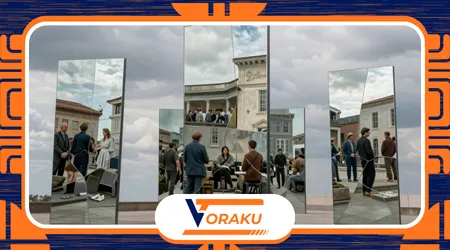
Berlin, November 9, 1989. Under floodlights and falling snow, people swing hammers at the Wall like they’re trying to wake something up.
Chunks of concrete drop with a dull thud, and the sound carries farther than it should. Strangers embrace across the breach, tears mixing with concrete dust.
I wasn’t there, but I’ve spoken to enough people who were—people now in their sixties who still keep a small piece of that wall in a drawer.
They describe the moment not as triumph, exactly, but as vertigo: the sudden fear that the story they’d told themselves for thirty years might no longer hold.
Collective memory shapes national identity more than constitutions or borders ever could.
It decides who belongs, who is forgiven, who gets to narrate the future.
That night in Berlin the old script shattered, and Germany had to start writing a new one on the spot.
Thirty-five years later the country still hasn’t finished the draft.
What gets remembered when the cameras leave?
Japan offers one of the clearest, and most uncomfortable, illustrations.
Walk into almost any high-school history classroom in Tokyo and you’ll find World War II presented in careful proportions: heavy emphasis on the firebombings of Tokyo and the atomic destruction of Hiroshima and Nagasaki, lighter touch on Nanjing, on Unit 731, on the “comfort women” system.
The curriculum doesn’t deny those events; it simply places them in soft focus.
There’s something unsettling in that calibration.
The postwar Japanese state—rebuilt under American supervision, then steered by conservative politicians—chose a narrative of victimhood and miraculous recovery.
It allowed a traumatized population to look forward rather than backward.
The economic miracle that followed seemed to ratify the choice: look how far we’ve come from the ashes.
Yet the same selective lens has left open wounds in relations with China, Korea, and parts of Southeast Asia.
When a prime minister visits Yasukuni Shrine or a textbook softens wartime language, the neighbors don’t see harmless nostalgia; they see a refusal to fully reckon.
I’ve sat with Japanese colleagues over late-night sake who admit, quietly, that the official story feels incomplete.
They don’t want militarism back, but they also don’t want the past reduced to a morality play starring Japan as perpetual victim.
The tension sits there, unspoken, in boardrooms and ballot boxes.
++ The Hidden Psychology Behind Obedience to Authority
Trauma can bind a nation together—or chain it
Rwanda after 1994 had no luxury of selective forgetting. A hundred days, almost a million dead, neighbors killing neighbors with machetes.
The new government decided memory would be the cornerstone of reconstruction.
Every April the country stops. Memorials stay open, survivors speak in schools, the word “genocide” is taught early and often.
The official line is blunt: we are all Rwandan now; ethnic labels are dangerous relics.
It’s worked, in a way. Kigali gleams, foreign investment flows, GDP climbs. Yet sit down with people outside the capital and you hear a different cadence.
A market vendor in Butare told me once, half-laughing, half-serious: “We remember so hard that sometimes we forget how to disagree.”
The enforced unity has bought peace, but at the price of political oxygen.
Dissent is quickly labeled “divisionism,” a word that carries the weight of corpses.
Israel offers the mirror image. The Holocaust is not commemorated; it is internalized.
Schoolchildren visit Yad Vashem, soldiers swear oaths at Masada, “Never Again” is less a slogan than a reflex.
That memory has forged an identity of fierce self-reliance, technological audacity, strategic paranoia. It also makes certain conversations almost impossible.
When images from Gaza circulate, many Israelis see not only today’s conflict but a replay of existential threat.
The past doesn’t explain everything, but it loads the emotional ammunition.
Both cases show the same mechanism at work: collective trauma can weld people into a single body, yet the weld is rarely clean.
It holds, but it can also distort.
++ Why Social Norms Exist Even in Highly Individualistic Societies
Why some memories refuse to stay buried
In Tulsa, Oklahoma, on May 31, 1921, a white mob burned Greenwood to the ground.
Black Wall Street—homes, businesses, churches, a hospital—reduced to smoking rubble.
Estimates of the dead range from thirty to three hundred.
For most of the twentieth century the massacre barely registered in national textbooks. Oklahoma schools called it a “riot.” Families who lost everything were told, in effect, to move on.
Then came 2020, George Floyd, protests, and suddenly archivists were pulling yellowed newspapers out of drawers. Survivors in their nineties gave interviews.
The story re-entered circulation not because new facts emerged, but because the present needed it.
When a people decides a memory is useful—or unavoidable—it stops being history and becomes ammunition.
The same dynamic played out with Argentina’s dictatorship. For years the military called the disappeared “subversives” who had simply vanished.
Then the Mothers of the Plaza de Mayo began their silent circles, holding photographs of sons and daughters.
They refused to let the story dissolve into bureaucratic fog. Decades later those white headscarves are shorthand for human rights across Latin America.
++ Collective Memory and National Identity Formation: The Role of Family and the State
Memory, once revived, changes the grammar of politics.
Power writes the first draft; the rest of us edit
Vladimir Putin understands this better than most. Since 2014 the Great Patriotic War has been elevated to near-sacred status.
Victory Day parades grow larger, school curricula more martial, any suggestion of Soviet collaboration with Nazis treated as near-treason.
The narrative does two things at once: it burnishes Russian greatness and it casts the present war in Ukraine as a continuation of the same righteous struggle.
The sleight of hand is elegant. Stalin’s pact with Hitler shrinks to a footnote; the millions sent to the Gulag become background noise.
What remains is a story of unbreakable resolve against external evil.
It’s not that Russians are being lied to wholesale; it’s that the frame has been tightened until only certain colors show.
South Africa tried the opposite gamble. The Truth and Reconciliation Commission didn’t erase apartheid; it aired it.
Perpetrators confessed in exchange for amnesty, victims told their stories on live television.
The wager was that sunlight, not selective darkness, would allow a new identity to form. Thirty years on, the rainbow nation still feels more aspirational than accomplished.
Yet the very act of speaking the past aloud changed what could be said in public.
Here is the quiet truth beneath it all: no nation remembers everything, and none forgets by accident.
Collective memory shapes national identity the way a river shapes a canyon—slowly, relentlessly, and according to forces that are rarely neutral.
The Brandenburg Gate looks almost ordinary now. Tourists take selfies where people once risked their lives to cross.
But every so often an older German will stop, stare at the pavement line that marks where the Wall stood, and you can see the calculation happening behind the eyes: how much of that night is still inside me, and how much have I chosen to leave on the other side?
That small, private arithmetic is where nations are quietly remade.
Frequently Asked Questions
How is collective memory different from what I remember personally?
Your personal memories are yours alone—first kiss, car accident, the smell of your grandmother’s kitchen.
Collective memory is the version a society agrees (or is persuaded) to treat as shared truth.
It lives in monuments, anthems, schoolbooks, family stories told at dinner.
You inherit it whether you like it or not.
Why do countries argue so fiercely about what happened a hundred years ago?
Because the past is never only about the past.
It’s raw material for legitimacy, for borders, for who pays taxes and who gets drafted.
When the story changes, power can change with it.
Is it sometimes better for a country to forget certain things?
After civil war or genocide, a certain amount of willed amnesia can stop the killing.
But deliberate forgetting almost always leaves residue—resentment, conspiracy theories, a generation that feels gaslit.
The least bad option is usually honest reckoning, even when it hurts.
How is the internet changing the way nations remember?
It’s making memory faster and more chaotic. A single viral thread can resurrect a massacre that textbooks ignored for decades.
At the same time it lets myths spread just as quickly. Official narratives now compete with bedroom historians and foreign trolls. Control is slipping.
Do public holidays actually shape how people see themselves?
More than we admit. The rituals—fireworks, parades, barbecues—rehearse the national story every year.
Independence Day teaches Americans they are rebels at heart; Bastille Day reminds the French that sovereignty can be seized.
Skip the holiday and you risk diluting the script.
Can a nation change its identity without changing its memories?
Not really. You can add new chapters—think Germany after reunification or South Africa after Mandela—but the old ones don’t disappear.
They get reinterpreted, re-weighted, sometimes weaponized. Identity follows memory the way shadow follows light.
