The Hidden Psychology Behind Obedience to Authority
When we talk about obedience to authority, we usually picture a man in a crisp uniform barking orders at a trembling subordinate, or perhaps a grainy, grayscale film of a 1940s political rally.
But the most chilling manifestation of this trait isn’t found in the extremes of history; it’s found in a quiet, nondescript room at Yale University in 1961.
Stanley Milgram, a psychologist who looked more like a neighborhood librarian than a provocateur, set up a simple experiment.
He hired ordinary people—postal clerks, engineers, high school teachers—and told them they were part of a study on “learning.”
They were asked to deliver electric shocks to a stranger behind a wall every time that stranger got a word-pair wrong.
As the voltage climbed, the screams from the other room became desperate, then eventually, eerily silent.
The “teacher” would look at the experimenter in his grey lab coat, sweating, protesting that the man might have a heart condition.
The experimenter would simply say: “The experiment requires that you continue.”
And they did. Not because they were sadists, but because a man in a lab coat told them it was the protocol.
What Milgram uncovered wasn’t a flaw in the German character or a relic of wartime brainwashing; he uncovered a hardwired architectural feature of the human psyche.
We are, at our core, creatures that look for a script provided by someone we perceive to be “in charge,” even when that script leads us into darkness.
Why do good people flip the switch?
The standard narrative suggests that people obey because they are afraid of punishment. We think of the boot on the neck, the threat of the gulag.
However, the reality is far more subtle and, frankly, more unsettling. People obey because it is the path of least psychological resistance.
When we enter a hierarchy, we undergo what Milgram called an “agentic shift.” We stop seeing ourselves as independent agents responsible for our own actions and start seeing ourselves as instruments of another person’s will.
In this state, the moral burden shifts. The person flipping the switch isn’t thinking, “Am I a murderer?” They are thinking, “Am I doing this job correctly?” It’s a terrifyingly easy transition to make.
What rarely is discussed is how this shift isn’t a lapse in judgment, but a sophisticated survival mechanism.
For millennia, the tribe that could coordinate quickly under a leader survived longer than the collection of individualists who stopped to debate the ethics of every spear-throw.
We have inherited the nervous systems of the survivors—the ones who knew how to fall in line when the stakes were high.
+ The Psychological Blueprint of Napoleon’s Rise to Power
What changed in our collective psyche after the 1960s?
For a long time, the world operated on a “command and control” model. You followed your father, your priest, and your king.
But the post-war era, fueled by the horrors of the Holocaust and later by the counter-culture movement, tried to break this spell.
We were told to “question authority.” It became a bumper sticker, a mantra for a generation that wanted to believe they were different.
Yet, when we look with more attention, the pattern repeats in digital spaces. The lab coat has been replaced by the algorithm or the “Terms of Service.”
The source of obedience to authority has simply migrated from the physical to the virtual.
| Aspect | Traditional Authority (20th Century) | Modern Authority (21st Century) |
| Visible Symbol | Uniforms, Titles, Badges | Verified Badges, Viral Consensus, UI/UX |
| Mechanism | Direct Orders / Physical Presence | Nudges, Shadow-banning, Social Credit |
| Justification | “Because I said so.” | “For your safety/convenience.” |
| Resistance | Public Protest / Desertion | Digital Literacy / Privacy Tools |
The transition from physical to digital authority hasn’t made us more independent; it has simply made the compliance more seamless.
In the past, you knew when you were being ordered around. Today, you are nudged. When an app tells you to take a specific route, or a social platform hides certain news, you obey not out of fear, but out of a calibrated trust in the “system.”
We’ve traded the drill sergeant for the interface.
+ Why Social Norms Exist Even in Highly Individualistic Societies
The invisible architecture of the office cubicle
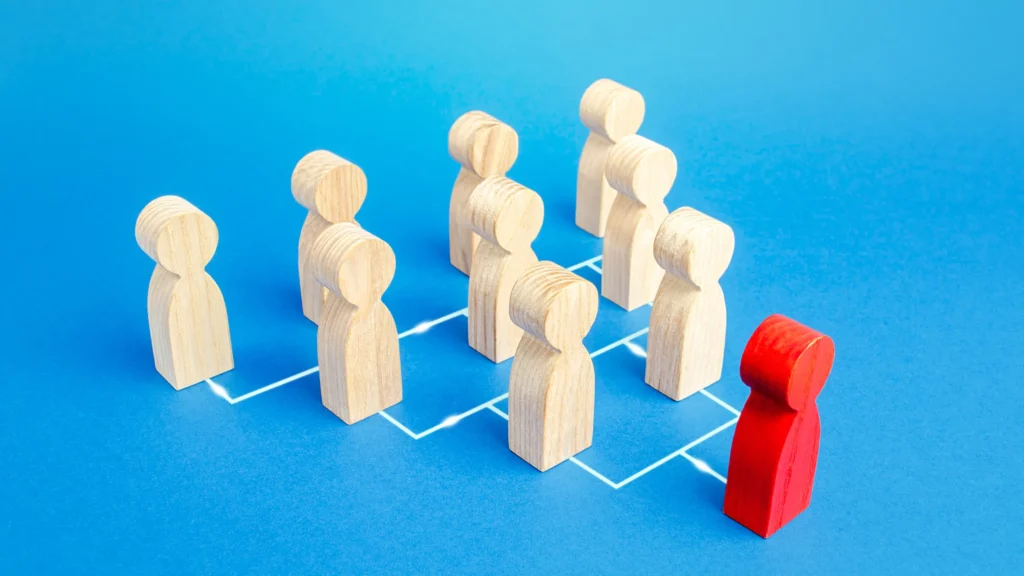
Imagine a junior analyst at a high-stakes investment firm in Manhattan. She sees a report that looks suspicious—data that suggests a massive overvaluation of an asset.
She considers speaking up. But then she looks at the sleek glass walls, the hierarchy of Senior VPs, and the sheer momentum of “the way things are done.”
She doesn’t stay silent because she’s a coward. She stays silent because the social cost of breaking the “agentic state” is higher than the moral cost of the error.
In her mind, the authority isn’t even a person; it’s the Brand. This is the modern Milgram experiment, played out in fluorescent-lit offices every day.
The hidden psychology here is rooted in our dread of social exclusion. To defy authority is to risk being cast out of the group.
To our primitive brains, being cast out of the group is a death sentence. Therefore, we prioritize the hierarchy’s stability over our own moral compass.
It’s a trade-off we make a thousand times a day, from following “standard operating procedures” that we know are inefficient to adopting the political slogans of our chosen “tribe” without a second thought.
Is the “Good Citizen” just a polite name for the obedient subject?
On the surface, obedience to authority is the glue of civilization. Without it, traffic lights are merely decorative and taxes are optional suggestions.
We need a certain level of compliance to keep the lights on and the water running. However, the line between “functional cooperation” and “dangerous compliance” is thinner than we like to admit.
There is a historical detail that often passes unnoticed: the most horrific atrocities in history weren’t committed by law-breakers.
They were committed by law-abiders. The bureaucrats who organized the deportations, the soldiers who guarded the camps, and the neighbors who turned a blind eye were all, by the standards of their own legal systems, “good citizens.” They were the ones who didn’t cause trouble.
In my analysis, the danger isn’t the “rebel” or the “criminal.” Those figures are easy to identify and police.
The real danger is the person who has lost the ability to say “No” when the order violates their fundamental humanity.
We have spent centuries perfecting the art of the “Yes,” but we have neglected the muscle of the “No.”
The ritual of the uniform and the power of the podium
Why do we listen to someone just because they stand on a slightly raised platform? Or because they wear a suit while we wear jeans?
Symbols act as psychological shortcuts. They signal to our brains: “This person has the map; you do not.” This is why even a fake uniform can change how people behave in the street.
If a man in a high-visibility vest puts out a “Road Closed” sign, we turn around. We don’t ask to see his permit. We assume the authority is legitimate because the symbol is familiar.
This reliance on symbols makes us incredibly vulnerable to “authority hacking.” In the digital age, this looks like a professional-looking website, a massive follower count, or a confident tone of voice in a podcast.
We are still looking for the grey lab coat, even when the person wearing it is just another fallible human behind a screen.
When we look at obedience to authority through this lens, we realize that authority is a co-created hallucination.
It only exists as long as we all agree to look at the podium and not at the person standing on it.
What changed after Milgram?
The revelations of the 1960s sparked a massive shift in how we view human responsibility, though whether we learned the right lesson is debatable. Here is a brief look at the social fallout:
- Ethics Boards (IRB): Research like Milgram’s became nearly impossible to repeat. We decided that protecting the psychological well-being of the participant was more important than uncovering the dark truths of the human soul.
- The “Nuremberg Defense” Collapse: The idea of “I was just following orders” was legally dismantled, yet socially, it remains our favorite hiding spot.
- Decentralization Fetish: The rise of blockchain and flat corporate structures is, at its heart, an attempt to build systems that don’t rely on a single “lab coat” figure.
- The Professionalization of Dissent: Whistleblowing went from being seen as “snitching” to a protected (albeit still risky) social necessity.
How do we reclaim our agency?
The reading most honest of this phenomenon suggests that we will never truly “cure” ourselves of the urge to obey.
It is too deeply baked into our biology. However, we can build a “slow-thinking” bridge between the order and the action.
The most dangerous words in any language are “That’s just the way it’s done.” When you hear those words, that is the signal that the agentic shift has taken place.
That is the moment to pause and ask: If I were the only person in this room, would I still do this?
It’s a terrifying question because it places the weight of the world back on your shoulders. It’s much easier to be an instrument than to be an author.
But in an era where authority is becoming increasingly automated and invisible, the act of questioning—of being the “difficult” person who asks for the “Why”—is the only thing that keeps us human.
We must remember that obedience to authority is a tool, not a virtue. It is a hammer that can build a hospital or crush a skull.
The choice of which one to do doesn’t belong to the person holding the hammer; it belongs to the person who decided to pick it up in the first place.
Frequently Asked Questions
Does everyone have the same tendency to obey?
While the tendency is universal, personality traits like “Agreeableness” can play a role. People who score high in agreeableness often find it more painful to dissent. However, Milgram’s work showed that environment and the presence of a “legitimate” authority figure are far more predictive of behavior than individual personality.
Is it always bad to obey authority?
Not at all. Social cohesion requires a degree of obedience. We obey stop signs, medical advice from doctors, and safety protocols on airplanes because they are based on expertise and collective safety. The problem arises when we stop distinguishing between “competence-based authority” and “power-based authority.”
Can we train people to be less obedient?
Yes, through what psychologists call “disobedient models.” In Milgram’s variations, if a second person refused to give the shocks, the original “teacher” was much more likely to stop as well. Seeing someone else dissent breaks the spell and reminds us that we have a choice.
How has the internet changed how we obey?
Authority is now more fragmented. We might ignore the government but strictly obey the “rules” of our online subculture to avoid being cancelled. We’ve traded one big master for a thousand tiny ones, but the psychological pressure to conform to the group’s “authority” remains the same.
Why do we feel guilty when we disobey even a “bad” order?
Because disobedience feels like a betrayal of the social contract. Our brains process social rejection in the same areas that process physical pain. Disobeying feels “wrong” because it triggers a fear of isolation, even if your moral mind knows it is the “right” thing to do.
