
Why Online Communities Are Becoming Cultural Anchors
In the damp, flickering shadows of the 18th-century Parisian salons, the air was thick with the scent of expensive snuff and the heat of radical ideas.
People didn’t just gather there to drink or posture; they gathered because the rigid structures of the monarchy and the Church had begun to feel like a suit of armor that no longer fit.
Today, that same restless human hunger has migrated. The digital flicker of a Discord server or a niche subreddit has replaced the candlelight of the Enlightenment, becoming the new hearth for those wandering the cold halls of a fragmented society.
This is where online communities have stepped in, not as a hobby, but as a survival mechanism for the soul.
Are we witnessing the death of the “Third Place”?
For decades, sociologists obsessed over the “Third Place”—those physical anchors like coffee shops, libraries, and pubs that existed in the sweet spot between the drudgery of work and the intimacy of home.
They were the connective tissue of civic life. But let’s be honest: urban sprawl turned our neighborhoods into transit corridors and rising costs turned a simple latte into a gated experience.
Those physical anchors didn’t just drift; they were cut loose.
What rarely is discussed—and what I find particularly unsettling—is that we didn’t just lose these spaces; we outsourced their essence to the cloud.
When you enter a specialized digital forum today, you aren’t “logging on” in the 1990s sense of the word.
You are participating in a ritual of recognition. In my analysis, the transition from physical neighborhoods to digital affinity groups isn’t a tragic loss of community, but a radical, necessary redefinition of it.
We have traded the convenience of geography for the brutal precision of ideology.
The pattern repeats with a sort of poetic inevitability: whenever traditional institutions—be they the village square or the local parish—fail to adapt to the sheer speed of human thought, we build new ones out of whatever material is at hand.
The shift to online communities as our primary cultural anchors happened silently, accelerated by a decade of physical isolation and the creeping realization that the person living next door might share our zip code, but almost never our worldview.
+ How Digital Rituals Are Replacing Physical Traditions
Why does a digital group feel more “real” than a physical neighbor?
There is a historical detail that tends to pass unnoticed: the concept of the “neighborhood” as a social unit is a relatively modern invention of the industrial age, a byproduct of housing people near factories. Before that, identity was tribal, professional, or religious.
We are, in a sense, circling back to an older way of being, where we are defined by what we believe and what we do, rather than where we happen to park our cars.
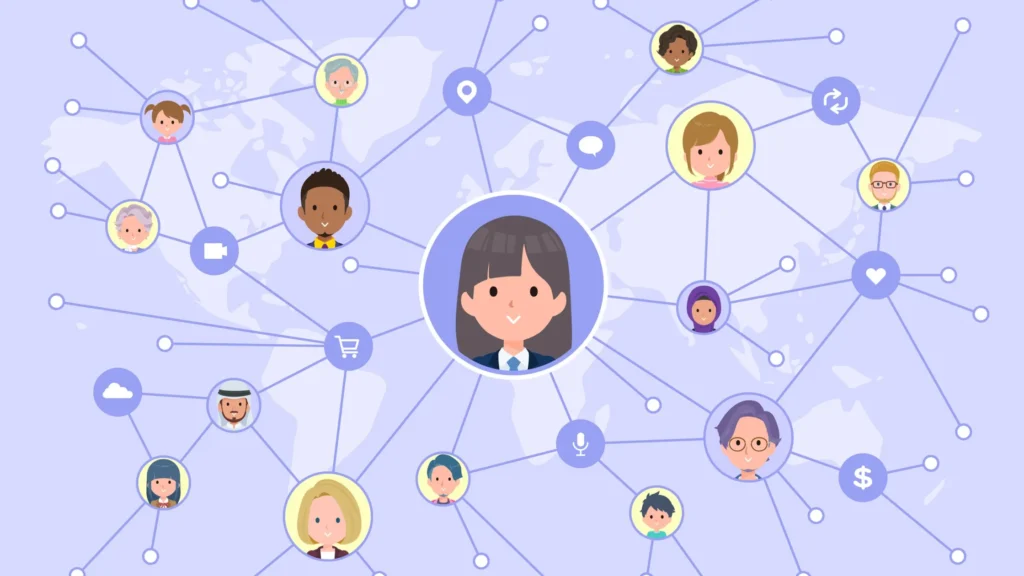
Think of a young freelance designer in a mid-sized city in 2026. She may not know the names of the people in apartment 4B, but she is a “Citizen” of a 50,000-member digital collective dedicated to sustainable typography.
When she faces a professional crisis or a crisis of faith, it isn’t the person across the hallway who offers a hand—it’s a stranger in Tokyo or Berlin who speaks her specific technical and emotional language.
To her, the online communities she inhabits provide more stability, mentorship, and cultural identity than her physical surroundings ever could.
The most honest reading of this phenomenon suggests we are moving toward what some call “Liquid Identity.”
In the past, your culture was handed to you like a heavy, inherited coat. Now, you sew it yourself.
You “anchor” yourself in a digital space that reflects your specific anxieties and aspirations, creating a sense of home that is portable and, crucially, chosen.
+ Why Bread Became the Foundation of Civilization
What changed after the migration to digital spaces?
The shift from physical to digital community-building didn’t just change where we talk; it rewired the very mechanics of how we form values.
We’ve moved from a system of “accidental proximity” to one of “intentional alignment.”
| Feature | The Traditional “Third Place” (1950-2000) | The Modern Digital Anchor (2020-Present) |
| Barrier to Entry | Physical presence, local social norms. | Shared interest, specialized knowledge. |
| Duration | Transitory (until the bar closes). | Persistent (asynchronous, 24/7). |
| Cultural Output | Local gossip, regional slang. | Global memes, niche aesthetics, new languages. |
| Authority | Seniority and local reputation. | Contribution, expertise, and “clout.” |
When we look closer, we see that online communities have become the laboratories for the next century’s traditions.
The slang used by teenagers on a gaming server today will be the standard lexicon of corporate marketing tomorrow.
The ethical debates happening in decentralized autonomous organizations (DAOs) are the messy, vital blueprints for future governance.
It’s a bottom-up cultural revolution that the mainstream media is still trying to decode.
Is this just a digital echo chamber?
There are good reasons to question the popular narrative that digital spaces are purely polarizing echo chambers.
While that’s a convenient trope for headlines, it ignores the profound psychological safety these spaces provide for marginalized groups.
Historically, if you were the only person in your town with a specific passion, a rare medical condition, or a non-conforming identity, you were an island. Now, you are part of a thriving archipelago.
The most fascinating aspect of how online communities function is their ability to create “micro-cultures” with their own history.
I’ve seen groups on platforms like Reddit or specialized Mastodon instances that possess more complex internal lore than some small nations.
They have their own heroes, their own villains, and their own secular holidays. They aren’t just places to chat; they are self-contained civilizations.
Imagine a woodworker in rural Maine who felt isolated for twenty years. He joins a specialized digital guild.
Suddenly, he isn’t just a “loner” in a dying town; he is a master craftsman within a global hierarchy.
He teaches apprentices via video, debates the merits of 1 Japanese joinery with a student in Osaka, and feels a profound sense of duty to his digital peers.
This isn’t a hobby; it’s a cultural anchor that keeps him grounded when the local economy falters.
Why are brands and governments so desperate to get inside?
The power of online communities hasn’t gone unnoticed by those who seek to control the narrative or sell us back our own identities.
We see a desperate, almost frantic scramble by legacy institutions to “gamify” participation or “build community” around household products.
But there is a fundamental law here: you cannot manufacture an anchor; an anchor is dropped by the people who need to stay in one place.
The most authentic digital spaces are those that grow organically out of necessity.
They are the digital version of the speakeasy—places where people go to say the things they aren’t allowed to say in the sanitized, HR-approved world of the modern public square.
This is why attempts by major corporations to create their own “communities” usually feel like a parent trying to use Gen Alpha slang: it’s cringeworthy because it lacks the shared struggle that defines a real culture.
Can a digital anchor survive the “Great Enshittification”?
As platforms become more focused on aggressive monetization and less on genuine connection—a process the writer Cory Doctorow famously termed “enshittification”—many fear these online communities will dissolve into the noise.
I disagree. History shows that when the salon is closed by the authorities, the intellectuals move to the cellar. When the cellar is flooded, they move to the attic.
We are already seeing a mass migration toward smaller, private, and more curated spaces.
The era of the “Mega-Platform” where everyone shouts at everyone else is waning. In its place, we are seeing the rise of the “Digital Campfire”—smaller groups where the noise is filtered out and the signal is clear.
These are the true anchors. They aren’t looking for scale; they are looking for depth.
The silent change that occurred while we were distracted by the “metaverse” hype was that we stopped looking for a digital version of the world and started building a better world within the digital.
The online communities of 2026 are not distractions from reality; for many, they are the only reality that makes sense in a fragmented, unpredictable age.
They are the new traditions, written in code and kept alive by the simple, human need to be seen.
The Evolution of Belonging: A Summary
- The Physical Era: Identity was tied to the land. You were where you were born.
- The Broadcast Era: Identity was tied to what you consumed. You were what you watched.
- The Community Era: Identity is tied to where you contribute. You are the digital spaces you help sustain.
FAQ: Understanding the Digital Shift
Are online communities replacing real-life friendships?
Not necessarily. They are often augmenting them or filling the gaps where physical social structures have collapsed. Many people find that their “online” friends eventually become their most trusted “offline” confidants. It’s less about a replacement and more about a different starting point for human connection.
How do these groups become “cultural anchors”?
An anchor provides stability. When the world feels chaotic—economically, politically, or environmentally—these groups provide a consistent set of values, a familiar language, and a reliable support network. They become the “home” you carry with you.
Is it healthy to spend so much time in digital niches?
It depends on the “oxygen” in the room. Some niches are toxic, but many are life-saving. The key is whether the community encourages growth or merely reinforces resentment. The most successful anchors are those that push their members to be better versions of themselves.
Why do physical “Third Places” continue to struggle?
High real estate costs and the commodification of public space are the primary culprits. When you have to pay $7 for a coffee just to sit down for an hour, the “community” aspect feels transactional. Digital spaces offer a low-cost, high-frequency alternative that physical businesses simply can’t match.
Can a community exist without a central platform?
The strongest ones do. They are “platform agnostic.” If one social media site dies, the community moves to another, or hosts their own server. The culture resides in the people and their shared history, not in the code.
