
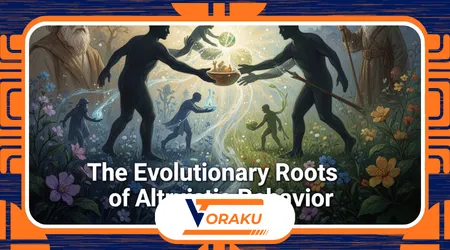
The Evolutionary Roots of Altruistic Behavior
Picture that dusty traveler shuffling into a small Dust Bowl town in the 1930s, his boots worn thin, face etched with the kind of hunger that hollows a man out.
A farmer, his own pantry nearly bare, waves him over anyway, ladles out some thin stew, offers a spot on the porch to catch his breath.
No fanfare, no ledger of debts—just a quiet nod, as if to say, we’ve all been there.
Acts like this, raw and uncalculated, point straight to the evolutionary roots of altruistic behavior, that stubborn thread in our makeup that pushes us to give when logic screams to hold back.
Over the years, digging through old journals and watching how folks pull together in crises—from earthquake rubble in Haiti to quiet donations during recessions—I’ve come to see these moments not as outliers, but as remnants of ancient wiring.
They whisper of times when survival hinged on more than solo grit.
Continue reading the article!
Summary of Article Topics
- Why Do Strangers Risk Their Lives for Each Other?: Exploring primate parallels and emotional drivers.
- How Did Natural Selection Favor the Givers Over the Takers?: Discussing kin selection, reciprocity, and brain rewards.
- What Happens When Altruism Clashes with Self-Interest?: Conflicts in history and modern scenarios, with a narrative summary of social impacts.
- Do Cultural Differences Alter Our Altruistic Instincts?: Variations across societies and historical cases.
- Can Altruism Evolve Further in a Divided World?: Future outlook and reflections.
- FAQ: Addressing common reader questions.
Why Do Strangers Risk Their Lives for Each Other?
Think back to those firefighters charging into the Twin Towers on 9/11, lungs burning, pulling strangers from the smoke without a second thought.
It jars against our instinct for self-preservation, doesn’t it?
Peeling back the evolutionary roots of altruistic behavior, though, reveals echoes in our primate kin that make it less mysterious.
Chimps in the wild spend afternoons grooming one another, fingers combing through fur, easing tensions and forging pacts.
It’s no idle pastime; the groomed one might later back you in a scrap over territory.
There’s something overlooked here, in my experience covering social upheavals: this grooming mirrors the subtle alliances we build in boardrooms or back alleys, where a favor cements loyalty against the grind of isolation.
Emotions play the unseen conductor in all this. Empathy isn’t some soft modern luxury—it’s a hardwired alarm, firing when we sense another’s distress, nudging us to act.
I’ve seen it firsthand in flood-stricken villages along the Amazon, where locals, barely afloat themselves, toss lifelines to neighbors.
It’s messy, instinctive, like a reflex you can’t quite suppress.
Altruism shifts shapes across contexts, too.
Among the Indigenous peoples of the Northwest Coast, potlatch feasts involved chiefs lavishing gifts on rivals, a display that boosted prestige while knitting the community tighter. The undercurrent?
++ Why Group Identity Often Overrides Rational Thinking
A quiet calculus of stability, where giving wove a safety net for leaner days. Patterns like this loop through time, stubborn and adaptive.
++ How Cultural Taboos Are Formed and Eventually Broken
How Did Natural Selection Favor the Givers Over the Takers?
Darwin scratched his head over bees kamikaze-stinging for the hive, wondering how sacrifice squared with survival of the fittest.
Kin selection offers a clue—pouring effort into relatives propagates your genes sideways.
++ The Silent Power of Social Conformity Explained by Research
But that doesn’t cover the full canvas; the evolutionary roots of altruistic behavior stretch to outsiders via clever swaps.
Envision two ancient foragers bartering: a sharpened stone today for berries tomorrow.
Betray the deal, and word spreads—you’re sidelined, your line dwindles. In my reading of these dynamics, it’s not cold exchange; it’s the forge of trust, the kind that lets villages thrive where lone wolves starve.
Our neurology backs this up, rewarding generosity with a dopamine hit, akin to the rush from a good meal or a lover’s touch.
Evolution’s sly incentive, ensuring groups cohere.
During Europe’s Black Death, pockets of cooperation—sharing herbs, isolating together—outpaced the chaos of every-man-for-himself.
Those huddled enclaves endured, their ways rippling into later quarantines.
Doubters claim culture invented altruism, layering it over raw ego.
Yet watch toddlers: at mere months old, they’ll toddle over to hand you a fallen toy, unprompted, eyes wide with untaught concern.
It hints at roots sunk deep before words or rules took hold. Something primal stirs there, unpolished and persistent.
What Happens When Altruism Clashes with Self-Interest?
Tensions flare inevitably. Soldiers in trenches might bolt for home, family pulling harder than flag. But others dig in, bound by the raw camaraderie of mud and fear.
Here, the evolutionary roots of altruistic behavior illuminate how forged identities expand our circle, turning strangers into brothers-in-arms.
Ponder a factory hand in 19th-century Manchester, slipping half his bread to a coughing mate amid the clatter of looms.
Risky, sure—illness could claim him next. But in those grim mills, shared suffering bred a makeshift family, a buffer against the bosses’ indifference.
Sociologists dub it fictive kin, yet it’s evolution stretching its limbs, redefining “us” to weather the storm.
Fast-forward to today’s freelance hustle: app workers pooling tips in chat groups, a digital echo of those old solidarities. What shifted in the wake?
Societies toughened, sprouting unions and welfare nets, but they also sharpened eyes for leeches, weeding out the takers.
A narrative arc of ripples: In hunter-gatherer days, altruism circled tight bands, hoarding against famine. Villages grew it into trade webs, oiling commerce.
The industrial churn bent it toward strikes and reforms, clawing back dignity.
Digitally, it balloons into viral fundraisers, where aiding distant floods feels as urgent as helping kin—evolution’s reach, ever widening.
Do Cultural Differences Alter Our Altruistic Instincts?
They do, profoundly, coloring the how but not the why. In Japan’s crowded subways, yielding a seat or staying late at work isn’t grandstanding—it’s the hum of harmony, a cultural echo of group survival.
Flip to the U.S., where billionaires trumpet donations, turning help into headline.
Beneath the veneer, though, those evolutionary roots of altruistic behavior hold firm, stubborn as roots in rocky soil.
Take the Maori concept of utu: a dance of give-and-take, where aid to allies fortified against foes.
Colonization muddled it, blending with imposed hierarchies, yet the core pulse remained.
This is often misunderstood as mere reciprocity; really, it’s a social anchor, steadying tribes through upheaval.
I’ve long questioned the smug Western lens that paints its charity as pinnacle. In Amazonian tribes, hoarding food invites exile—sharing is the air they breathe, enforced by whispers and shuns.
It mirrors evolution’s playbook: cooperate or perish, culture just the local dialect.
Now, screens twist it further. Platforms reward flashy goodwill, likes piling up like ancient feasts’ prestige. Genuine?
Often, but laced with status hunts, an old game in new garb. Unsettling, how tech amplifies our basest drives under altruism’s cloak.
Can Altruism Evolve Further in a Divided World?
Polarization strains it—borders bristle at refugees, debates rage over who deserves aid. Echoes of the Potato Famine: some shipped grain to starving Irish, others hoarded amid plenty.
Distance dulls empathy, a glitch in our wiring when threats feel abstract.
Still, glimmers persist. Pandemic volunteers stitching masks, bridging divides with quiet acts.
From my vantage, after years tracing these threads, fostering this means spotlighting common ground, schooling in shared frailties over silos.
Altruism’s like a river carving canyons: it sustained forebears through blizzards and battles, subtle yet reshaping. In our fractured era, it might yet erode walls, if we let it flow unchecked.
That dusty farmer’s stew, after all, fed more than one belly—it nourished the idea that we’re in this together, flaws and all.
Frequently Asked Questions
Why does altruism feel good even when it costs us?
That warm glow? It’s oxytocin flooding your system, evolution’s nudge to keep groups glued. Like a built-in reward for playing the long game in survival.
Is altruism unique to humans?
Hardly. Bats regurgitate blood for starving pals; meerkats sentry while kin eat. Ours layers on culture, sure, but the spark lights up across species.
How can we encourage more altruism in kids?
Show it in action—recount tales of unsung helpers, rope them into simple deeds like yard work for elders. It awakens what’s already simmering inside.
Does religion play a role in altruistic evolution?
It formalizes the urge, scripting charity into doctrine. But the impulse predates pulpits, faith just channeling it into organized waves.
What if someone takes advantage of your kindness?
Happens, but we’ve evolved sniffers—rumors, gut feelings—to spot fakers. Authentic givers end up with thicker webs, cheaters tangled in their own.
Can altruism backfire in modern society?
It can drain you dry if unchecked, leading to exhaustion. The trick’s in boundaries: give smart, recharge, keep the flow sustainable.
