
The Forgotten Revolts That Nearly Changed History
The Forgotten Revolts That Nearly Changed History
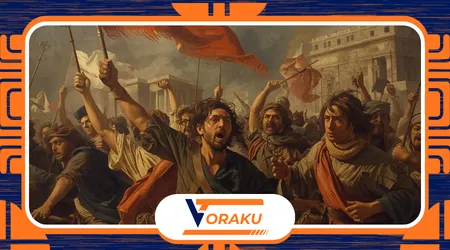
In the sticky heat of a June afternoon in 1381, smoke still curling from the Savoy Palace, a teenage king on horseback faced several thousand soot-streaked men who carried farm tools and the kind of certainty that only comes when people have decided there is nothing left to lose.
For forty-eight hours London belonged to them.
They dictated terms. They watched royal officials dragged from hiding places.
Then everything snapped back—promises torn up, leaders hanged from gibbets in market squares across the home counties.
Most history books give that episode a polite paragraph, if they mention it at all.
Yet those two days keep returning to me as one of the sharpest illustrations we have of how thin the membrane really is between order and upheaval.
Forgotten Revolts That Nearly Changed History are not romantic failures; they are diagnostic tools.
They show exactly where the social machine was grinding hardest, where the pressure had built beyond what deference and sermons could contain.
The pattern is depressingly consistent: a sudden widening of political imagination, a brief seizure of real power, then ferocious restoration dressed up as the return of “peace.”
Continue reading our article to learn more!
Table of Contents
- Why do respectable histories keep sidelining the revolts that almost succeeded?
- The summer Florence briefly belonged to the wool-combers
- How near did England actually come to dismantling serfdom in 1381?
- Germany, 1525: when half the countryside thought the Gospel demanded redistribution
- Louisiana, 1811: the revolt too large to be allowed into the national story
- What, exactly, changed?
Why do respectable histories keep sidelining the revolts that almost succeeded?
Because success writes the curriculum. Failed insurrections are allowed only as cautionary colour—proof that radicalism always overreaches.
But spend enough time with the primary sources, and a quieter truth emerges: these movements were frequently more disciplined, more articulate, and more politically lucid than the panicked chronicles let on.
++ The Overlooked Role of Translators in History
Chroniclers needed monsters; what they actually recorded were people who had read enough scripture, heard enough travelling preachers, and done enough arithmetic on their rents to conclude that the existing arrangement was neither natural nor permanent.
++ Why Certain Historical Mysteries Remain Unsolved
The summer Florence briefly belonged to the wool-combers
1378, Santa Maria Novella still smelling of fresh plaster.
The ciompi—unskilled wool workers barred from the guilds that ran the city—marched in formation, seized the palace of the Signoria, and for three years participated in governing one of the richest urban economies on the continent.
++ How Oral Traditions Preserve Alternative Histories
They forced through three new guilds for the poorest trades, shifted some taxation onto wealth rather than heads, and limited the use of torture in judicial proceedings.
Michele di Lando, a carder with no lineage worth mentioning, found himself holding the banner of justice.
There is something quietly unnerving about that image: men whose entire working lives had consisted of monotonous, back-breaking fibre preparation suddenly debating fiscal policy in the same halls where Medici ancestors would later pose for portraits.
The experiment ended in street fighting and mass proscriptions, but the memory refused to die completely.
Later Florentine republicanism—however oligarchic it became—always carried a faint, embarrassed awareness that sovereignty had once slipped, very briefly, into rougher hands.
How near did England actually come to dismantling serfdom in 1381?
Closer than the traditional narrative likes to admit.
The rebels did not simply burn manorial rolls for the pleasure of seeing parchment curl; they targeted the documentary machinery that kept people legally bound.
They knew precisely which documents mattered. At Mile End the boy-king Richard II agreed—in writing—to abolish serfdom, pardon the insurgents, and fix rents at fourpence an acre.
At Smithfield the following day Wat Tyler was murdered under a flag of truce, the crowd was told the promises still stood, and within weeks every charter was declared obtained under duress and void.
What lingers is the speed of the collapse of deference.
These were not starving peasants blinded by rage; many were prosperous enough to own tools, pay taxes, and travel long distances in good order.
Their demands were concrete and surprisingly restrained: no more forced labour, no more arbitrary courts, an end to the legal fiction that tied a man to the soil he worked.
Had the royal party fractured, or had a few more sympathetic knights defected, the legal scaffolding of English serfdom might have cracked open politically rather than simply rotting away over the next two centuries through cash commutation.
As one chronicler grudgingly noted, the rebels moved “not like a rabble, but like men who knew what they wanted.”
That sentence, buried in a Latin paragraph dripping contempt, is perhaps the most honest thing written about them.
Germany, 1525: when half the countryside thought the Gospel demanded redistribution
The German Peasants’ War remains the largest popular rising in European history before the French Revolution.
Somewhere between 100,000 and 300,000 people—farmers, miners, small-town artisans—took up arms across vast regions.
They produced the Twelve Articles, a document so measured it still reads like a reasonable negotiating position: return of the commons, abolition of serfdom “unless it can be proved from Scripture,” election of pastors, fair hunting and fishing rights.
Thomas Müntzer took the rhetoric further, preaching that the time of princes was over.
For months wagon laagers and elected captains controlled swathes of Swabia and Thuringia.
Then the professional armies arrived—landsknechts with arquebuses and field artillery.
At Frankenhausen the peasant force was cut to pieces in an afternoon; Müntzer was racked, beheaded, his head displayed in a cage.
Luther’s pamphlet urging the princes to slaughter without mercy still makes uncomfortable reading.
The revolt accelerated the consolidation of princely absolutism in the German lands and helped ensure that political unification arrived centuries later, and in a very different form.
Yet the Articles themselves remain a quiet rebuke to anyone who imagines that sixteenth-century peasants were incapable of sophisticated political thought.
Louisiana, 1811: the revolt too large to be allowed into the national story
Along the narrow strip of sugar and cotton plantations north of New Orleans, several hundred enslaved people—many of them Haitian-born—marched with drums and agricultural tools toward the city.
For forty-eight hours they controlled the river road. Planters abandoned mansions.
The militia barely had time to organize before the column was met with grapeshot and cavalry.
Charles Deslondes and dozens of others were tortured, executed, decapitated; their heads were mounted on poles for miles along the levee.
This was the single largest slave insurrection in United States history.
Textbooks still give it a footnote if anything at all. The planters’ version prevailed for generations: a chaotic outburst by “banditti,” not a political act.
Yet court records and survivors’ accounts show careful planning, clear objectives, and conscious invocation of the Haitian example.
The speed and brutality of the repression reveal how seriously the slaveholding class took the threat.
What, exactly, changed?
Very little in the short term, which is precisely why these near-misses matter. Each suppression sharpened the reflexes of the powerful.
Poll taxes disappeared from England for centuries. Florence’s elite learned to keep the lower guilds fragmented.
German princes invested heavily in standing forces and administrative centralization.
In the American South the domestic slave trade expanded partly as insurance against future risings.
++ List of revolutions and rebellions
The deeper legacy is psychological. Every time ordinary people have forced open the door—even for a weekend—the people on the other side remember how easily it can happen again.
That memory drives pre-emptive concession, selective repression, and an enormous amount of cultural work aimed at making radical demands appear unthinkable.
These Forgotten Revolts That Nearly Changed History are not feel-good stories of pluck.
They are evidence that the arrangements we inherit were, at critical junctures, actively defended against alternatives that seemed, for a moment, entirely plausible.
That knowledge sits uncomfortably. It suggests the present is less solid than it pretends to be—and that the next time the membrane thins, the outcome is not pre-ordained.
Frequently Asked Questions
Why aren’t these events taught more widely?
Victors write the first draft, and elites have long preferred stories of orderly progress over messy popular agency.
Schools favor kings and constitutions; the messy courage of anonymous laborers complicates the tale.
Could any of them realistically have succeeded?
Short answer: briefly, yes. The ciompi held power for years. The English rebels extracted written promises. German peasants controlled large territories.
Success required sustained unity and external alliances they rarely secured.
Do these revolts prove violence never works?
No. They show violence can force temporary concessions and shift the Overton window, even when crushed.
Serfdom’s practical end and later labor rights owe debts to the fear these events instilled.
How do they connect to modern protests?
The grievances—unfair taxation, loss of commons, elite impunity—sound familiar to anyone following debt crises, land grabs, or wealth gaps.
The tactics differ, but the underlying demand for dignity is the same.
Is there a lesson for today’s activists?
Organization and narrative control matter as much as numbers. The rebels who left records and built alliances lasted longest.
And remember: even failure plants seeds. The next generation reads the suppressed accounts and asks, “What if?”
These Forgotten Revolts That Nearly Changed History refuse to stay buried because they expose something uncomfortable: the world we inhabit was not inevitable.
At pivotal moments, ordinary people glimpsed alternatives and were willing to die for them.
The fact that those alternatives were snatched away does not make the glimpse less real.
