
The Lost Voices Behind Famous Historical Moments
The lost voices behind famous historical moments are often the very ones who held the scaffolding of history together while the icons took their bows on the balcony.
Imagine standing in the thick, humid air of the National Mall in August 1963.
You hear the thunderous resonance of Dr. King’s dream, but your elbow is brushing against a woman whose name you’ll never see in a standard high school textbook.
She is the one who organized the buses, negotiated the permits, and spent six months ensuring that ten thousand people had sandwiches and water.
Without her logistical sweat, the “dream” would have remained a silent prayer in a local church.
History is frequently written as a series of solo performances, a gallery of Great Men doing Great Things.
We are taught to view the timeline of human progress through the lens of individual genius—the lone inventor, the singular general, the charismatic revolutionary.
But when you spend two decades digging into the social fabric of our past, you start to realize that this “Great Man” theory is essentially a marketing campaign for the winners.
Behind every grand signing of a treaty or a revolutionary breakthrough, there is a ghost map of assistants, wives, laborers, and marginalized strategists who provided the intellectual and physical labor that made the “moment” possible.
Why does our collective memory prefer a single protagonist?
Human psychology craves simplicity. It’s a bit lazy, really—it is far easier for a culture to remember a face than a movement.
We anchor our identity to icons because they provide a mental shortcut to complex ideological shifts.
When we think of the Space Race, we see Neil Armstrong’s bootprint. What we don’t see—at least not until very recently—are the “human computers” like Katherine Johnson or the seamstresses at Playtex who hand-stitched the layers of the Apollo spacesuits with the precision of a surgeon.
The social force at play here is a phenomenon I call “narrative consolidation.” To make history digestible for the masses, we strip away the noise.
The problem is that the “noise” is often where the real humanity lives. When we ignore the lost voices behind famous historical moments, we lose the context of how change actually happens.
It doesn’t happen because one person decided it should; it happens because a critical mass of “unimportant” people reached a breaking point.
This erasure isn’t always accidental. It is often a deliberate byproduct of the power structures of the era.
If you were a woman in the 19th century contributing to a scientific breakthrough, your name was an inconvenience to the social order.
If you were a person of color providing the tactical backbone for a colonial independence movement, your leadership was a threat to the narrative of the “civilized” liberator.
+ How Power Determines Which Stories Survive
What happened to the people who actually built our “Golden Ages”?

Take the Victorian era, often characterized by its rapid industrialization and the stiff-collared dignity of its elite.
We remember the Great Exhibition of 1851 as a triumph of British ingenuity. But the lost voices behind famous historical moments like this belong to the navvies—the itinerant laborers who dug the canals and laid the tracks.
Imagine a worker named Thomas in 1840s Northern England. He isn’t a figure of political influence.
He lives in a shanty town, his body is a map of scars from blasting accidents, and he moves more earth in a week than a modern excavator.
His labor created the physical infrastructure of the modern world, yet in the annals of history, he is a statistic, a footnote in a report on “labor conditions.”
There is something deeply unsettling about how we celebrate the bridge but forget the hands that bled to build it.
| The Icon/Event | The Public Narrative | The “Lost Voice” Contribution |
| The Printing Press | Johannes Gutenberg’s singular stroke of genius. | The anonymous metalworkers and ink-makers who refined the chemistry. |
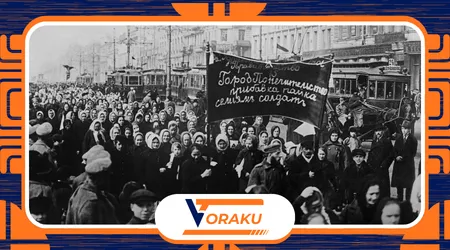
| The Russian Revolution | Lenin’s strategic brilliance in October 1917. | The Petrograd bread riots led by women that actually broke the Tsarist spine. |
| The Discovery of DNA | Watson and Crick’s double helix model. | Rosalind Franklin’s X-ray diffraction images (Photo 51). |
| The Abolition of Slavery | Political maneuvers by figures like Wilberforce or Lincoln. | Constant, small-scale sabotage and uprisings by the enslaved themselves. |
When we look at this table, we see a pattern of “intellectual gentrification.”
The high-level concept is attributed to the person with the most social capital, while the foundational work—the data, the sweat, the high-stakes risk—is absorbed into the background.
+ How Historical Silence Shapes Modern Narratives
How does this historical amnesia shape our behavior?
This isn’t just a matter of “correcting the record” for the sake of fairness. The way we view the lost voices behind famous historical moments directly influences how we view our own agency.
If we believe that only “special” people change the world, we become passive. We wait for a CEO or a political savior to fix the climate, or the economy, or the social fabric.
The reality is that history is a collaborative, messy, and often anonymous endeavor. There is a profound detail that often goes unnoticed: most of the rights we enjoy today—weekends, the vote, food safety standards—weren’t gifts from the top down.
They were the result of the “unimportant” making themselves heard.
Consider the modern workplace. We are currently obsessed with “Founders.” We treat tech moguls like deities.
But if you look at the evolution of the internet, it wasn’t just a few guys in a garage. It was a decades-long collaboration of public-sector researchers, librarians who understood data categorization, and hobbyists who spent their nights on BBS boards.
By focusing only on the billionaires, we ignore the collective intelligence that actually drives innovation.
+ The Social History Behind Handshakes
The silent architects of the Renaissance
Let’s step back further. We talk about the Renaissance as a blossoming of individual artistic talent—Da Vinci, Michelangelo, Raphael.
But the lost voices behind famous historical moments in art were the apprentices and the “color men.”
In a 15th-century Florentine studio, the master might paint the faces and hands, but the vast stretches of landscape, the intricate drapery, and the very chemistry of the pigments were handled by teenagers whose names we will never know. These studios were essentially small factories.
The “individual” genius was actually a creative director managing a team of highly skilled technicians.
The social shift here was the birth of the “Artist” as a celebrity. Before this, creators were viewed as craftsmen, akin to stonemasons.
When we shifted to the cult of the individual, we started devaluing the craft itself. We began to value the name on the canvas more than the work on the canvas.
I’ve often thought that our current obsession with “personal branding” is just the final, exhausted gasp of this Renaissance-era shift.
We are all trying to be the “icon” because we’ve been taught that the people in the background don’t exist in the eyes of history. It’s a hollow pursuit.
What changed after we started looking for these voices?
Recently, there has been a seismic shift in how we approach history. This isn’t just “revisionism”—a word often used as a slur by those who prefer the comfortable myths—but rather a more honest accounting.
- Archaeology of the Mundane: We now study trash heaps and skeletal remains to understand the lives of those who didn’t write books.
- Oral Histories: We are racing to record the stories of the last survivors of major 20th-century events, recognizing that a foot soldier’s perspective is as vital as a general’s.
- Digital Archives: The internet has allowed for the democratization of the record. Local historical societies can now digitize letters from “ordinary” citizens, providing a ground-level view of the lost voices behind famous historical moments.
A brilliant resource for exploring these expanded narratives is The National Archives, which holds the raw data of human existence—pension records, court transcripts, and telegrams—that bypass the polished memoirs of the elite.
Similarly, Smithsonian Magazine frequently highlights the scientific and cultural contributors who were previously written out of the frame.
Reclaiming the “Background” of our own lives
On my reading of this phenomenon, the most dangerous thing we can do is continue to buy into the “Main Character” myth.
When we ignore the lost voices behind famous historical moments, we fail to recognize the power of our own communities.
Think about the most significant changes in your own life. Was it a single, dramatic speech by a politician?
Or was it a series of small, supportive actions by friends, mentors, and coworkers? Most of us live in the “background” of history, but that is precisely where the most important work is done.
The honest truth is that the icons need us more than we need them. A leader without a base is just a person shouting in a room.
A scientist without a lab full of assistants is just someone with a theory they can’t prove. The lost voices behind famous historical moments are the actual engine of the human story.
As we move further into a century defined by massive, decentralized challenges like AI and global shifts in labor, we would do well to remember the “navvies” of the 1840s or the “human computers” of the 1960s.
Their invisibility was a choice made by historians, not a reflection of their actual impact. We should probably start looking at the background more often; it’s where the truth usually hides.
Editorial FAQ: Understanding the “Lost Voices”
Is “lost voices” just another way of saying “marginalized groups”?
Not exclusively, though there is significant overlap. While women, people of color, and the poor are the most frequently erased, “lost voices” also includes technical experts, middle-managers of revolutions, and anyone whose contribution didn’t fit the simplified “hero” narrative of the time.
Why is it important to learn about people who didn’t “win”?
Because the “winners” only tell us how they want to be remembered. The people who struggled, the people who provided the labor, and even the people who lost their battles provide the full picture of the social pressures and realities of an era. It makes history a tool for understanding, not just a list of achievements.
Does this mean the “Great Men” of history weren’t actually important?
Not at all. Figures like Churchill, Gandhi, or Marie Curie were undeniably pivotal. However, their importance is often magnified by removing the context of the thousands of people who supported, informed, and executed their visions. We aren’t trying to tear down the statues; we’re just trying to look at the people who built the pedestal.
How can I find these narratives if they aren’t in the main textbooks?
Look for “social history” or “micro-history” books. Instead of reading a biography of a King, read a book about the life of a typical baker in the 17th century. Look for primary sources—diaries, letters, and local records—where the unfiltered voice of the “average” person still resonates.
Will AI make it easier or harder to find these lost voices?
It’s a double-edged sword. AI can scan millions of documents to find patterns and names that humans might miss. However, if the data used to train the AI is already biased toward “famous” people, it might just reinforce the same old myths. It requires a conscious effort by human researchers to direct technology toward the “footnotes” of history.
