
The Overlooked Role of Translators in History
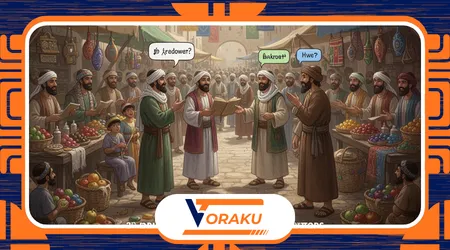
Picture this: In the flickering candlelight of a 16th-century Spanish convent, Diego de Landa hunches over a makeshift desk, his ears tuned to the halting words of an aging Mayan priest.
The air thick with incense and tension, Landa scribbles furiously, trying to pin down ancient glyphs into Spanish script amid the chaos of conquest.
But in that rush, meanings twist subtly under his hand—biases creeping in like shadows, forever skewing the stories that would shape our understanding of lost worlds.
There’s something profoundly human about that moment in the Yucatan, back in the 1560s.
Translators have hovered at the edges of history’s biggest turns, their quiet labor bending empires and ideas without ever stepping into the light.
Over years spent sifting through dusty archives and tracing social undercurrents, I’ve come to see how these figures didn’t merely pass along words—they reshaped them, often with consequences that still linger in our fractured dialogues today.
Keep reading the article and learn more!
Summary of Article Topics
- Why Do Translators Fade into Historical Backgrounds?: Explores societal biases and historical examples like Renaissance translators.
- How Have Translators Shaped Cultural Exchanges Without Recognition?: Discusses Ottoman dragomans, Nuremberg Trials, and modern parallels.
- What Forces Have Marginalized Translators’ Contributions Over Time?: Analyzes power dynamics in colonial and revolutionary contexts.
- Can We See Translators as Unsung Architects of Social Change?: Includes a comparative table and examples from Japan and feminism.
- How Does Recognizing Translators Alter Our View of History?: Connects to contemporary issues and concludes reflectively.
- Frequently Asked Questions: 6 natural questions with direct answers.
Why Do Translators Fade into Historical Backgrounds?
We chase the bold strokes in history—the conquerors, the visionaries—yet translators slip through like ghosts.
It’s a bias baked deep into how we tell stories, favoring the originators while dismissing the bridges as mere echoes.
But dig a little, and you realize translators aren’t replicating; they’re forging something new, often under duress.
The Renaissance offers a stark case. As Arabic wisdom on stars and surgeries seeped into Europe through Toledo’s bustling translation houses, men like Gerard of Cremona wrestled texts from one tongue to another, fueling a scientific surge.
Gerard gets a nod at best, while the glory clings to the ancient authors or the European minds who built on them.
It’s almost deliberate, this erasure, rooted in a discomfort with borrowed brilliance.
And here’s a nagging detail that histories gloss over: translators often hailed from the fringes—enslaved scholars in Rome pouring Greek philosophy into Latin, their intellects fueling an empire that owned them.
That power imbalance? It echoes in how we undervalue their craft, treating it as mechanical rather than masterful.
Now pivot to the Cold War’s tense huddles at the UN, where interpreters juggled phrases that could tip the world toward peace or peril.
Khrushchev’s infamous line about “burying” the West?
A translational slip turned economic boast into grave threat, stoking fears that shaped policies for decades.
++ Why Certain Historical Mysteries Remain Unsolved
In boardrooms or border crossings today, that same precarious dance continues, translators holding the fragile line between clarity and catastrophe.
++ How Oral Traditions Preserve Alternative Histories
How Have Translators Shaped Cultural Exchanges Without Recognition?
The overlooked role of translators in history goes beyond being ignored—it’s about the quiet alchemy they perform, sifting cultures through sieves of their own making.
Ottoman dragomans come to mind, those multilingual diplomats weaving between sultans and foreign ambassadors.
Take Alexander Mavrocordato in the 1600s: a Greek navigating treacherous talks, his selective phrasings sometimes easing alliances, other times sowing discord to suit hidden agendas.
He climbed to power on words alone, yet chronicles reduce him to a conduit, missing how he steered the empire’s fate.
Then there’s the raw weight of Nuremberg, where interpreters like Siegfried Ramler channeled atrocities from German to Allied ears, their voices cracking under the burden.
That innovation in simultaneous translation didn’t just speed justice; it exposed the horrors in real time, scarring the translators themselves.
But in retellings, they’re footnotes to the judges and defendants.
In my quieter reflections, translators strike me as eternal outsiders, straddling worlds without fully claiming either.
That in-betweenness breeds suspicion—label them traitors for a misplaced word, as happened with bilingual operatives in the American Revolution, decoding enemy missives that swung battles.
Their shadows loom large, yet invisible.
++ The Untold Story of Failed Social Experiments
Link that to our digital sprawl: algorithms mangling posts across languages, a benign tweet igniting outrage elsewhere.
It mirrors blunders like the 1870 Ems Dispatch, tweaked in translation to spark the Franco-Prussian War—a reminder that words, mishandled, can unravel societies.
What Forces Have Marginalized Translators’ Contributions Over Time?
At its core, it’s about who controls the tale. Those in charge hoard the narrative, wary of anyone who might rewrite it mid-stream.
Colonial Africa brims with examples: European overlords leaning on local interpreters to impose edicts, only for those mediators to whisper alterations, shielding traditions from erasure.
Histories paint them as dutiful, but scratch the surface, and you find subtle acts of defiance, reshaping colonial grip from within.
A more unflinching look reveals translators as sparks in uprisings.
In Haiti, enslaved linguists ferried French revolutionary ideals into Creole, arming the revolt that birthed a nation.
Toussaint Louverture’s aides turned pamphlets into rallying cries, yet their names fade against the leader’s legend.
This threads into immigrant lives now, where kids bridge languages for their families in sterile offices or courtrooms, carrying adult weights that mold their paths.
It’s a echo of old hierarchies, the vulnerable bearing the load of connection.
Zoom out, and translators emerge as quiet levelers of knowledge.
Luther’s Bible in everyday German shattered the Church’s Latin stronghold, handing power to the masses and fanning Protestant flames.
That shift wasn’t just religious; it democratized thought, upending social orders.
Can We See Translators as Unsung Architects of Social Change?
Without doubt. Envision a samurai in Meiji-era Japan, poring over Dutch-rendered Western philosophies that dismantled feudal chains, propelling a nation into modernity.
Those translations weren’t passive; they ignited transformation.
Or Constance Garnett, channeling Russian giants like Tolstoy into English amid Edwardian constraints, her nuances subtly elevating women’s plights in those tales.
It’s tempting to romanticize, but really, she nudged literary currents toward equity.
Questioning the standard scripts, I find ample cause to elevate these figures—they show ideas as migrants, evolving en route.
A quick side-by-side:
| Era | Key Translator/Role | Historical Impact | Modern Echo |
|---|---|---|---|
| Ancient | Rosetta Stone scribes | Unlocked Egypt’s secrets, bridging millennia | AI unraveling forgotten scripts |
| Medieval | Ibn Sina’s interpreters | Funneled Islamic insights westward, seeding science | Cross-border medical breakthroughs |
| Modern | UN voices | Wove postwar reckonings and pacts | Apps smoothing global summits |
| Contemporary | Asylum linguists | Tip scales in human rights pleas | Swaying policies on migration |
This snapshot highlights the evolution: from etched stone to seamless code, yet always pivotal.
The overlooked role of translators in history lingers in subtitlers who globalize K-dramas, adapting wit across cultures to knit unlikely bonds.
How Does Recognizing Translators Alter Our View of History?
It strips away the illusions, revealing history as a tangled conversation, not a solo performance.
Recall Sacagawea on the Lewis and Clark trek, her translations forging paths through Native lands—less a sidekick, more a strategist whose words averted clashes.
Romanticize her, and you miss the agency; credit her, and exploration feels shared, messy.
In our divided era, translators in newsrooms or protests amplify distant voices, like those Arab Spring dispatches that crossed oceans to stir solidarity.
Why skimp on multilingual skills in schools or stories? It ties back to lingering empires of one language dominating.
Sifting these layers, translators feel like threads in a vast web—resilient, connecting amid pulls and tears.
Foreground them, and the past softens: less triumph, more tentative exchange, urging us to listen harder now.
++ Academics spotlight role of translation in spreading revolutionary ideas
Frequently Asked Questions
Who were some key translators that influenced major historical events?
Jerome’s 4th-century Latin Bible locked in Christian teachings for ages. La Malinche, aiding Cortés, wove conquest with complex loyalties.
Why don’t history books talk more about translators?
They were often cast as helpers, not shapers. Their ephemeral work leaves originators stealing the show.
How do translators affect modern society in similar ways?
In talks or tech, they avert disasters. AI in trade or interpreters in courts keep fairness afloat.
Can mistranslations really change history?
Absolutely—biblical “virgin” versus “young woman” molded faiths. Diplomatic slips have brewed wars.
What’s one overlooked story of a translator’s impact?
Kumarajiva, the 5th-century monk in China, whose sutra translations fused Indian and Chinese wisdoms, reshaping Eastern thought.
How can we better appreciate translators today?
Name them in credits, push for language learning—build more spans across divides.
++ Historical role of translation studied in new book ‘Translation’s Forgotten History’
