
The Untold Lives of Ordinary People in History
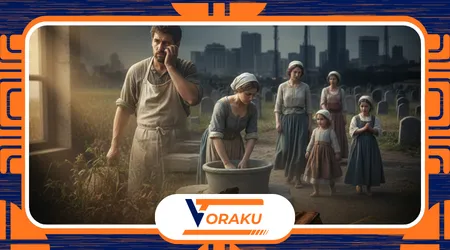
The story of ordinary people in history often begins not with a crown or a declaration of war, but with something as fleeting as a grocery list or a frantic complaint scrawled on a clay tablet.
In the sweltering summer of 1788, a baker in a small village outside Paris wasn’t contemplating the philosophical merits of the Enlightenment.
He was staring at a pile of blighted wheat, calculating exactly how many days it would take before his neighbors started throwing stones at his windows.
He wasn’t a “revolutionary” yet; he was just a man with a flour-dusted apron and a rising sense of dread.
History books have an irritating habit of zooming out until the individual disappears into a grey blur called “the masses.”
We discuss the Roman Empire as if it were a monolith of marble and polished legionnaires, conveniently forgetting the laundress who spent her days scrubbing urine into tunics just to get the stains out.
This obsession with the “Great Man” theory—the comforting idea that a few charismatic individuals steer the ship of destiny—is a fiction we tell ourselves to feel like the world is under control.
But the truth is far more chaotic, and frankly, far more human.
Why do we keep falling for the “Great Man” trap?
There is a psychological safety in attributing historical shifts to the whims of kings and generals.
If Napoleon alone caused the Napoleonic Wars, then we don’t have to reckon with the millions of individual choices, the tiny local resentments, and the localized economic collapses that made his rise inevitable.
However, a more honest reading suggests that leaders are often just the foam on top of a very large, very restless wave.
What rarely is discussed—and what I find particularly telling—is that our archives are inherently biased toward the literate and the wealthy.
For centuries, being an “ordinary” person meant being invisible to the record by design. If you couldn’t afford a monument or didn’t have the luxury of a memoir, your existence was distilled into a single line in a tax ledger.
This silence has created a distorted mirror. We see the past as a series of grand speeches, when in reality, it was a cacophony of whispers in taverns and marketplaces.
+ The Psychological Blueprint of Napoleon’s Rise to Power
What can a 4,000-year-old complaint teach us?

There is a detail that often passes unnoticed in the study of Ancient Mesopotamia: the “Ea-nasir” tablet. It’s essentially a copper merchant’s customer service complaint from around 1750 BCE.
A man named Nanni was absolutely furious that he was delivered sub-standard copper ore. When we read his indignant words today, the distance of four millennia evaporates instantly.
Nanni isn’t a “historical figure”; he’s a guy who feels ripped off.
This continuity of experience is the real engine of history. Whether it’s a merchant in Ur or a gig worker today navigating a broken algorithm, the emotional architecture remains the same.
When we look at ordinary people in history, we start to see that the “big” events—the wars and treaties—are actually just the delayed reactions to millions of these small, personal frictions.
The pattern repeats with a sort of poetic inevitability. The Black Death didn’t just kill; it fundamentally rebalanced the power between the peasant and the lord.
Because labor became scarce, the “ordinary” farmhand suddenly had leverage for the first time in his life.
He could walk away. The feudal system didn’t collapse because of a royal decree; it crumbled because millions of nameless workers realized their hands were more valuable than the lord’s title.
+ The Forgotten Civilizations That Vanished Without Records
What changed when the “nobodies” started speaking up?
The transition from a world of silent subjects to one of vocal citizens was a slow, grinding process fueled by the democratization of information.
The printing press is usually credited with the Reformation, but the real magic was what happened in the margins.
It was the scandalous pamphlets and the shared songs that allowed a cobbler in London to realize that a weaver in Lyon was angry about the exact same thing.
| Historical Shift | The “Great” Narrative | The “Ordinary” Reality |
| Industrial Revolution | James Watt invents the steam engine. | Rural families forced into slums, reinventing the concept of “home.” |
| The Crusades | Kings fight for the Holy Land. | Second sons and landless peasants seeking a life better than starvation. |
| American Frontier | Manifest Destiny and political expansion. | Women in sod houses struggling to keep children alive through brutal winters. |
There is something deeply moving about the resilience found in these hidden lives. Think of a young woman working in a textile mill in Lowell, Massachusetts, in the 1830s.
To the factory owner, she was a unit of production. To the historian of the era, she was part of an economic trend.
But in her letters home, she talks about the smell of the air and the books she’s reading by candlelight. In my analysis, her quiet rebellion of self-education is as significant as any battle fought on a field.
How do these invisible lives still influence us?
When we look at modern culture, we are seeing the direct descendants of folk traditions. Much of what we consider “high culture” today didn’t trickle down from the palace; it bubbled up from the gutter.
Jazz, blues, street food—these are the legacies of ordinary people in history who found ways to express identity under the radar of the elite.
There’s a persistent myth that the past was a time of rigid tradition and slow change. But dig into the lives of the working class in the 19th century and you find a world of constant, frantic reinvention.
They were the original “disruptors,” moving across oceans with nothing but a trunk, creating new languages and hybrid cultures.
Our current globalized reality isn’t a product of some modern boardroom; it’s the culmination of centuries of “ordinary” migration and survival.
Why should we bother looking for the “nobodies”?
There are good reasons to question any curriculum that prioritizes dates and names over lived experience.
A history that ignores the common person is a history that lacks empathy. It becomes a game of chess played with wooden pieces, rather than a story of flesh and blood.
When we focus on the struggle of a single mother in the Victorian era or a sailor on a 17th-century merchant vessel, the past becomes a mirror rather than a museum.
I’ve often felt that the most profound historical site isn’t a castle, but an old graveyard where the headstones have been worn smooth by the rain.
Those nameless markers represent the real builders of our world. They are the ones who tilled the fields and survived the plagues so that we could be here. To ignore them is a form of cultural amnesia.
The reading of history that I find most compelling is one that recognizes the “agency of the small.”
It is the realization that your daily choices—what you buy, how you treat a stranger—are the raw materials of the future.
We are currently the ordinary people in history that scholars will be trying to decode in the centuries to come.
They won’t just look at our leaders; they’ll look at our discarded digital footprints and our personal struggles to see who we really were.
The “Social Turn”: What actually shifted?
In the mid-20th century, a group of historians began to pivot away from kings and toward “history from below.” This wasn’t just an academic shift; it changed how we see ourselves.
- Recognition of Domestic Labor: We finally began to value the “unpaid” work of women as a primary economic driver rather than a background detail.
- Archaeology of the Mundane: Digging up trash heaps (middens) became more important than finding gold crowns for understanding reality.
- The Power of Oral History: Recording the memories of the marginalized saved entire cultures from being erased by the “official” record.
FAQ: The People Behind the Pages
Why is it so hard to find info about common people?
Because for most of history, paper was expensive and literacy was a tool of the elite. Common people left “unintentional” records: court transcripts, tax rolls, and physical artifacts. We have to be detectives to find the truth between the lines.
Did ordinary people even know “Big History” was happening?
Often, they didn’t see it that way. A farmer in the 14th century might know there was a war, but he wouldn’t call it “The Hundred Years’ War.” He would call it “the time the soldiers came and burned my barn.” Historical periods are usually named long after the people in them are gone.
Is social history less accurate than political history?
Not at all. While a treaty gives you a clear date, social history gives you the “why.” Political history tells you the laws that were passed; social history tells you if anyone actually bothered to follow them.
How can I find out about my own “ordinary” ancestors?
Genealogy has moved beyond just names. By looking at land records, local newspapers, and military pension files, you can piece together the daily struggles and small triumphs that shaped your own lineage.
Is it possible that we are over-romanticizing the past?
There is a danger in that. The lives of ordinary people in history were often brutal and filled with toil. The goal isn’t to make the past look “cute,” but to acknowledge that their suffering and their joy were as real as our own.
