
The Untold Story of Women Rulers in Medieval Europe
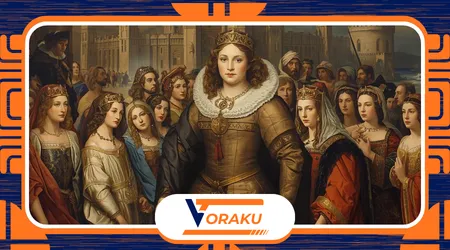
The Untold Story of Women Rulers in Medieval Europe begins, strangely enough, not with a coronation but with a woman standing in a muddy London street in the spring of 1141, surrounded by barons who had just sworn to follow her—and who were already looking for the exit.
Empress Matilda had come to claim what her father swore she would inherit: the English crown.
The chroniclers called the next years the Anarchy, a polite way of saying everything fell apart.
What lingers in my mind, though, is the moment she tried to enter the city in state and the citizens shut the gates, shouting that they would accept no queen. She never wore the crown.
Yet her claim held long enough for her son to take the throne without a fight.
That single refusal to vanish quietly still feels like a small, stubborn crack in the story we usually tell ourselves about medieval power.
Continue reading the text!
Summary of the article’s topics:
- The Claim in Westminster: Opening Scene from 1141
- How Did Women Even Rise to Power in a Man’s World?
- Empress Matilda’s Stand: The Anarchy That Redefined Rule
- Eleanor of Aquitaine: Duchess, Queen, and Rebel Mother
- Comparative Table: Women Who Held the Reins of Power
- What Changed After These Rulers? The Silent Shifts
- Why the Erasure Persists – And the Patterns That Still Echo
- Frequently Asked Questions
How Did Women Even Rise to Power in a Man’s World?
I’ve spent years turning over these women’s charters and letters, the ones that survived fire and damp and deliberate neglect.
What keeps striking me is how unheroic so much of it feels. They weren’t riding white horses through battle lines.
They were counting rents, swearing in sheriffs, writing to bishops who owed them favors.
The Untold Story of Women Rulers in Medieval Europe is less about glorious exception and more about the system quietly admitting it could not always afford to be consistent.
Necessity, mostly, wearing its most pragmatic face.
When every male heir drowned, died of fever, or fell at the wrong battle, the oaths already sworn to a daughter became the only rope left to pull the realm out of the ditch.
Primogeniture looked rigid on parchment, but in practice it bent like green wood under strain.
Barons who grumbled about female rule usually grumbled louder about losing their lands to civil war or a foreign claimant.
So they knelt, sometimes with gritted teeth, sometimes because the alternative meant empty coffers and burned villages.
++ How Imperial China Managed Power Without a Standing Army
Empress Matilda’s Stand: The Anarchy That Redefined Rule
Empress Matilda’s story still unsettles me. Her father had made every lord in England and Normandy swear to accept her back in 1127. When he died in 1135, her cousin Stephen moved faster than anyone expected.
The barons broke their oaths almost overnight.
++ Shadows Beneath the Surface: The Secret Intelligence Networks of the Cold War Era
Matilda spent the next nineteen years clawing back legitimacy inch by inch—through sieges, papal legates, captured castles, and the slow realization among enough magnates that Stephen could not hold the kingdom together.
++ Why the Byzantine Empire Survived Longer Than Rome Itself
In 1141 she rode into Winchester as “Lady of the English,” the closest she came to queenship.
Then the Londoners rioted, the bishop of Winchester changed sides, and she fled disguised as a commoner. She never sat on the throne.
But her persistence meant Henry II inherited without contest in 1154. There’s something almost cruelly ironic in that: the woman who could not be crowned made the dynasty possible.
Eleanor of Aquitaine: Duchess, Queen, and Rebel Mother
Eleanor of Aquitaine feels different—sharper, more theatrical, yet no less calculated.
She was fifteen when she became Duchess of Aquitaine in her own right, one of the richest inheritances in western Europe.
She married Louis VII of France, went on crusade with him, grew tired of his piety and indecision, secured an annulment on grounds of consanguinity, and within months married the younger son of the King of England.
That younger son became Henry II.
She brought him Aquitaine, Poitou, and a court culture that outshone Paris.
When Henry was away, she governed. When their sons rebelled against him in 1173, she backed the boys—perhaps out of love, perhaps out of long memory of being sidelined.
Henry imprisoned her for sixteen years. She emerged at sixty-two to act as regent for Richard while he crusaded, then for John after Richard died.
Chroniclers called her a Jezebel.
Reading her letters, I see someone who understood that power is rarely seized in a single dramatic gesture; it is worn, year after year, like old armor that has learned to bend without breaking.
Comparative Table: Women Who Held the Reins of Power
The Untold Story of Women Rulers in Medieval Europe becomes clearer when we line them up and look without sentimentality.
Here are four whose reigns left marks still visible in charters and chronicles:
| Ruler | Realm | Years Active | Key Achievement | Major Challenge |
|---|---|---|---|---|
| Empress Matilda | England (disputed) | 1135–1153 | Secured Plantagenet succession | Never crowned; driven from London |
| Eleanor of Aquitaine | Aquitaine / England | 1137–1204 | Regent for two kings; cultural force | Long imprisonment; family civil war |
| Melisende of Jerusalem | Kingdom of Jerusalem | 1131–1161 | Held fragile crusader state together | Power struggles with husband and son |
| Margaret I of Denmark | Scandinavia (Kalmar) | 1387–1412 | Engineered the Kalmar Union | Balancing noble factions across kingdoms |
These were not anomalies so much as pressure points where the feudal machine revealed its own contradictions.
A queen could raise scutage, hear pleas, grant markets, and negotiate truces with exactly the same tools as a king.
The Church might frown on female rule in theory, but when the alternative was a realm sliding into factional chaos, many bishops found reasons to bless the arrangement.
What Changed After These Rulers? The Silent Shifts
What changed after these rulers? The shifts were rarely dramatic, rarely written into law.
Yet they accumulated. English lawyers began to treat claims through the female line as legitimate transmission rather than awkward exception.
Regency became an accepted office rather than scandal.
Romances and chronicles kept their names alive, even when official histories tried to shrink them back into footnotes.
The notion that sovereignty could legitimately wear a woman’s face entered the political bloodstream—faintly, contested, but impossible to fully erase.
Why the Erasure Persists – And the Patterns That Still Echo
There’s something unsettling in how thoroughly these stories were later minimized. Medieval chroniclers, almost all male and almost all clerical, preferred neat dynastic lines.
Later historians, especially in the nineteenth century, projected their own certainties backward and called anything else aberration.
The honest reading, I think, is simpler and more uncomfortable: patriarchy was never as watertight as it wished to appear.
It had to negotiate, compromise, sometimes retreat. These women did not dismantle the system.
They worked its seams until the fabric stretched.
The letters remain—petitions, grants, complaints, occasional sharp reprimands. They show women doing the daily work of rule: balancing budgets, punishing rebels, rewarding loyalty.
When we read them closely, the pattern is stubborn.
Power was never abstract. It lived in childbirth that produced heirs or failed to, in widowhood that freed a woman to act, in the brutal arithmetic of who outlived whom.
Frequently Asked Questions
Was Empress Matilda ever officially crowned?
No. She was acclaimed Lady of the English in 1141 and briefly controlled parts of the kingdom, but popular resistance and shifting alliances prevented a coronation.
Her victory was her son’s uncontested accession.
Did Eleanor of Aquitaine lead troops in battle?
Not in the conventional sense.
She accompanied Louis VII on the Second Crusade and later managed armies and logistics for her sons, but the sources emphasize administration and diplomacy over personal combat.
How did they pay for their rule?
Through control of duchies, counties, and royal demesne lands that generated independent income—tolls, judicial profits, feudal incidents.
Many had wealth kings could not simply confiscate without risking rebellion.
Why are so few public monuments dedicated to them?
Until recently, most historians focused on kings and decisive battles.
The slow recovery of charters, pipe rolls, and letters has only lately revealed the extent of their governance.
Public memory trails the evidence.
Could a woman have been crowned queen regnant in twelfth-century England?
In theory, yes—the barons swore to Matilda. In practice, the combination of baronial unease, church ambivalence, and urban resistance made it impossible.
The machinery existed; the consensus did not.
What do their lives still force us to confront?
That power is opportunistic before it is ideological. They claimed what circumstance offered and held it through tenacity and timing.
The system bent for them—not willingly, but because it had to. That bending still echoes.
These women never set out to rewrite gender.
They simply refused to let the absence of a Y chromosome erase their line.
They governed, negotiated, endured. Their paper trails are still there if we bother to read them.
And when we do, the tidy story of inevitable male rule starts to fray at the edges.
That fraying feels worth noticing.
For a full list and fresh perspectives on these remarkable figures, see the recent feature 25 Medieval Women Who Ruled.
For deeper scholarly context on how queenship transformed our understanding of medieval monarchy, explore this overview of medieval queenship research.
