
Why Bread Became the Foundation of Civilization
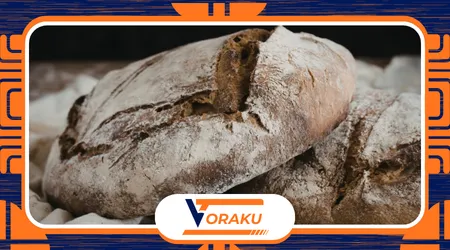
I remember standing in a small, dusty bakery in a back alley of Cairo a few years ago. It wasn’t a tourist spot; it was a lifeline.
The air was thick with the scent of charred flour and the rhythmic thlap-thlap of dough hitting stone.
Men and women stood in a line that seemed to stretch back through the centuries, clutching coins for their daily aish baladi.
In Arabic, the word for bread, aish, literally means “life.” It isn’t just food; it’s a social contract.
This sensory overload made me realize that the moment bread became the foundation of civilization, we didn’t just change our diet—we essentially traded our nomadic freedom for the comfort of predictability.
For nearly 95% of human history, we were wanderers. We followed the herds; we knew exactly which week a specific berry would ripen in a specific valley.
But about 10,000 years ago, in the Fertile Crescent, something shifted. We stopped moving.
It’s a mistake to think we stopped because we grew lazy or “evolved” into a better state. We stopped because we became obsessed with a specific type of grass.
Did we domesticate wheat, or did wheat domesticate us?
The traditional narrative—the one we’re fed in primary school—tells us that humans, in a stroke of genius, invented agriculture to escape the hardships of foraging.
But if you look at the skeletal remains of early farmers compared to hunter-gatherers, a much grimmer story emerges.
These early farmers were shorter, more prone to disease, and their bones show the repetitive stress of grinding grain for hours.
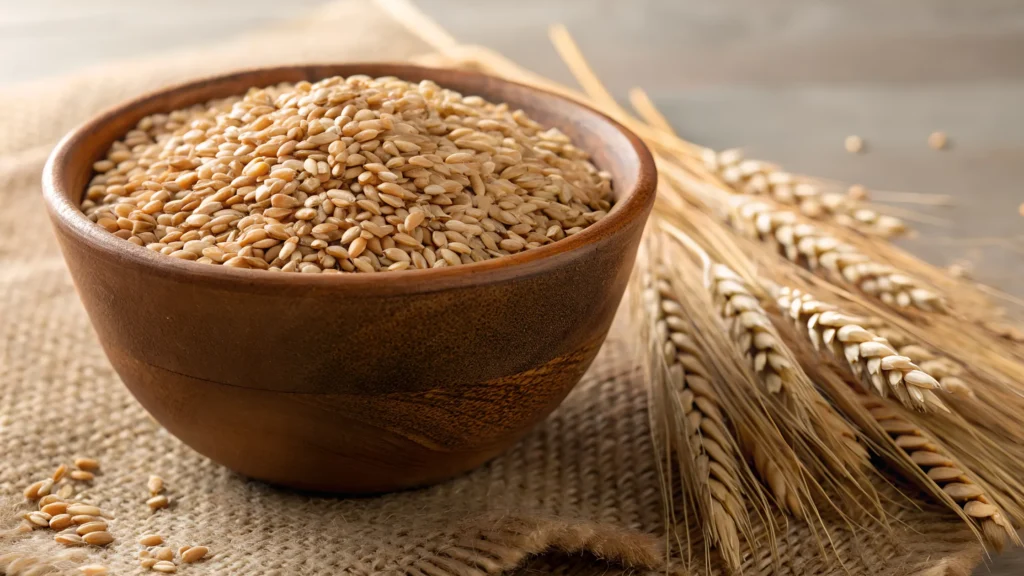
The transition wasn’t an immediate upgrade. It was a caloric trap. Wheat, barley, and rye offered something meat couldn’t: storability.
You can’t put a gazelle in a warehouse for two years, but you can store a ton of grain. This surplus is the silent, heavy engine of every empire.
What is rarely discussed is that the surplus grain didn’t just feed people; it created the need for a class of people who didn’t farm—the priests, the soldiers, and the tax collectors.
When bread became the foundation of civilization, it necessitated the invention of writing.
We didn’t start writing to compose poetry or record our dreams; we started writing to keep track of who owed how many bushels of grain to the central temple.
Cuneiform, the world’s first script, is largely a collection of grocery receipts. It’s sobering to think that the pinnacle of human expression—literature—began as a ledger for sourdough ingredients.
+ The Hidden Psychology Behind Obedience to Authority
What changed after the “Bread Revolution”?
| Feature | Pre-Bread (Foraging) | Post-Bread (Agrarian) |
| Social Structure | Egalitarian, small bands | Hierarchical, mass societies |
| Property | Fluid, communal | Fixed, fiercely defended |
| Labor | Varied, intermittent | Repetitive, sunrise-to-sunset |
| Diet | Diverse, high protein | Narrow, high carbohydrate |
| Concept of Time | Seasonal/Cyclical | Linear/Planning for harvest |
Why did we choose a food that requires so much work?
Think about the sheer, exhausting process of making a loaf of bread from scratch. You have to clear land, plant seeds, pray for rain, harvest, thresh, winnow, grind, knead, and finally, bake.
Compared to picking an apple or killing a rabbit, it’s an absurd amount of labor for a few calories.
There is a fascinating, albeit controversial, theory that we didn’t start farming for bread at all, but for beer. The fermentation process made water safe to drink and provided a caloric “buzz.”
Whether it was the loaf or the pint, the result was the same: we became tethered to the soil. This “tethering” is the true birth of the state.
Once a population is tied to a field of wheat, they are easy to count, easy to tax, and easy to govern.
You can’t run away from an invading army if your entire year’s food supply is sitting in a heavy ceramic jar. It’s the original form of collateral.
There’s a historical detail that often goes unnoticed: the “sacredness” of bread in almost every religion.
From the Egyptian offerings to the Christian Eucharist, bread is elevated to the divine. This isn’t just spiritual poeticism; it’s a cultural survival mechanism.
By making bread holy, society ensured that the grueling, back-breaking labor of producing it was viewed as a moral duty rather than a choice. We sanctified our own toil.
+ The Unexpected History of Everyday Table Manners
The Roman bread basket and the politics of hunger
Imagine a citizen in Rome during the second century. He doesn’t farm; he’s a tanner or a carpenter living in a cramped apartment.
His peace of mind depends entirely on the grain ships arriving from Egypt. The Roman elite understood this perfectly.
The famous phrase panem et circenses (bread and circuses) wasn’t just a cynical observation; it was a sophisticated tool of social control.
The “Annona”—the grain dole—fed hundreds of thousands of Romans. This created a peculiar psychological shift.
For the first time, the link between personal labor and food was severed for the urban masses. Food became a political right.
When the grain ships were delayed by storms, the city didn’t just go hungry; it went into a violent, scorched-earth riot.
This is where we see that when bread became the foundation of civilization, it also became its greatest vulnerability.
In my analysis, we haven’t moved as far from this Roman model as we’d like to think. We don’t have a grain dole, but we have global supply chains.
When the price of wheat spikes today—whether due to a war in the Black Sea or a drought in Kansas—governments tremble.
The Arab Spring, often cited as a purely democratic awakening, was sparked in many regions by the skyrocketing price of flour.
A hungry man isn’t looking for a ballot; he’s looking for a hearth.
The Industrial Revolution and the whitening of the loaf
As we moved into the 19th century, bread underwent another radical transformation. It became industrial.
Think of an ordinary family navigating a profound social upheaval in 1850s London.
They moved from the countryside, where bread was dark, coarse, and made of stone-ground flour, to the city, where they encountered the “white loaf.”
White bread became an immediate status symbol. It suggested purity, refinement, and wealth.
However, the process of refining flour stripped away the nutrients, leading to widespread deficiencies like beriberi and pellagra.
To fix this, we started “enriching” flour. We broke the bread, then tried to glue it back together with synthetic vitamins.
It was a classic human solution: fix a problem created by our own progress with even more progress.
This was the moment bread stopped being a local craft and became a global commodity. The invention of the roller mill allowed for massive scale, but it also killed the “living” element of bread.
The germ was removed to extend shelf life, making the foundation of our civilization more durable but less nutritious.
We traded flavor and health for the ability to ship a bag of flour halfway across the world without it spoiling.
Why do we still obsess over sourdough and “ancient grains”?
When we look with more attention, the pattern repeats: whenever we feel disconnected from our roots, we return to the hearth.
The sourdough craze of the early 2020s wasn’t just a hobby; it was a collective psychological retreat.
In a world of digital ephemeralness, there is something profoundly grounding about a starter culture that requires daily feeding. It’s one of the few things in our lives that cannot be automated or hurried.
There’s a good reason to question the narrative that we have “outgrown” our dependence on grain.
We might eat less of it in the age of Keto and Paleo diets, but our entire global economy is still built on the calories provided by the “Big Three”: wheat, rice, and corn.
The fact that bread became the foundation of civilization means that our skeletons, our cities, and our laws are all shaped by the requirements of a grass.
We are, quite literally, the servants of the grain. We built cathedrals to ensure the harvests were blessed, and we built digital stock exchanges to trade the “futures” of those harvests.
The ghost in the machine
We often think of ourselves as masters of nature, but the history of bread suggests we are more like partners in a very long, very complex dance.
Every time you tear into a crusty baguette or fold a tortilla, you are participating in a ten-thousand-year-old ritual of stability.
The most honest reading of this phenomenon suggests that civilization is not a building or a constitution; it is the ability to guarantee a meal for tomorrow.
Bread provided that guarantee. It allowed us to stop worrying about where the next meal was coming from so we could start worrying about philosophy, art, and gravity.
But that security came at a price. We traded the nomadic freedom of the forest for the predictable, daily toil of the field.
FAQ
Was bread really the cause of permanent settlements?
It’s a “chicken and egg” scenario, but most evidence suggests that the desire to harvest wild grains led people to stay in one place longer. Once they started actively planting, there was no going back. You have to stay to protect your investment from thieves and animals.
Why is white bread considered “lesser” now when it used to be for the elite?
Status is always about scarcity. When white flour was hard to produce, only the rich had it. Now that industrial processing makes white flour cheap and ubiquitous, the “luxury” has shifted back to the labor-intensive, artisanal, whole-grain loaves of our ancestors.
Did bread contribute to the rise of slavery?
Sadly, yes. Large-scale grain production requires massive amounts of manual labor. Many early civilizations used enslaved populations to do the grueling work of tilling and harvesting, further cementing the link between grain and power hierarchies.
Can civilization exist without bread or grains?
Some cultures, like the Inuit or certain pastoralist tribes, have functioned without grain. However, they never developed the high-density urban populations that define “civilization” in the Western sense. Grain is the only food source that allows for the massive caloric surplus needed to feed a city.
Is the “gluten-free” movement a sign that bread’s reign is over?
Unlikely. While many are discovering sensitivities to modern, fast-fermented industrial wheat, the global demand for grain is higher than ever. We are more likely to change how we process wheat than to abandon it entirely.
The next time you see a simple loaf of bread, don’t just see a side dish. See it as the blueprint of your city, the reason you can read these words, and the invisible thread that holds the social fabric together.
