
Why Certain Foods Became Cultural Symbols
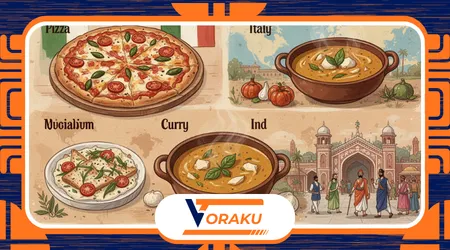
Picture this: It’s a sweltering summer evening in Naples around 1889, and Queen Margherita of Savoy, weary from the pomp of royal tours, craves something simple amid the chaos of unifying a fractured Italy.
A local pizzaiolo named Raffaele Esposito is summoned to the palace, where he crafts a pie topped with tomatoes, mozzarella, and basil—colors mirroring the new Italian flag.
She bites in, declares it divine, and just like that, pizza shifts from street grub for the poor to an emblem of national pride.
Why certain foods became cultural symbols often starts in moments like these, where chance encounters with power elevate the ordinary into something profound.
Continue reading the article!
Summary of Article Topics
- How Does Migration Turn Everyday Meals into Global Icons?: Explores sushi and tacos, analyzing economic and cultural adaptations from migration.
- Why Do Some Foods Evoke Comfort, While Others Signal Status?: Discusses tea and caviar, contrasting everyday rituals with luxury, with historical and social insights.
- Comparative Table: A historical comparison of key foods, their origins, transformations, and modern meanings, followed by a “What changed after this?” reflection.
- What Hidden Forces Keep These Symbols Alive Today?: Examines media, religion, and human stories, connecting past influences to present behaviors.
- Conclusion: Reflective wrap-up on food as mirrors of society.
- FAQ: 6 natural questions with direct answers on specific foods and broader themes.
How Does Migration Turn Everyday Meals into Global Icons?
Migration doesn’t just move people; it reshapes what we eat and why it matters, often in ways that feel both inevitable and surprising.
Consider sushi, which many now associate with Japanese precision and minimalism—a clean, almost meditative bite.
But rewind to the Edo period in the 1800s, when it was fast food for Tokyo’s working class—vinegared rice topped with raw fish, hawked from street carts amid the din of daily life.
It wasn’t until post-World War II, with Japanese emigrants scattering to places like California, that sushi evolved into something else.
In Los Angeles, chefs like Noritoshi Kanai introduced nori rolls to appeal to American palates wary of raw seafood, birthing the California roll with its avocado and crab stick—adaptations born of necessity, not nostalgia.
What strikes me as often misinterpreted is how economic forces propelled this shift. Japan’s post-war boom exported not just cars and electronics but a subtler cultural soft power, cuisine included.
Hollywood stars nibbling sushi in the 1980s turned it into a status symbol—healthy, exotic, a far cry from its humble origins.
Today, when I see sushi bars in Midwestern malls, it’s a reminder of globalization’s double edge: it democratizes flavors but often dilutes their stories, like watering down a fine broth.
A friend in Tokyo once lamented, over a shared meal, how Western adaptations strip away the seasonality central to true sushi, where fish choices reflect the ocean’s rhythms, not just convenience.
This pattern echoes with tacos in Mexico and the U.S. Tacos started as miners’ fare in 19th-century silver towns—corn tortillas wrapped around whatever scraps were handy, a makeshift armor against hunger.
But as Mexicans migrated north during the Bracero Program in the 1940s, tacos adapted to Tex-Mex influences, incorporating ground beef and hard shells in a bid for broader appeal.
By the 1970s, fast-food chains like Taco Bell commodified them, turning a regional staple into a billion-dollar industry. The irony?
While it spread Mexican culture, it also sparked debates over authenticity that feel endless.
In my view, this tension highlights how migration forces foods to negotiate identity—becoming symbols of resilience for communities while risking caricature by outsiders, a dance that’s as precarious as it is vital.
++ Why We Eat Three Meals a Day
Why Do Some Foods Evoke Comfort, While Others Signal Status?
Shifting gears a bit unevenly, let’s think about tea in Britain.
It’s not just a beverage; it’s a ritual of composure amid empire’s storms, a quiet anchor in turbulent seas.
Introduced in the 17th century via Portuguese royalty, tea exploded in popularity during the Industrial Revolution—factories churning out workers who needed quick caffeine hits, colonial trade from India and China making it cheap enough for the masses.
++ The Forgotten Origins of Public Holidays
But the real magic—or manipulation—happened in drawing rooms, where afternoon tea became a social equalizer.
Or so the narrative goes; there’s something unsettling here about how it masked class divides.
For the aristocracy, it was porcelain cups and scones; for the working class, strong brews in mugs during brief, bone-weary breaks.
Post-World War II rationing elevated it further, symbolizing stoic endurance—”keep calm and carry on” with a cuppa, as the posters urged.
I recall interviewing an elderly Londoner who survived the Blitz; for her, tea wasn’t mere comfort but a quiet act of defiance against chaos, a small rebellion in a chipped mug.
The hidden significance of what we eat Today, in a world of coffee chains, tea clings to its Britishness, even as global warming threatens Assam plantations.
It prompts us to ask: How long can a symbol endure when its sources shift underfoot?
Contrast that with caviar, long a marker of opulence that whispers exclusion.
Harvested from sturgeon in the Caspian Sea since ancient times, it gained mythic status in Tsarist Russia as a tsar’s delicacy, a glistening pearl of privilege.
European courts adopted it in the 19th century, but overfishing and Soviet controls turned it rare—and exorbitantly pricey.
What fascinates me, and what history often skims over, is the marketing pivot: by the 1980s, as farmed varieties emerged, brands like Petrossian positioned it as aspirational luxury, less about sustenance and more about flaunting in an unequal society.
Eating caviar isn’t about hunger; it’s about signaling wealth, a subtle flex amid growing divides.
When oligarchs flaunt it today, it echoes those historical power plays, reminding us that some foods divide as much as they unite—sharp as a knife’s edge.
Additional information
Why certain foods became cultural symbols ties back to these dualities—comfort versus status, unity versus exclusion.
A closer look reveals economic undercurrents: colonial exploitation for tea, environmental strain for caviar.
++ The Untold History of Common Household Objects
These aren’t static icons; they evolve with us, sometimes cracking under pressure.
| Food | Historical Origin | Key Transformation | Modern Symbolism |
|---|---|---|---|
| Pizza | Naples street food for the poor (18th century) | Royal endorsement in 1889; U.S. immigration wave | Italian unity; American innovation and inclusivity |
| Sushi | Edo-period fast food in Japan (19th century) | Post-WWII adaptation in the U.S. | Japanese elegance; global health trend |
| Tea | Introduced to Britain via colonies (17th century) | Industrial Revolution popularization | British resilience; everyday ritual |
| Tacos | Mexican miners’ wrap (19th century) | U.S. migration and commercialization | Mexican heritage; fusion cuisine debates |
| Caviar | Caspian Sea delicacy (ancient Persia/Russia) | 19th-century European adoption; modern farming | Luxury and exclusivity; environmental concerns |
This table underscores recurring themes: how scarcity, trade, and adaptation forge symbols, often at a hidden cost. What changed after these shifts?
Societies found ways to bond over shared tastes, but it came with baggage—cultural appropriation, ecological damage, quiet erasures.
For instance, pizza’s globalization boosted economies but homogenized local variations, leaving some flavors forgotten.
What Hidden Forces Keep These Symbols Alive Today?
Digging deeper, media and marketing play outsized roles, shaping narratives that stick like honey.
Hollywood films romanticized French croissants as Parisian chic, ignoring their Austrian roots from the 1830s—arriving in Paris via Viennese bakers, then refined into layers of buttery dough that flake like forgotten promises.
By the 20th century, as tourism boomed, they symbolized effortless elegance.
Yet, in my analysis, this glosses over the labor behind it: bakers rising at dawn, immigrants staffing patisseries in the shadows.
Today, when chains like Starbucks sell them worldwide, it’s a diluted echo, prompting questions about authenticity in a commodified world—where does the real story end and the sell begin?
Another layer: religion and taboo, those ancient guardians of the table.
Pork in Jewish and Muslim traditions isn’t just avoided; its absence defines community, a boundary etched in faith and survival.
Conversely, in China, pork symbolizes prosperity—think Lunar New Year feasts swelling with abundance.
These aren’t arbitrary whims; they stem from old strategies, like pigs competing for scarce resources in arid lands, decisions that echoed through generations.
When patterns repeat, as with modern vegan movements mirroring historical abstinences, it shows a stubborn continuity.
A reading more honest than most suggests these symbols persist because they anchor identity in turbulent times, like roots gripping soil during a storm.
Human stories bring this home, making the abstract tangible.
Imagine a young Vietnamese immigrant in 1970s New Orleans, recreating pho with local beef to soothe a gnawing homesickness—over decades, it morphs into a fusion staple, symbolizing adaptation amid loss.
Or picture a family in rural India, where mangoes aren’t just fruit but harbingers of summer festivals, tying generations through shared picking rituals that smell of earth and memory.
These vignettes humanize the sprawl, showing how foods become vessels for belonging, fragile yet enduring.
Reflecting on all this, I’ve come to see food symbols as mirrors of our aspirations and fears—cracked, perhaps, but revealing.
They evolve quietly, shaped by power dynamics we rarely acknowledge outright. Next time you grab a slice or sip tea, pause—there’s a world in that bite, whispering secrets.
Frequently Asked Questions
How did pizza really become Italy’s national dish?
It started with Queen Margherita’s approval in 1889, but immigration and post-unification needs for common ground turned it from regional fare into a unifying icon.
Why is sushi seen as sophisticated now, when it was once street food?
Post-war migrations to the West adapted it for new tastes, and marketing emphasized its health benefits, elevating it from quick bites to a symbol of refinement.
Does tea still hold the same meaning in Britain today?
Absolutely, though coffee culture challenges it; it remains a touchstone for calm and tradition, especially in times of stress.
What makes caviar a status symbol rather than everyday food?
Its historical rarity and association with royalty, plus modern scarcity from overfishing, keep it tied to wealth and exclusivity.
How do migrations affect food symbols over time?
They force adaptations that blend cultures, like tacos in the U.S., creating new meanings while preserving core identities.
Can environmental changes threaten these cultural foods?
Yes, climate shifts endanger tea plantations and sturgeon habitats, potentially reshaping what these symbols represent in the future.
