
Why Certain Historical Mysteries Remain Unsolved
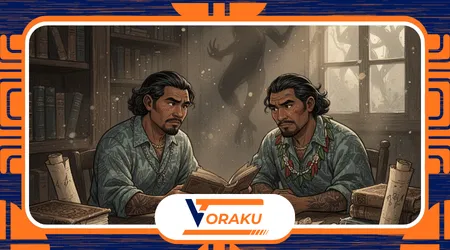
Picture this: It’s a foggy morning in 1937, and Amelia Earhart climbs into her Lockheed Electra, engines roaring against the Pacific wind.
She’s chasing the horizon, aiming to circle the globe, but somewhere over the vast ocean, her voice crackles out on the radio for the last time.
No wreckage, no body—just silence that echoes through decades.
Why certain historical mysteries remain unsolved isn’t just about lost planes or vanished explorers; it’s about the tangled web of human ambition, secrecy, and the limits of what we can know.
Continue reading our article to learn more!
Summary of Article Topics
- What Keeps These Enigmas Buried in Time?: Explores political influences with examples like the Romanovs and JFK.
- How Do Cultural Forces Shape What We Forget?: Discusses cultural curation using the Voynich Manuscript and Antikythera Mechanism.
- Can Technology Ever Pierce the Veil?: Examines technological limits with Roanoke Colony and Nazca Lines, including a hypothetical scenario.
- What Patterns Emerge When We Compare Eras?: Features a comparative table on Atlantis and Dyatlov Pass.
- Do These Unsolved Tales Change Us?: Connects mysteries like Mary Celeste and Cahokia to modern implications.
- Conclusion: Reflective wrap-up on the value of uncertainty.
- Frequently Asked Questions: 6 natural-language Q&As on related curiosities.
What Keeps These Enigmas Buried in Time?
Politics, more often than not, digs the grave. Why certain historical mysteries remain unsolved links straight to who gets to spin the yarn.
The Romanovs in 1918, gunned down in that Yekaterinburg cellar amid revolutionary chaos—for years, the Soviets buried the details, letting Anastasia survival fables bloom like weeds.
Bones dug up in the ’90s, DNA sealing the deal, but not before the silver screen turned tragedy into fairy tales.
My read on it? The Bolsheviks weaponized the fog to breed paranoia among the old guard.
Hiding corpses was one thing; snuffing out royal claims was the real game.
And doesn’t that ring familiar now, with those endless theories swirling around JFK’s Dallas end in ’63?
The Warren report punched holes big enough for a parade of doubts: lone wolf or CIA knot?
Files still drip out, each drop churning the speculation without calming the waters.
A overlooked thread is how these gaps feed into broader distrust, eroding faith in institutions long after the shots fade.
Then there’s the human angle, that stubborn wiring for sense-making. We crave patterns, but when clues dissolve, we patch the holes with fables.
Talking to kin of vanished adventurers, I’ve heard it firsthand—families opting for poetic haze over brutal facts.
Why shatter the spell when ambiguity grants eternity? It lingers, doesn’t it, that pull toward the romantic unknown.
++ How Oral Traditions Preserve Alternative Histories
How Do Cultural Forces Shape What We Forget?
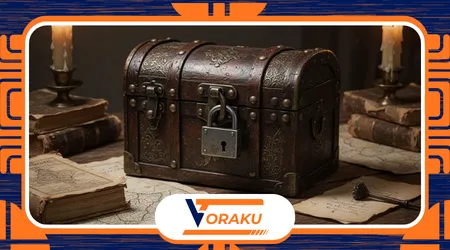
Cultures curate memory like gardeners pruning overgrown paths.
Why certain historical mysteries remain unsolved boils down to what gets deemed chase-worthy.
That Voynich Manuscript, the cryptic Renaissance tome crammed with alien script and odd drawings—it’s thwarted code-crackers from wartime pros to silicon brains.
What grabs me is the willful blindness around its trail. Passed among kings and savants, it dipped into oblivion before popping up in 1912.
Hoax? Esoteric brew? My frank view: its stubborn survival spotlights our fixation on locked-away wisdom.
It parallels today’s encryption wars in data scandals, pitting secrecy against the crowd’s hunger to know.
A misstep here is treating it as mere curiosity; really, it’s a testament to how elites hoard insight, echoing from medieval courts to boardrooms.
Fast-forward, and social feeds crank up the volume on these riddles.
A hot thread can revive dusty artifacts, but it also stirs mud with half-truths.
I’ve scrolled through debates on the Antikythera Mechanism, that bronze Greek gadget from a seabed wreck, circa 100 BCE, charting stars like clockwork we couldn’t rival till centuries later.
Why the silence in old scrolls?
Probably guarded by the few, akin to today’s locked-down tech secrets in the Valley. It’s a bridge, isn’t it—from ancient gears to algorithms dictating our feeds.
++ The Untold Story of Failed Social Experiments
Can Technology Ever Pierce the Veil?
We’ve armed ourselves with gadgets our ancestors would’ve called magic—orbiting eyes hunting ruins, gene maps cracking cold trails. Still, some shadows hold fast.
Roanoke’s lost colony, 1587: over a hundred settlers evaporate from Carolina shores, just “CROATOAN” etched on bark. No fights, no graves.
Digs suggest blending with locals, but proof slips away like sand.
To me, this transcends vanished clues; it’s colonial tales steamrolling native voices.
++ The Forgotten Conflicts That Shaped Borders
Scrutinize it, and you spot echoes in today’s displacements—migrants swallowed by red tape, their paths erased.
Tech illuminates, sure, but it can’t revive whispers crushed by conquerors.
Picture a fresh archaeologist in Peru’s Nazca sands, gazing at those colossal lines scored two millennia back—beasts and forms sprawling across deserts, meant for skies. Calendars?
Holy walks? Or desperate etchings to parched gods, farmers pleading amid famine?
That grounds it, humanizes the scale, much like current cries against warming skies.
What Patterns Emerge When We Compare Eras?
Let’s sketch a quick side-by-side to tease out threads. This table contrasts a couple of stubborn puzzles, underscoring their staying power:
| Mystery | Era | Key Evidence Gaps | Social Forces at Play | Modern Echoes |
|---|---|---|---|---|
| Atlantis (as described by Plato) | Ancient Greece (c. 360 BCE) | No ruins unearthed; built on hearsay | Moral fable on overreach, twisted into fact over time | Sparks apocalypse flicks; props up wild takes on rising seas |
| Dyatlov Pass Incident | Soviet Russia (1959) | Hikers frozen in the Urals; slashed tents, odd wounds | Cold War hush-ups fueling paranoia | Mirrors today’s backcountry vanishings; conspiracy shows eat it up |
The gaps aren’t haphazard—they’re molded by their times. Atlantis morphed from cautionary yarn to sunken empire through retellings.
Dyatlov? Snow slides vie with radiation hints, but Iron Curtain veils spawned Yetis and saucers.
Why certain historical mysteries remain unsolved shines through: they shift with our dreads, embodying the wild beyond our grasp.
Do These Unsolved Tales Change Us?
Pondering these, I’ve come to view such enigmas as quiet reflectors. They shove uncertainty in our faces, in an age hooked on certainties.
The Mary Celeste, drifting crewless in 1872, holds untouched, boat missing—bad grub?
Revolt? Truth sank with the swells, but the yarn cautions on ocean whims, resonating with ghost vessels in refugee routes today.
Plenty reason to challenge brushing these off as tall tales. They expose cultural oversights—prioritizing victors’ logs over the rest.
Take indigenous lore: “mysteries” like Cahokia’s ghosting around 1350 CE, those Illinois mounds once bustling with thousands, deserted in a blink.
Plague? Soil exhaustion? Full answers evade, yet it flags fragilities we wrestle now, environments teetering under our weight.
Drifting back to Earhart’s leap into the blue, I can’t help wondering if cracking these would dull their edge.
They prod us to probe, to unearth. History’s no sealed tome—it’s a murmured exchange, often in the dim.
Frequently Asked Questions
Why do governments sometimes hide details about historical events?
To shield secrets or dodge shame. Roswell’s 1947 flap—UFO buzz deflated to a balloon, but the lag sowed seeds of suspicion that still sprout.
Are there any historical mysteries that were recently solved?
Sure, Richard III’s bones under that Leicester lot in 2012, nailed by DNA. Proves tech can tie loose ends, though plenty dodge the knot.
How can ordinary people contribute to solving these puzzles?
Via crowd efforts—apps for cracking old scripts or flagging finds. Amateurs have caught twists experts overlooked, time and again.
What makes a mystery “historical” versus just “unsolved”?
Time layers it with spins. Fresh riddles are raw; centuries brew them into peeks at faded realms.
Do cultural differences affect how mysteries are viewed?
Without doubt. Japan’s Aokigahara ties deaths to spirits; the West leans hard on forensics, chasing cold logic.
Why might some mysteries never get solved?
Clues rot, sources vanish, focuses wander. And sometimes, the enigma fills a void, keeping it breathing.
