
Why Group Identity Often Overrides Rational Thinking
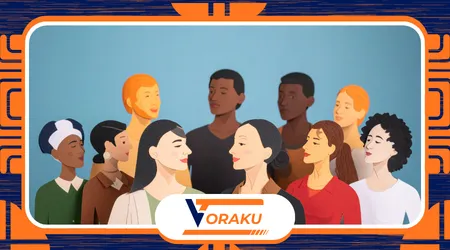
Picture Rosa Parks on that Montgomery bus in 1955, feet aching after a full shift, the air thick with the day’s humidity and the familiar tension of enforced separation.
When the driver ordered her to stand so a white passenger could sit, she stayed put—not because she had calculated the perfect moment for defiance, but because something deeper held her there: the accumulated weight of her community’s quiet, shared refusal to keep bending.
Group identity often overrides rational thinking in flashes like that one.
Thousands followed, walking dusty miles instead of riding, trading comfort and paycheck for something intangible yet unbreakable.
I’ve read those boycott accounts so many times the pages feel worn, and what lingers isn’t the strategy alone—it’s how personal logic dissolved into collective resolve.
People knew arrests loomed, jobs might vanish, bricks could fly through windows at night.
Still they chose the long walk. That choice reveals something stubborn in us: belonging can pull harder than self-preservation.
Continue reading our article!
How Does Group Allegiance Shape Our Choices in Crisis?
Look back at the trenches of 1914–1918.
Men wrote home doubting the war’s purpose, yet day after day they climbed ladders into machine-gun fire for flags and phrases they’d barely questioned before enlistment.
Propaganda helped, sure, but the real glue was the sudden, fierce kinship forged in mud and fear. Nationalism wasn’t abstract; it became the air they breathed together.
Something unsettling surfaces when you trace this pattern forward.
In the months after the 2020 election, court after court dismissed fraud claims, yet rallies kept swelling with chants that evidence couldn’t touch.
Loyalty to the side felt more real than spreadsheets or sworn testimony.
It’s rarely about lacking facts; it’s about what facts cost when they threaten the circle you stand inside.
I’ve spoken with people who’ve walked away from those circles—activists, former insiders—and they describe the same ache: questioning the group felt like amputating part of themselves.
++ How Cultural Taboos Are Formed and Eventually Broken
Rationality returns later, sometimes years later, but in the heat of belonging it recedes like a tide.
++ The Silent Power of Social Conformity Explained by Research
What Hidden Forces Drive Us to Prioritize Tribe Over Truth?
Henri Tajfel’s experiments in the early 1970s still unsettle me.
He divided strangers into meaningless groups—coin flips, preference for one painter over another—and watched favoritism bloom almost instantly.
People awarded more resources to their arbitrary team, even when it hurt overall gain.
The groups had no history, no future, no face-to-face contact. Yet bias appeared.
That finding cuts against the comfortable story we tell ourselves: that prejudice needs deep roots. It doesn’t.
++ Why Moral Panics Repeat Across Generations
A label is enough. In Salem Village in 1692, a small, isolated Puritan settlement already taut with land disputes and frontier dread, accusations of witchcraft spread like frost.
Evidence was spectral at best—dreams, fits, invisible pins. But the community closed ranks around a shared story of divine testing.
Dissent meant risking your own soul in the eyes of neighbors who were also your only safety net.
After the hangings stopped and the governor finally intervened, something shifted quietly: the grip of pure religious authority loosened.
By the time the new republic took shape, separation of church and state wasn’t just philosophy; it carried the memory of what unchecked group certainty could do.
Echoes appear now in digital spaces where algorithms serve as invisible pastors, feeding confirmation until doubt feels like disloyalty. The dynamic hasn’t changed much—only the pulpit.
Can We See This Pattern in Everyday Life?
It shows up closer to home than we’d like. Picture a software engineer in a startup that’s hemorrhaging cash but still preaching “we’re family here.”
Red flags wave—missed payrolls, pivots that defy market data—yet she stays late, defends the vision in group chats, because leaving would mean abandoning the people who’ve shared late-night pizzas and big promises.
Group identity often overrides rational thinking when the alternative is solitude in a world that already feels precarious.
Or consider family gatherings where a relative spins a theory that craters under basic scrutiny. No one corrects him sharply; the table stays polite.
The cost of confrontation—fractured holidays, awkward silences—outweighs the cost of letting nonsense slide. I’ve watched it happen in rooms I know well.
During the French Revolution’s Terror, the same mechanism turned inward.
Revolutionaries who once shared ideals began guillotining each other over doctrinal purity. Robespierre’s faction saw moderation as betrayal.
Thousands died before the pendulum swung back, leaving a wariness about unchecked ideological fervor that still shapes how democracies guard against their own excesses.
Why Do Smart People Fall for Groupthink?
Intelligence offers no shield.
Early-20th-century eugenics drew endorsements from brilliant minds—Wells, Shaw, even parts of the American progressive elite—because it flattered existing hierarchies of class and race.
Science was bent to serve identity, not the other way around.
The recoil after 1945 was fierce; eugenics became taboo in polite discourse. But the impulse to wrap group advantage in rational clothing didn’t vanish—it migrated.
In boardrooms, the Enron story still stings.
Employees drank what insiders called “the Kool-Aid,” ignoring mounting evidence of fraud because the company’s swaggering culture demanded belief.
Loyalty wasn’t optional; it was identity. When the house collapsed in 2001, new laws followed—Sarbanes-Oxley tightened audits—but the cultural vulnerability remains.
Smart people inside high-stakes groups can convince themselves the numbers lie if the narrative feels truer.
| Historical Event | Group Identity Trigger | Rational Override Example | Long-Term Social Impact |
|---|---|---|---|
| Salem Witch Trials (1692) | Puritan religious enclosure | Spectral evidence accepted without challenge | Eroded theocratic dominance in colonial justice |
| World War I Trenches | Hyper-nationalist cohesion | Mass charges despite clear tactical futility | Reshaped alliances, sowed seeds for future wars |
| Montgomery Bus Boycott (1955) | Shared racial dignity under siege | Economic hardship endured for collective stand | Catalyzed federal civil rights legislation |
| Enron Collapse (2001) | Aggressive corporate “family” ethos | Fraud indicators dismissed as disloyal skepticism | Strengthened financial oversight regulations |
These moments aren’t isolated; they loop.
How Does This Affect Our Future Decisions?
Polarization keeps tightening the screws.
Climate debates fracture along partisan lines even as data piles higher. Solutions stall because admitting common ground risks exile from the tribe.
Yet the same force can lift: #MeToo channeled shared outrage into accountability, overriding individual hesitation.
What I’ve come to accept, after years of watching these currents, is that group identity isn’t a bug. It’s wiring. Hunter-gatherers survived because of it.
The trick lies in multiplying our memberships—local and global, professional and personal—until no single allegiance owns us completely.
When identities overlap and overlap again, the override loses some of its grip.
Still, it never disappears entirely. We remain creatures who need to belong.
The question is whether we let that need think for us or whether we occasionally step outside the circle long enough to see clearly.
Frequently Asked Questions
How can I tell when group loyalty is clouding my own thinking?
Watch for the flinch when information arrives from outside your circle. If the first instinct is dismissal rather than curiosity, that’s usually the signal.
Isn’t group identity sometimes a force for good?
Of course. It fueled abolition, suffrage, desegregation. The danger isn’t identity itself—it’s when it becomes the only lens.
Why are leaders so good at weaponizing this dynamic?
They promise certainty and belonging in uncertain times.
Once people feel seen and protected by the group, evidence that challenges the leader starts feeling like a personal attack.
Can we train ourselves out of it?
Partly. Exposure to different viewpoints, deliberate reflection, even travel helps. But it requires effort—most of us default to comfort.
What makes social media worse for this?
It shrinks the circle to a screen-sized echo while making dissent visible and punishable in real time. The feedback loop is faster and harsher than any village square.
Does this play out differently across cultures?
Collectivist settings lean harder into harmony and face-saving; individualist ones prize personal conviction.
But the core override—tribe over truth—crosses borders without much translation.
++ The Family Weekly: What Marketers Think Moms Want
