10 Quiet Choices That Shaped the Outcome of World War I
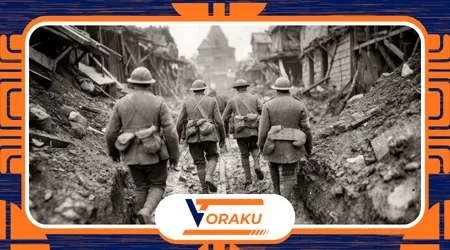
The outcome of World War I wasn’t merely forged in the industrial meat-grinder of the Somme or the gilded echoes of Versailles; it was often decided by exhausted men in quiet rooms making choices they didn’t realize would resonate for a century. Imagine a humid evening in July 1914.
A telegram sits on a mahogany desk in Belgrade. To the world, it’s a diplomatic formality, but to the clerk holding it, it’s a death warrant for nine million people.
We often view history as a series of inevitable tidal waves, but when you spend two decades digging through archives and social patterns, you realize it’s actually a mosaic of fragile, human-scale decisions.
History is rarely a straight line. It is a jagged path carved by ego, logistical blunders, and the occasional bout of bureaucratic indigestion.
While we all know about the assassination of Archduke Franz Ferdinand, it’s the granular shifts in policy and individual hesitation that truly dictated the final collapse of empires.
The Belgian Refusal: A Matter of National Pride over Pragmatism
In August 1914, the German Empire made King Albert I of Belgium an offer that seemed, on paper, logically sound for a small nation: let our troops pass through to France, and we will compensate you for every broken fence and trampled field.
Most pragmatic leaders would have calculated the terrifying odds and stepped aside.
Instead, Albert’s refusal to sacrifice Belgian neutrality forced Germany to execute the Schlieffen Plan with a level of brutality that horrified the global public.
What strikes me as rarely discussed is how this single choice transformed a territorial dispute into a moral crusade.
By standing firm, Belgium delayed the German advance just long enough for the “Miracle of the Marne” to occur.
This wasn’t just a military delay; it was a psychological pivot. It gave the British a “just cause” to sell to a deeply skeptical public.
Without the “Rape of Belgium” narrative, British entry might have been sluggish, and the outcome of World War I could have seen a German-occupied Paris by Christmas.
+ The Hidden Role of Minor Figures in Major Events
The Great Retreat’s Missed Opportunity at the Marne
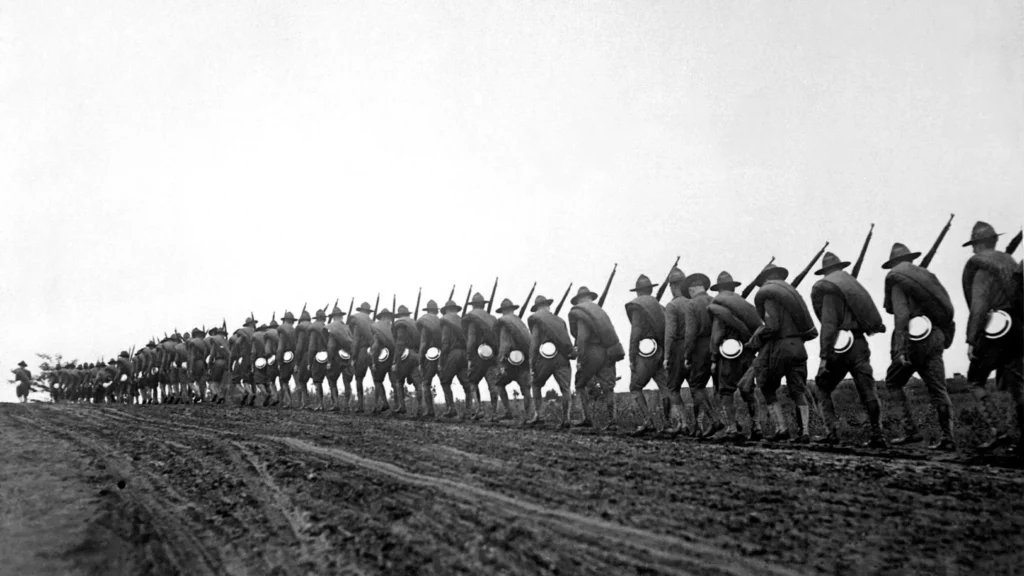
Alexander von Kluck is a name that doesn’t often survive the filter of modern memory, but his decision to veer his First Army east of Paris—instead of encircling it—remains one of history’s greatest “what ifs.”
He was chasing a retreating French army, smelling blood. In his tactical aggression, he opened a gap between his forces and the German Second Army.
The French didn’t just get lucky; they exploited a human ego. Kluck believed the French were a spent force, a narrative he preferred over the reality on the ground.
This arrogance led to the Gallieni “Taxi Cab” mobilization and the subsequent stalemate.
When we look at modern corporate failures, the pattern repeats: a leader so focused on the “kill” that they ignore the structural vulnerability of their own flanks.
+ How the Black Death Quietly Reshaped Modern European Society
The Unlikely Diplomacy of the “Zimmermann Telegram”
By 1917, the United States was a sleeping giant, clinging to isolationism with a grip that seemed unbreakable.
Then came Arthur Zimmermann, the German Foreign Secretary, who decided to send a coded proposal to Mexico, suggesting an alliance against the U.S. and promising the return of Texas, New Mexico, and Arizona.
What I find most absurd isn’t the proposal itself—nations have made weirder deals—but Zimmermann’s decision to admit he sent it.
When the British intercepted and leaked it, many Americans thought it was British propaganda. Had Zimmermann simply denied it, the U.S. Senate might have debated for months.
Instead, he confessed, out of a strange sense of Prussian honor or perhaps sheer delusion.
This confession essentially locked in the American entry, cementing the final outcome of World War I by providing the Entente with an inexhaustible supply of “doughboys” and industrial might.
The British Decision to Use Merchant Convoys (Finally)
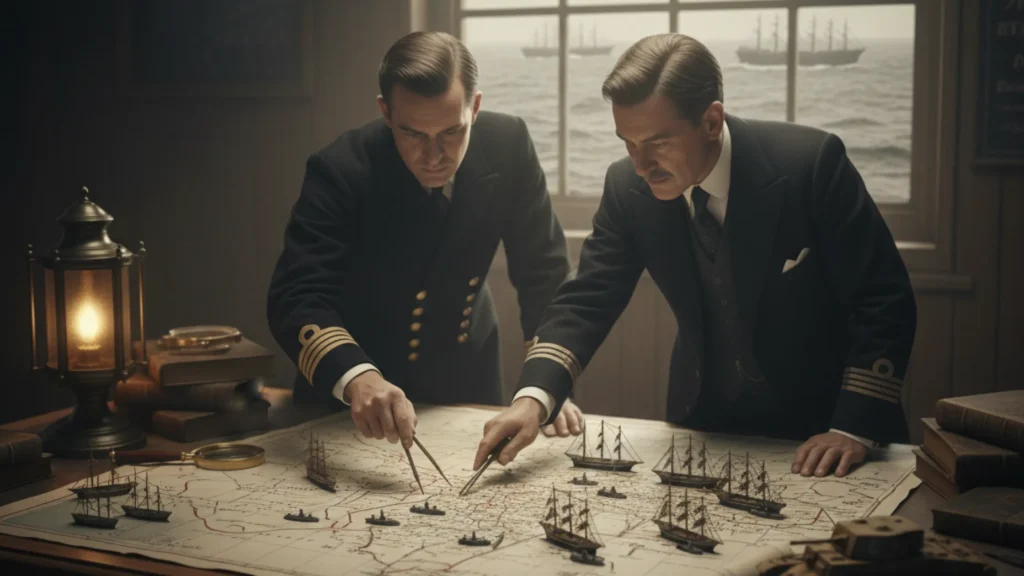
For years, the British Admiralty resisted the idea of merchant convoys. The “Old Guard” naval officers believed that grouping ships together made them a bigger target for U-boats.
It was a classic case of institutional inertia. They preferred “aggressive patrolling,” which was effectively like trying to find a needle in a dark, watery haystack.
It took the intervention of Prime Minister David Lloyd George, who practically forced the Admiralty to adopt the convoy system in 1917.
The results were instantaneous. Shipping losses plummeted. There is a profound social lesson here: sometimes the experts are so blinded by traditional “offensive” doctrine that they fail to see the protective power of community.
The convoy system didn’t just save beans and bullets; it saved the British soul from starvation.
“The Admiralty thought of the sea as a battlefield for warships, forgetting that it was actually a lifeline for the hungry.”
The Choice to Send Lenin in a “Sealed Train”
One of the most cynical and brilliant moves of the war came from the German High Command.
Seeing Russia crumbling under the weight of the February Revolution, they decided to inject a “virus” into the Russian body politic.
They took Vladimir Lenin from his exile in Switzerland and transported him across Germany in a sealed railway car to St. Petersburg.
The Germans knew Lenin would cause chaos; they just didn’t realize he would create a superpower that would eventually occupy half of Germany forty years later.
By facilitating the Bolshevik Revolution, Germany successfully knocked Russia out of the war. However, this short-term tactical win for the outcome of World War I birthed the Cold War.
It’s a sobering reminder that today’s “brilliant” geopolitical hack is often tomorrow’s existential crisis.
The Suspension of the “Offensive à Outrance”
In 1917, the French Army reached a breaking point. After the disastrous Nivelle Offensive, soldiers began to “baa” like sheep led to the slaughter as they marched to the front.
Mutiny wasn’t just a threat; it was a reality across dozens of divisions. General Philippe Pétain made a crucial decision: he stopped the suicidal charges.
He promised “waiting for the tanks and the Americans.” He improved food, leave, and conditions.
This shift from viewing soldiers as disposable assets to viewing them as a finite, human resource saved the French Army from total internal collapse.
It’s a shift we see in modern labor movements—the realization that you cannot extract value from a broken spirit.
The Adoption of the “Rolling Barrage”
Before 1916, artillery was used like a sledgehammer—pounding a position for days before the infantry moved.
This just warned the enemy to go into their deep bunkers. The decision to switch to the “rolling barrage,” where shells landed just hundreds of yards in front of advancing troops in a timed sequence, changed everything.
It required an incredible level of trust between the gunners and the infantry. If the timing was off by seconds, you killed your own men.
This technical evolution meant that by 1918, the “Hundred Days Offensive” could actually move the lines.
The war of attrition ended because of a synchronization of math and courage, proving that the outcome of World War I was as much about logistics as it was about bravery.
The Decision to Ignore the “Tank” in Germany
The British developed the tank (initially disguised as “water tanks” for Mesopotamia, hence the name).
The Germans, however, dismissed them as “clumsy toys.” While the British and French built thousands of Renault FTs and Mark IVs, Germany only produced about 20 of their own A7V tanks.
They chose to focus on U-boats and heavy artillery. This was a catastrophic failure of imagination.
When the tanks finally “cracked” the Hindenburg Line, the German infantry experienced “tank panic.”
There is a historical pattern here: the dominant power often scoffs at the “ugly” new technology of the challenger until it is too late to adapt.
You can find more detailed technical breakdowns of these machines at the Imperial War Museum.
The Italian Choice: Switching Sides
Italy began the war as an ally of Germany and Austria-Hungary. However, in 1915, they signed the Treaty of London and joined the Triple Entente.
This wasn’t because of a sudden love for democracy; it was a cold, calculated decision based on promised territories like South Tyrol and Trieste.
This forced Austria-Hungary to fight a two-front war, bleeding their resources dry.
While the Italian front is often mocked for its stagnant battles in the Alps, the sheer exhaustion it caused the Central Powers was a vital weight on the scale.
When we look at modern shifting alliances in trade, we see the same “sacred egoism” that drove the Italian cabinet in 1915.
The Decision Not to Invade Holland
Germany could have easily marched through the Netherlands to bypass the “choke point” of Belgium.
They chose not to, primarily to keep a “windpipe” open for neutral trade. This decision kept the Dutch out of the war but also limited Germany’s strategic depth.
By respecting Dutch neutrality, Germany inadvertently created a sanctuary for their own Kaiser when he eventually abdicated.
More importantly, it meant they were squeezed into a narrower front in France, making the trench stalemate inevitable. Every decision to not do something is as powerful as a declaration of war.
| Decision | Actor | Long-term Social Impact |
| Belgian Neutrality | King Albert I | Birth of modern international “war crimes” discourse |
| Sealed Train | German High Command | The rise of the USSR and 20th-century Communism |
| Convoy System | David Lloyd George | Globalization of maritime security standards |
| Tank Development | British War Office | The end of cavalry and the birth of mechanized society |
Why These Fractures Matter Now
When we analyze the outcome of World War I, we are really analyzing the birth of the modern world.
The collapse of four empires (German, Austro-Hungarian, Ottoman, and Russian) wasn’t just a map-drawing exercise; it was the moment the “Old World” died.
We live in the debris of these ten decisions. The borders of the Middle East, the tension in Eastern Europe, and even our reliance on massive industrial-military complexes all stem from these quiet moments of choice.
The lesson for us is that we are currently making choices—regarding AI, climate, and decentralized power—that will look just as “pivotal” to a historian in a hundred years.
We are the actors in a play we haven’t finished writing. For a deeper look at the social ramifications of the Great War, the National WWI Museum and Memorial offers an incredible archive of the human experience during this era.
FAQ Editorial: Understanding the Great War’s Turning Points
Did the U.S. really change the outcome of World War I?
Yes, but perhaps not in the way you think. It wasn’t just the soldiers; it was the psychological blow to Germany. Knowing that an endless supply of fresh men and money was coming made the German High Command realize they had to win in 1918 or never. They gambled on one last “Spring Offensive” and lost.
Why was the tank so important if it broke down so often?
The tank’s importance was psychological as much as tactical. It offered a way to cross “No Man’s Land” without being mowed down by machine guns. Even when they broke down, they forced the Germans to change their entire defensive strategy.
Was the assassination of the Archduke the only cause?
Not at all. The assassination was the spark, but the room was already filled with gasoline—nationalism, colonial rivalry, and a series of secret treaties. Any number of small sparks could have started it; this one just happened to be the most dramatic.
What was the most “human” mistake made during the war?
The obsession with “prestige.” Many generals ordered attacks simply because they didn’t want to admit a previous attack had failed. This pride-over-life mentality led to millions of unnecessary casualties and eventually the social revolutions that ended the war.
How did the war change the role of women in society?
Because the war required total industrial mobilization, women entered the workforce in unprecedented numbers—ammunition factories, offices, and transport. Once the war ended, it was impossible to “put the genie back in the bottle,” leading directly to the suffrage movements and the restructuring of the modern labor force.
