
Why Ancient Wars Were Often Won Before Battles Began
Ancient Wars Were Often Won Before Battles Began in the flicker of torchlight inside a commander’s tent, not in the crash of bronze on the field.
Picture the Macedonian camp the night before Issus in 333 BCE.
Alexander’s officers bent over crude maps while quartermasters tallied wagons of grain and barrels of water hauled from coastal ports.
Envoys had already slipped away to peel away Persian allies with promises of lighter taxes and protected lands.
Darius’s massive host glittered just miles distant, yet the real struggle had played out in whispers and ledgers weeks earlier.
The dawn charge would thrill poets for centuries. The outcome, though, had hardened into place long before the first spear left its hand.
Continue reading the text and learn more!
The Road Map
- The Hidden Calculations That Preceded the Charge
- How Logistics Turned Rome Into an Unbeatable Machine
- Sun Tzu’s Timeless Blueprint for Victory Without Bloodshed
- A Soldier’s View: The Human Cost of Pre-Battle Strategy
- What Changed in the Aftermath of These Silent Victories
- Echoes in Modern Strategy
The Hidden Calculations That Preceded the Charge
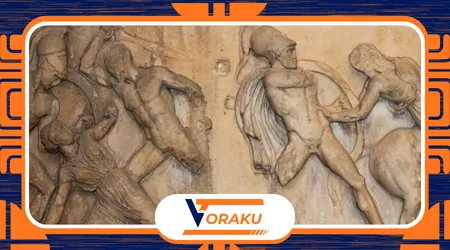
What rarely surfaces in the stirring battle tales is how much ancient conflict turned on decisions made far from any clash of arms.
Knowledge of terrain, stockpiles of food, and the shifting loyalty of border tribes often outweighed raw courage in the front rank.
Ancient Wars Were Often Won Before Battles Began because the side that arrived fed, informed, and backed by reliable friends forced its opponent into a fight already half-lost.
The pattern threads through one empire after another: mastery of the unseen elements quietly tilted the scales.
Armies devoured resources at a frightening rate. Ten thousand men and their horses could swallow twenty tons of grain and forage daily.
Without steady supply lines, even the fiercest warriors faded through hunger, disease, or desertion. Diplomacy layered on top of that.
Alliances bought safe passage, fresh water, and intelligence no lone scout could gather.
When those threads wove tight, battle became less a gamble than a grim formality.
There’s something quietly unsettling in that truth—the grand heroic charges often served as little more than punctuation for decisions already sealed.
++ The Political Myth of the “Dark Ages” Explained by Historians
How Logistics Turned Rome Into an Unbeatable Machine
Rome makes the case clearest. Hannibal delivered stunning blows at Trebia and Cannae, yet the republic refused to buckle.
While Carthaginian forces foraged across Italian fields and watched goodwill wither, Roman roads, granaries, and rotating legions sustained pressure that never let up.
Supplies crossed the Mediterranean in a steady rhythm that Carthage could not match.
By the time the armies met at Zama, Hannibal’s men had already lost the deeper war of endurance months earlier.
The social machinery behind this edge ran deeper than organization alone.
Republican institutions rewarded men who thought in years rather than seasons.
Senators haggled over mule contracts and allied grain quotas with the same seriousness they granted battlefield glory.
That collective habit turned warfare from a string of duels into something closer to a grinding system.
Ancient Wars Were Often Won Before Battles Began because Rome grasped that an army’s belly and its web of friends decided fate more reliably than any brilliant maneuver on the day itself.
++ The Silent Influence of Merchants on the Rise of Empires
Sun Tzu’s Timeless Blueprint for Victory Without Bloodshed
Far to the east, amid the fractured states of the Spring and Autumn period, Chinese thinkers reached a harsher conclusion.
Sun Tzu argued that the supreme skill lay in breaking the enemy’s resistance without ever needing to fight.
Temple calculations—careful weighing of moral cohesion, terrain, command, and method—came first.
Intelligence networks, quiet psychological pressure, and the deliberate severing of supply lines ranked higher than direct assault.
A wise leader shaped conditions so thoroughly that battle itself became unnecessary or hopelessly lopsided.
That insistence on preparation without spectacle still carries weight.
It suggests ancient societies, no less than our own, valued cunning over brute spectacle when existence hung in the balance.
The honest reading reveals a discomforting preference: true mastery often meant avoiding the glory of the charge altogether.
++ Why the French Revolution Did Not End Feudalism Overnight
A Soldier’s View: The Human Cost of Pre-Battle Strategy
Consider a young Athenian hoplite named Nikias in the summer of 415 BCE, standing on the deck of a trireme slicing toward Sicily.
Behind him stretched months of fierce debate in the assembly, frantic shipbuilding, and uncertain diplomacy with fickle allies.
He knew spears would clash eventually, yet his life hinged more on whether grain ships kept arriving and whether Sicilian cities opened their gates than on any personal skill with a shield.
The long, empty stretches between departure and contact gnawed at morale in ways no epic ever recorded—exhaustion, creeping doubt, and the slow fraying of cohesion that often settled the matter before the first shield wall locked.
These quieter moments put flesh on the abstract talk of logistics.
Behind every decisive campaign stood farmers handing over their harvest, merchants risking vessels on uncertain seas, and families watching sons sail into the unknown.
Preparation carried its own casualties: desertions, mutinies born of empty bellies, broken oaths that left no marble to commemorate them.
What Changed in the Aftermath of These Silent Victories
Each success secured through foresight rather than slaughter left a subtle mark.
Empires that mastered pre-battle groundwork expanded with fewer wasted lives and stretched resources further. Rome’s logistical depth let it absorb terrible defeats and keep advancing.
Alexander’s intelligence web turned a modest Macedonian force into a sprawling realm. Yet the same methods bred fragility.
Overdependence on intricate supply chains invited disaster when those chains snapped, as later Roman probes into Germania would demonstrate in blood.
A spare comparison of three pivotal moments brings the pattern into sharper relief:
| Conflict | Key Pre-Battle Element | Deciding Factor | Lasting Outcome |
|---|---|---|---|
| Issus (333 BCE) | Intelligence and fractured alliances | Persian coalition weakened | Rapid Macedonian expansion |
| Second Punic War | Roman supply endurance | Sustained pressure over years | Carthage removed as rival |
| Peloponnesian War | Overstretched Athenian logistics | Supply lines strained to breaking | Spartan victory through attrition |
The rows show a stubborn consistency: the side that prepared the ground most thoroughly usually set the terms of engagement.
Echoes in Modern Strategy
The same logic surfaces wherever large-scale rivalry unfolds. Political races tilt on fundraising and voter mapping long before any vote is cast.
Corporate maneuvers rest on balance sheets and quiet alliances forged in back rooms.
Even sports dynasties are built on years of scouting, film study, and sponsorship deals before the final whistle.
Ancient Wars Were Often Won Before Battles Began because the constraints of limited resources and human endurance have never really shifted.
Foresight remains the unseen architect that shapes what later looks like destiny.
Ancient Wars Were Often Won Before Battles Began not because courage deserted the field but because calculation had already done its work.
The next time dramatic clashes fill the headlines, look instead to the months or years that came before—the grain tallies, the broken alliances, the quiet stockpiling.
That hidden labor still decides far more than the visible storm of steel ever could.
The quieter truth lingers: many victories are sealed not in glory, but in the patient, often unglamorous business of getting ready.
Frequently Asked Questions
Did any ancient commander actually win without fighting at all?
Yes. Sun Tzu celebrated the general who forced surrender through superior positioning and severed supplies.
Several Chinese campaigns and certain Roman frontier operations ended with the enemy simply withdrawing once their situation became untenable.
Why do popular stories focus so much on the fighting?
Chroniclers and poets needed stirring heroism to move their audiences and justify the terrible human price.
The tedious work of organizing grain shipments and repairing roads rarely inspired songs, yet it settled far more conflicts.
Could a smaller army ever beat better preparation?
Rarely, through brilliant leadership or sudden luck with weather.
Those exceptions usually prove the rule—sustained logistical and diplomatic edges tend to wear down even the most gifted tactician over time.
How important was terrain knowledge in all this?
Critical. Accurate maps of water sources, choke points, and hidden routes let commanders choose favorable ground or avoid disaster.
Good intelligence on landscape often turned potential defeat into a decisive ambush.
Does the same principle apply outside actual warfare?
It does. High-stakes negotiations, election cycles, and even major legal battles are frequently decided by groundwork laid long before the public moment arrives.
Will future conflicts keep following this pattern?
Almost certainly. Technology may change the tools, but the need to secure resources, intelligence, and alliances first remains the most reliable path to dominance.
Preparation has always been the steadier road.
Delve deeper into Roman supply mastery during the Punic Wars here: Second Punic War – Logistics and Endurance.
And explore the original strategic thinking behind Sun Tzu’s emphasis on pre-battle calculation: Every Battle Is Won Before It Is Ever Fought.
