
The Future of Storytelling in Digital Cultures
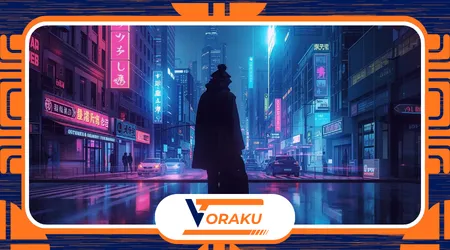
A teenager in Seoul leans against the subway door, one hand gripping the rail, the other flicking upward across a glowing screen. Fifteen seconds of someone else’s life.
A joke. A confession. A fragment of a breakup.
Gone before it fully lands. Across from him, a man in his forties pauses a historical drama mid-scene, scrolling through comments that reinterpret the moment he just watched.
The story splinters, reforms, multiplies.
No one in that train is simply watching anymore.
The Future of Storytelling in Digital Cultures lives in these quiet, almost forgettable gestures—small interactions that, taken together, are rearranging how narrative works at a structural level.
Not loudly. Not ceremonially. Just steadily, like water reshaping stone.
There’s something slightly unsettling about how natural this all feels.
Continue reading the text to learn more!
Summary of Topics
- Narrative opening: everyday digital storytelling scene
- Historical roots of participatory storytelling
- Platform influence on narrative structure
- Fragmentation and human cognition
- Case study: everyday digital life as narrative
- Depth vs speed in storytelling
- Technology vs human behavior
- Hybrid future of traditional and digital formats
- Emerging patterns and future directions
What happens when platforms stop hosting stories and start shaping them?
There’s an old literary anecdote that rarely gets the attention it deserves.
When Charles Dickens released The Pickwick Papers in serialized form, readers didn’t just follow the story—they tugged at it. Letters arrived in waves.
Characters gained importance because people cared about them loudly enough. Plotlines shifted, sometimes subtly, sometimes not.
It wasn’t pure authorship. It never really was.
What’s different now is not participation, but velocity—and the strange opacity of the systems involved. Platforms don’t just distribute stories; they quietly reorganize them.
An algorithm doesn’t care about narrative integrity. It cares about movement: what keeps circulating, what sticks, what provokes.
The Future of Storytelling in Digital Cultures is tied to this shift in authority.
Not from author to audience—that transition started long ago—but from both to an invisible layer of mediation that decides, in milliseconds, what deserves to exist in front of us.
That’s where the tension sits.
Stories are no longer released into the world. They are filtered into it.
++ How Technology Is Redefining Privacy Norms
How did storytelling bend itself to fit machines?
At first, digital storytelling behaved politely. Blogs resembled essays.
Early videos mimicked television pacing. Podcasts borrowed heavily from radio. It was as if creators were asking for permission from older forms.
Then the tone changed.
Gradually, almost imperceptibly, stories stopped imitating tradition and started responding to metrics. Length shrank. Hooks sharpened.
Emotional beats were repositioned closer to the beginning, then closer still. It wasn’t a creative revolution—it was an adaptation.
++ The Cultural Impact of AI Companionship
A subtle but decisive one.
| Era | Dominant Medium | Narrative Control | Audience Role |
|---|---|---|---|
| 19th Century | Serialized Print | Author + Publisher | Reactive |
| 20th Century | Film & Television | Studios & Networks | Passive |
| Early Internet | Blogs & Forums | Individual Creators | Participatory |
| Platform Era | Social Media & Streaming | Algorithms | Co-creator + Amplifier |
What changed after this transition isn’t always visible at first glance.
Stories became less like lines and more like loops. Endings lost their authority.
Characters started behaving like recurring signals rather than evolving individuals.
And audiences—perhaps the most significant shift—stopped being spectators and became active distorters, sometimes without realizing it.
The Future of Storytelling in Digital Cultures begins to make sense only when seen through this lens: narrative not as a finished product, but as something continuously recalibrated in real time.
++ Why Digital Detox Is Becoming a Status Symbol
Why do fragmented stories feel strangely complete?
There’s a common complaint that attention spans are collapsing. It sounds convincing, but it doesn’t quite hold up under scrutiny.
Human experience has never been linear.
Memory doesn’t unfold like a novel. It flickers. It jumps. It skips inconvenient details and lingers on irrelevant ones. A smell triggers a decade-old moment.
A passing phrase reshapes an entire recollection. In that sense, fragmented storytelling isn’t a degradation—it’s a return, of sorts.
What feels new is the externalization of that internal process.
A sequence of disconnected clips—morning coffee, late-night thoughts, a missed call—gradually forms a narrative, but only in the mind of the viewer.
The creator offers pieces. The audience assembles meaning. Not always accurately.
There’s something quietly powerful about that dynamic. And something a bit dangerous too.
The Future of Storytelling in Digital Cultures leans heavily on this collaborative ambiguity, where the absence of context is not a flaw, but a feature.
What does a life look like when it becomes a shared narrative?
Picture a young delivery worker in São Paulo.
He films in between shifts. Traffic stalled under a gray sky. A joke exchanged with a street vendor. A brief, tired reflection at midnight. None of it is framed as a “story.”
There’s no arc, no resolution, no deliberate construction.
And yet, over time, something emerges.
Followers begin to recognize patterns—exhaustion, humor, small victories. They comment. They speculate. They fill in gaps with their own assumptions.
A single viral clip reframes everything that came before it. Suddenly, one moment defines a life.
At that point, authorship becomes slippery.
The narrative no longer belongs entirely to the person living it.
It becomes negotiated—shaped by strangers, boosted by algorithms, refracted through collective interpretation.
There’s a tendency to celebrate this as empowerment. Sometimes it is. But there’s also a quieter consequence: identity itself starts behaving like content.
The Future of Storytelling in Digital Cultures doesn’t just reshape stories—it alters how lives are perceived, packaged, and remembered.
Are we losing depth, or just moving it somewhere harder to see?
It’s easy to assume something is being lost. Shorter formats, faster pacing, constant interruption—it all points in that direction.
But that reading is a bit too convenient.
Depth hasn’t vanished. It’s been redistributed.
A story might begin as a fleeting clip, then expand through commentary, deepen across long-form audio, and stretch into discussions that last weeks.
The narrative isn’t contained—it’s scattered. To follow it fully requires effort, curiosity, and time.
Which, perhaps, is the point.
What used to be delivered as a complete experience is now something closer to a trail. Some follow it. Most don’t.
The Future of Storytelling in Digital Cultures seems less concerned with preserving depth in a single place and more interested in dispersing it across multiple layers of engagement.
That makes it richer for some—and invisible for others.
Who is actually in control here?
There’s a habit of blaming technology as if it operates independently of human intention. That’s too simple.
Platforms create conditions. People adapt to them quickly—sometimes uncomfortably quickly.
Creators learn what works, audiences learn what to reward, and together they reinforce patterns that feel organic but are anything but accidental.
It becomes a loop.
Stories are shaped to fit the system, and the system evolves to favor those shapes. What rises to the surface isn’t just popular—it’s structurally encouraged.
There’s something worth questioning in that dynamic. Not in a dramatic, alarmist way, but in a grounded, persistent one.
The Future of Storytelling in Digital Cultures will be defined not only by what stories are told, but by the invisible rules that determine which ones are allowed to travel.
Where do older forms of storytelling stand now?
They haven’t disappeared. They’ve shifted position.
Books, films, theater—they still exist, but they no longer operate in isolation. A novel gains traction through online discussion before it ever reaches a bestseller list.
A film’s meaning is extended, sometimes distorted, through endless reinterpretation online.
Stories leak out of their original containers.
There’s a historical rhythm to this. When print emerged, it didn’t erase oral storytelling—it reframed it.
Something similar is unfolding again, though at a speed that leaves little time for reflection.
What emerges isn’t replacement. It’s overlap.
What kind of storytelling is quietly taking shape?
Predictions tend to age poorly, but certain trajectories are difficult to ignore.
Narratives are becoming more immersive—not just visually, but socially. The boundary between creator and audience continues to blur.
Ownership becomes ambiguous. Authenticity becomes harder to pin down.
Artificial intelligence enters the picture not as a singular disruption, but as a multiplier.
It accelerates processes that were already underway: generation, personalization, adaptation.
The real shift isn’t technological—it’s relational.
The Future of Storytelling in Digital Cultures will likely be shaped by how people negotiate authorship, trust, and meaning in environments where stories are no longer stable.
The story is no longer where we expect to find it
Something fundamental has moved.
Storytelling hasn’t simply migrated onto screens. It has slipped into the spaces between interactions—comments, pauses, reinterpretations, algorithmic nudges.
It no longer sits still long enough to be fully grasped.
The teenager on the subway isn’t just consuming fragments—he’s part of a continuous narrative flow that extends far beyond his screen.
The man watching a paused drama isn’t following a story—he’s negotiating its meaning alongside others.
Stories have become environments.
Not fixed, not finished, and rarely owned by a single voice.
And perhaps that’s the most honest way to understand where all of this is heading: not toward the end of storytelling, but toward a version of it that behaves less like a product and more like weather—shifting, surrounding, impossible to hold, but always there.
FAQ – Future of Storytelling in Digital Cultures
1. Is digital storytelling replacing traditional formats?
Not quite. It’s reshaping how those formats are experienced, often extending them beyond their original boundaries.
2. Why do short-form stories feel so compelling?
They align closely with how memory and attention naturally operate—fragmented, emotional, and immediate.
3. Are algorithms deciding what stories succeed?
They play a major role in visibility, but human behavior reinforces those patterns, creating a feedback loop.
4. Does participatory storytelling improve narratives?
It broadens perspectives, but it can also fragment coherence and prioritize reaction over reflection.
5. Will AI take over storytelling?
Unlikely. It will influence how stories are created and distributed, but human interpretation remains central.
++ How Social Media Shapes Narrative Identity
