
How Religious Schisms Quietly Redrew European Borders
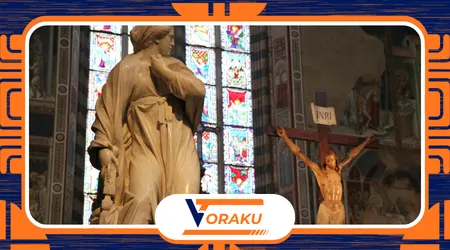
Religious Schisms Quietly Redrew European Borders long before ministers sat around polished tables pretending the continent could be organized through diplomacy alone.
In October of 1648, exhausted negotiators moved through the damp halls of Münster and Osnabrück carrying stacks of papers that looked bureaucratic enough, though outside those walls much of Central Europe still resembled a graveyard interrupted by smoke.
Travelers crossing the German states at the time described abandoned farms overtaken by weeds, churches stripped bare, roads haunted by displaced families and soldiers who no longer remembered which side they belonged to.
Entire regions had become emotionally unrecognizable to the people born there.
That is the part history books often flatten into neat paragraphs.
Continue reading our text and learn more!
Summary of Topics
- How theological disputes became political weapons
- Why rulers feared religious ambiguity
- The Protestant Reformation and territorial identity
- The emotional scars left by the Thirty Years’ War
- How ordinary Europeans experienced confessional borders
- The hidden connection between religion and nationalism
- Why echoes of these divisions still linger in Europe
Why did rulers become obsessed with religious uniformity?
From a distance, the violence of Europe’s religious conflicts can appear absurdly disproportionate. Wars over doctrine.
Mass displacement over theological wording. Cities destroyed over questions most ordinary peasants could barely articulate.
But that interpretation misses how power functioned at the time.
Religion was not a compartment of life. It was the skeleton holding public order together.
Law, taxation, education, kingship, inheritance, even the rhythm of the calendar itself—everything passed through religious legitimacy.
To challenge the Church was not merely to challenge belief. It was to loosen the bolts holding political authority in place.
That is why Martin Luther terrified Europe’s ruling classes in ways modern audiences sometimes underestimate.
His criticism of Rome did not just threaten theology. It threatened structure.
And rulers understood this immediately.
There’s a historical detail that tends to slip past simplified accounts of the Reformation: many princes who embraced Protestantism were not suddenly seized by spiritual revelation. Some certainly were.
Others saw an opportunity too useful to ignore. Breaking from Rome meant reclaiming land, wealth, taxation, and local authority. Monasteries could be dissolved.
Church assets redirected. Loyalty rerouted away from distant Catholic power centers.
Faith and opportunism became intertwined so tightly that separating them now feels almost impossible.
The Religious Schisms Quietly Redrew European Borders because rulers discovered that confessional unity created administrative stability.
A population praying the same way was easier to discipline, easier to mobilize, easier to imagine as a coherent political body.
There is something chilling in that realization.
++ The Overlooked African Kingdoms That Dominated Global Trade
The state began to understand religion not simply as truth, but as infrastructure.
++ Why Ancient Wars Were Often Won Before Battles Began
What happened to ordinary people trapped between changing faiths?
Imagine a Catholic craftsman living in a German principality that suddenly adopts Lutheranism under a new ruler.
One year his church smells of incense and candle wax. Saints stare down from painted walls. Feast days interrupt labor with ritual and procession.
Then, gradually, things disappear. Images removed. Sermons rewritten. Familiar prayers treated with suspicion.
The local priest replaced by someone trained in a different theological language altogether.
Life continues outwardly. Bread is still baked. Markets still open.
But something underneath shifts.
What rarely gets discussed is how psychologically exhausting these transitions were for ordinary people.
Historians often describe confessional change through decrees and treaties, though the real transformation happened in quieter places: dinner tables, baptisms, funerals, marriages.
The Religious Schisms Quietly Redrew European Borders because they reorganized daily life at an intimate level.
Over time, communities raised under different religious systems stopped imagining themselves as part of the same moral landscape.
And once that mental border forms, political borders become much easier to defend.
++ The Political Myth of the “Dark Ages” Explained by Historians
Why did the Thirty Years’ War leave Europe emotionally fractured?
There are wars that destroy infrastructure, and there are wars that damage a civilization’s nervous system. The Thirty Years’ War did both.
A farmer living somewhere near Magdeburg in the 1630s would have struggled to explain the theological complexities behind the conflict.
What he understood was simpler and more terrifying: armed men kept arriving under different banners claiming divine legitimacy while burning the same crops.
Catholic armies. Protestant armies. Mercenaries loyal mostly to survival.
For civilians, ideology often arrived wearing muddy boots.
By the middle of the war, famine and disease moved across Central Europe almost like weather systems.
Some German territories lost enormous portions of their populations.
Entire communities disappeared quietly into starvation, plague, or migration.
And yet—and this matters—the violence did not weaken confessional identity as much as one might expect. In many places, it intensified it.
Trauma has a strange way of sharpening boundaries.
Communities devastated by conflict often cling more fiercely to whatever distinguishes them from enemies, even when those distinctions helped fuel the destruction in the first place.
That contradiction sits at the center of much of European history.
The Religious Schisms Quietly Redrew European Borders because suffering transformed abstract theology into emotional inheritance. Religious affiliation became tied to memory: memory of massacres, occupations, betrayals, survival.
People rarely abandon identities forged through collective pain.
How did invisible religious borders become cultural instincts?
A merchant traveling through Europe in the seventeenth century crossed more than frontiers. He crossed atmospheres.
In some Protestant cities, churches felt stripped down almost to the point of severity. White walls. Minimal decoration. A moral emphasis on discipline and restraint.
In Catholic regions, public ritual remained theatrical and sensory—bells, incense, processions moving through crowded streets.
Even silence felt different depending on where one stood.
Europeans became remarkably skilled at reading these subtle signals.
Accent, gesture, dress, patterns of worship—all functioned as markers of belonging. Suspicion attached itself to small details.
When examined carefully, the pattern still echoes faintly across Europe today.
Historically Protestant regions often developed different relationships to bureaucracy, labor organization, and public trust than historically Catholic or Orthodox regions.
These distinctions are never absolute, and simplistic cultural determinism should be treated carefully. Still, the historical residue remains difficult to ignore entirely.
The Religious Schisms Quietly Redrew European Borders not only geographically, but psychologically.
They taught populations how to categorize outsiders long before passports or modern nationalism formalized those divisions.
That habit survives longer than people think.
Was nationalism really separate from religious conflict?
This is where many historical narratives become suspiciously tidy.
Nationalism is often portrayed as replacing religion, as though Europe simply evolved from sacred loyalties into secular political identities.
Reality was far messier. In many cases, nationalism inherited the emotional architecture religion had already built.
Dutch resistance to Catholic Spain was not purely political.
English identity hardened partly through anti-Catholic sentiment.
Scandinavian kingdoms consolidated themselves around Lutheran structures that blended faith with state loyalty so completely that separating the two became nearly impossible.
The vocabulary changed later. The emotional machinery remained familiar.
Martyrs became patriots. Sacred missions became national destinies. Heresy transformed into political treason.
There are good reasons to question the comforting idea that Europe ever became fully secular in a clean or linear sense.
Much of modern political identity still carries the emotional fingerprints of older confessional conflicts.
The Religious Schisms Quietly Redrew European Borders because they trained populations to think collectively through moral division—through the instinctive separation of “us” and “them.”
History changes costumes more often than it changes behavior.
Why does Eastern Europe reveal the deeper complexity of these divisions?
Western Europe tends to dominate conversations about religious schisms, partly because Western narratives dominate history itself.
But Eastern Europe reveals something more unstable and, in many ways, more revealing.
In the Balkans especially, Catholic, Orthodox, Muslim, and Jewish communities often existed side by side for generations under shifting imperial systems. Identity there was layered rather than cleanly divided.
Families navigated overlapping loyalties with remarkable flexibility—until political crises hardened those identities into weapons.
That transformation could happen frighteningly fast.
A village capable of coexistence for decades might collapse into distrust almost overnight once rulers began mobilizing religion for territorial ambition. Fear compresses complexity. It forces people into categories.
There is something painfully modern about that dynamic.
The Religious Schisms Quietly Redrew European Borders not because ordinary people naturally sought endless conflict, but because elites repeatedly discovered how useful religious identity became during moments of instability and competition.
And once unleashed, those divisions rarely remained controllable.
The map changed long before Europe admitted it
By the time diplomats codified borders through treaties and formal negotiations, much of Europe had already been transformed beneath the surface.
Religious division altered migration patterns, educational systems, alliances, economic behavior, and emotional loyalties long before nationalism emerged as the continent’s dominant political language.
The real border-making process happened slowly—in churches, classrooms, marketplaces, and private fears.
That may be the most unsettling lesson hidden inside this history.
Political maps often appear sudden in retrospect.
In lived experience, they usually form gradually, accumulating through repeated acts of separation so ordinary people barely notice them happening in real time.
A prayer changes. A school changes. A neighbor becomes suspect. Then, eventually, a border appears.
The Religious Schisms Quietly Redrew European Borders because they reshaped how Europeans imagined belonging itself.
Not merely where people lived, but who counted as morally trustworthy, culturally familiar, spiritually legitimate.
And once societies begin organizing themselves around those instincts, geography follows almost automatically.
History rarely moves in straight lines.
But it does leave deep grooves.
FAQ
1. Did religion alone reshape European borders?
No. Dynastic ambition, economics, military power, and political rivalry all played major roles.
Religion acted as the emotional and ideological force binding many of those conflicts together.
2. Why was the Protestant Reformation so destabilizing politically?
Because religious authority was deeply tied to governance. Challenging the Church also threatened systems of taxation, legitimacy, law, and political control.
3. What made the Thirty Years’ War so devastating?
The conflict combined religious tension, territorial ambition, famine, disease, and mercenary warfare, creating enormous civilian suffering across Central Europe.
4. Do these old religious divisions still influence Europe?
In subtle ways, yes. Historical confessional cultures continue shaping attitudes toward authority, social trust, public institutions, and national identity.
5. Why did rulers care so much about religious uniformity?
Shared religion created social cohesion and reinforced political authority. Diversity of belief was often perceived as a threat to stability and control.
++ Redrawing Religious Boundaries in Contemporary Europe
