
Why History Remembers Leaders but Forgets Movements
History Remembers Leaders but Forgets Movements.
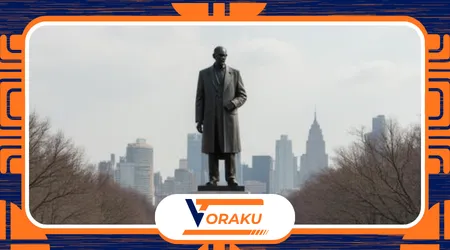
That blunt fact hits hardest when you stand in a rain-lashed square and stare up at a lone bronze figure while the real engines of change – the thousands whose feet wore down the pavement – have been quietly erased from the scene.
Take Selma, 1965. The cameras locked on John Lewis and Martin Luther King Jr. striding across the bridge.
Behind them stretched rows of sharecroppers in mud-caked boots, students with handmade signs, and domestic workers who had risen before dawn to walk instead of ride the segregated buses.
Their blisters, their arrests, their steady refusal to break – these became footnotes at best.
The pattern feels too consistent to shrug off as mere accident.
Continue reading the text and learn more!
Mapping the Hidden Narrative
- Why Leaders Dominate the Story
- The Social Forces Behind Selective Memory
- A Worker’s View from the March
- Table of Forgotten Collectives
- Movements in the Digital Era
- FAQ
Why Do Textbooks Crown Kings and Presidents While Crowds Disappear?
A single face simplifies everything. Stories need a protagonist the way rivers need banks; without one, the tale spills over and loses all shape.
Curricula, monuments, and nightly news all reach for the same shorthand – a name, a date, a dramatic silhouette.
What rarely gets discussed is how convenient this habit proves for those already holding power. A leader can be celebrated, condemned, or replaced.
A movement, scattered and stubborn, refuses easy capture. The French Revolution makes the point sharply.
Robespierre and Danton fill the pages, Napoleon rides in later as the tidy closer.
Yet the real ignition came from market women marching on Versailles, from peasants burning feudal ledgers in the provinces, from city artisans who risked everything before any grand speech rang out.
Those anonymous surges created the vacuum that ambitious men eventually filled.
++ Why Some Empires Left No Written Records
How Did the Great Man Theory Quietly Shape What We Call History?
Nineteenth-century thinkers like Carlyle packaged the idea that world history amounted to the biographies of great men.
The timing was no coincidence.
It flattered the new industrial elites who preferred crediting exceptional individuals over admitting that ordinary people, once organized and furious, could force the gates open.
Something unsettling lingers in how tightly that lens still grips popular memory.
Even after social historians began excavating “history from below,” the wider culture kept clutching the old script. Leaders deliver clean drama and photogenic moments.
Movements demand patience, messy context, and the uneasy truth that change rarely belongs to any one voice.
++ The Untold Contributions of Anonymous Innovators
What Forces Made the Crowd Invisible?
Archives favored the powerful – treaties, diaries, official decrees – while the scrawled notes of seamstresses or farmhands rarely survived the years.
Newspapers, hungry for readers, fastened on charismatic speakers.
++ The Silenced Stories of Defeated Societies
A feedback loop took hold: the more a figure was quoted, the more central he seemed; the more central he seemed, the less room remained for the grinding labor that kept the cause alive.
A detail that usually slips past is how this selective memory began reshaping strategy itself.
Aspiring leaders learned to perform as singular heroes.
Movements that resisted crowning one person often faded faster from view. The pattern echoes across continents and eras with stubborn regularity.
Imagine a Seamstress on the March
Picture Clara, twenty-three, a garment worker in Washington in 1913. She has scrimped for months to afford a white dress and sash for the great suffrage parade.
All day she walks Pennsylvania Avenue with thousands of other women while hecklers jeer and police turn away.
That night her feet bleed through her stockings, yet she writes one plain line in her diary: “We were the parade.”
Clara never became a household name.
Alice Paul and Carrie Chapman Catt did.
Without the seamstresses, teachers, and laundresses who filled block after block, though, the constitutional amendment would have stayed a polite petition on someone’s desk.
Clara’s quiet endurance humanizes what the headlines erase: the patient, often invisible work of turning private anger into public force.
What Changed After the Crowd Was Written Out?
Once movements slipped from the official record, politics tilted toward personality.
Voters started judging parties by the candidate’s spark rather than the platform’s weight.
Protest itself leaned into spectacle because spectacle produces the face cameras crave.
Even now, climate strikers or racial-justice demonstrators watch their months of neighborhood meetings reduced to whichever teenager or celebrity happens to lead the chant on a given afternoon.
The table below sketches the recurring trade-off:
| Event | Leader Remembered | Movement Forgotten | Lasting Consequence |
|---|---|---|---|
| American Revolution | George Washington | Committees of correspondence, boycotts by farmers and artisans | Independence cast as one man’s war |
| Women’s Suffrage | Susan B. Anthony | Tens of thousands of marchers and petition collectors | Vote won by collective endurance, credited to icons |
| Civil Rights Movement | Martin Luther King Jr. | Montgomery boycotters, Freedom Riders, church women who fed meetings | Moral arc credited to one voice |
Each row reveals the same bargain: complexity traded for clarity, shared courage shrunk to individual genius.
Why History Remembers Leaders but Forgets Movements Still Shapes How We Protest Today
Social media has sharpened the blade further.
A viral clip of one activist can eclipse months of quiet organizing.
Movements that refuse a single spokesperson – think Occupy Wall Street – struggle for sustained attention precisely because they lack the familiar heroic outline.
History remembers leaders but forgets movements because the latter demands we acknowledge that real power often bubbles up from below, messy and leaderless at its heart.
The honest reading suggests something deeper: the real engines of lasting change have always been the people whose names never made the plaque.
The Quiet Cost of Hero Worship
There is a quiet cost. When movements vanish from memory, ordinary people lose the blueprint for how change actually happens. They wait for the next savior instead of linking arms with neighbors.
Leaders, sensing their inflated place in the tale, sometimes start believing their own press.
Politics then becomes a theater of personality, repeatedly disappointing because it was never built for structural repair.
Yet the forgotten collectives keep proving the point.
Every major advance – labor rights, expanded voting, environmental safeguards – began not with a soaring speech but with countless small refusals repeated until they could no longer be ignored.
Frequently Asked Questions
Does this mean leaders don’t matter?
Leaders can crystallize energy already swelling from below and steer it at critical moments. The trouble lies in proportion.
Textbooks usually flip the sequence, crediting the helm when the hull did the heavy pushing.
Why do some movements eventually get remembered through leaders?
Only when those figures later serve as useful symbols for the state or for generations seeking tidy origin stories.
Gandhi became the face of Indian independence long after mass civil disobedience had done the real work.
Is social media fixing or worsening the imbalance?
It worsens the spotlight on individuals in the short run.
Over time, though, the flood of citizen footage might force a messier, more accurate record – assuming anyone bothers to preserve it.
Can leaderless movements still succeed?
They can and have. Early phases of the Arab Spring and certain climate networks show diffuse coordination can rattle regimes.
Success, however, often invites later creation of retrospective heroes to make the story neat enough for classrooms.
Will future history books correct this bias?
Some university courses already lean toward people’s history.
Popular memory, shaped by monuments, films, and election cycles, still hungers for the single face on the poster. The correction remains incomplete at best.
What can an ordinary person do?
Document the small acts. Keep diaries, save group photos, preserve meeting notes.
The next generation will need proof that change was never the solo performance it is usually sold as.
++ A Call to Action: Memory and Resistance
++ The cult of memory: when history does more harm than good
