
Shadows Beneath the Surface: The Secret Intelligence Networks of the Cold War Era
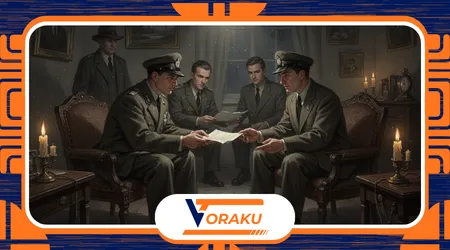
The secret intelligence networks of the Cold War Era were never louder than on the night of 25 April 1956, when Soviet soldiers in greatcoats staged their theatrical “discovery” of a 1,476-foot tunnel running beneath a cemetery on the edge of West Berlin.
Flashbulbs popped, cameras rolled, and the next day’s headlines screamed about American and British audacity.
What the newsreels didn’t show was the handful of exhausted technicians who, eleven months earlier, had sat in a dimly lit operations room listening to the ordinary complaints of Soviet officers—about rotten rations, delayed pay, and the sheer tedium of garrison life—knowing full well that the man who had betrayed the entire project was still walking free in London.
I’ve read the transcripts. I’ve walked the stretch of Altglienicke where the tunnel surfaced.
And every time I return to those years, I’m struck by how much of the Cold War’s secret machinery felt less like grand strategy and more like a long, tense family argument conducted in whispers across continents.
Continue reading the article!
Summary of Topics
- The Foggy Beginnings: A Berlin Tunnel Operation
- The Human Faces Behind the Betrayals: Cambridge Graduates Turned Spies
- Technical Audacity and Its Quiet Failures
- Why Ideology Outweighed Loyalty for So Many
- What Shifted Once the Curtain Fell
- FAQ: Real Questions About These Hidden Networks
How did a muddy tunnel under Berlin come to matter so much?
They called it Operation Gold on the American side, Stopwatch on the British.
The idea was brutally simple: the Soviets had gone silent on the airwaves for anything sensitive, so someone had to go underground.
Work began in the summer of 1954 under the cover of a radar station. By early 1955 the tunnel was finished—steel-lined, air-conditioned, equipped with tape recorders that never stopped turning.
For nearly a year it captured half a million conversations, enough raw material to fill 1,750 intelligence reports.
++ Why the Byzantine Empire Survived Longer Than Rome Itself
There is something quietly unsettling about the fact that George Blake, the MI6 officer who passed the blueprint to the KGB, allowed the whole thing to run.
Moscow decided the intelligence value of keeping Blake in place outweighed the embarrassment of a tapped line.
When the tunnel was finally “found,” the Soviets performed outrage for the press while quietly rerouting their most sensitive traffic elsewhere.
Yet the haul—unfiltered gripes about morale, equipment shortages, and the first hints of unrest in East Germany—was real.
As the CIA’s own declassified account makes plain decades later, no disinformation poisoned those cables. The listeners had heard the enemy breathing.
Who were the Cambridge Five, and why do their stories still feel personal?
The tunnel was engineering; the Cambridge Five were something closer to tragedy.
Five young men—Maclean, Burgess, Philby, Blunt, Cairncross—raised in the comfortable certainty of the British upper-middle class, sitting through the 1930s watching unemployment queues lengthen, Franco’s bombers over Guernica, and Chamberlain’s umbrella diplomacy.
++ The Forgotten Diplomacy That Almost Prevented World War II
They concluded, with the earnestness of youth, that liberal capitalism had failed and that Moscow offered the only coherent alternative.
Maclean handed over entire runs of Foreign Office cables. Burgess, charming and chaotic, drifted through the BBC and MI6 leaking as he went.
Philby, posted to Washington as the MI6 liaison, quietly sabotaged operations against Soviet networks while drinking with the very men he was betraying.
Blunt spent his days cataloguing the King’s pictures and his nights passing MI5 files.
Cairncross, the least flamboyant, still managed to deliver Ultra decrypts that helped at Kursk.
What usually gets glossed over is the slow bleed of trust that followed. When Burgess and Maclean disappeared to Moscow in 1951, the Americans began double-checking every British-sourced report as though it carried contagion.
Philby’s flight in 1963 felt like the final wound.
British intelligence never quite recovered its old swagger; the habit of suspicion toward their own elite class became institutional.
There is a lingering aftertaste in the files—a kind of institutional bruise that historians writing for a broader audience still feel when they try to explain why the “special relationship” always carried a slight limp.
What forces turned friends into assets and colleagues into suspects?
The real fuel was never ideology alone. It was the collision of private disappointment with public purpose.
A stalled career, a crumbling marriage, a sense of being overlooked—these were the small cracks through which recruitment officers slipped their hooks.
Penkovsky, the GRU colonel who passed missile photographs to the West, was driven partly by conviction and partly by resentment at being sidelined.
++ The Emergence of Digital Coming-of-Age Rituals
Tolkachev, the radar engineer who handed over design secrets that saved the Pentagon billions, acted out of disgust with the Afghan war and the corruption he saw around him—until a CIA mole sold him out in 1985.
The same human weather blew in both directions.
Western agencies spent the 1950s and 60s interrogating their own people with polygraphs and loyalty oaths until talented linguists and analysts simply walked away.
In Moscow, the KGB’s periodic purges devoured some of their most productive assets.
Every handler I’ve spoken to—those still willing to talk—described the same grinding uncertainty: Is this defector genuine, or am I the one being played?
Families absorbed the cost without ever knowing the full price.
Children learned not to ask why Daddy came home late smelling of cigarette smoke and railway stations.
Spouses pretended not to notice the locked drawer, the sudden trips abroad.
The habit of secrecy seeped into ordinary life until it felt normal to keep the most important parts of yourself hidden even from the people you loved most.
What shifted once the visible walls came down?
The Wall fell, the acronyms stayed. The listening posts that once tracked Warsaw Pact landlines pivoted to satellite intercepts and fiber trunks.
The cocktail-party recruiters moved online. The old Five Eyes machinery—born to share SIGINT against the Soviets—quietly expanded its mandate.
Techniques that once seemed exotic (massive voice transcription, pattern analysis of telephone metadata) became standard practice against newer threats.
One thing that rarely gets said aloud is how the end of the bipolar world quietly licensed habits of surveillance that would have been politically toxic in the 1970s.
The moral arguments that flared during the Church Committee hearings simply went dormant, only to re-emerge with different acronyms and different enemies.
The architecture of suspicion proved more durable than the ideology it was built to contain.
Frequently Asked Questions
Were the spy novels anywhere close to reality?
Le Carré came closest—not to the gadgets, but to the atmosphere: the paperwork, the waiting, the slow corrosion of ordinary relationships.
Real dead drops happened in suburban parks; real handlers spent more time filing expense reports than dodging bullets.
Did these networks actually prevent a hot war?
Often enough to matter. Penkovsky’s intelligence gave Kennedy room to maneuver in 1962 instead of launching first.
Gordievsky’s reporting in the early 1980s helped Reagan and Thatcher understand how frightened Moscow really was.
Accurate information narrowed the margin for fatal misunderstanding.
Why did so many early spies come from privileged backgrounds?
Comfort can breed a peculiar guilt. They had seen the Depression, watched appeasement fail, and decided their own class had forfeited the right to lead.
Later recruits were more likely motivated by cash or revenge, but the first wave genuinely believed they were choosing history over country.
How did ordinary people feel the presence of these networks?
Mostly as background static—longer passport queues, unexplained security checks at universities, the vague sense that certain questions were better left unasked.
The secrecy shaped manners more than headlines.
Could a Cambridge Five happen again?
The setting would be different—online forums instead of college sherry parties—but the psychology hasn’t changed.
Any closed world that demands loyalty while swimming in moral ambiguity will always tempt the person who decides the greater good lies somewhere else.
Looking back through the redactions and the half-burned files, what stays with me is not the victories or the scandals but the sheer weariness carried by everyone involved.
The men and women who could never explain their absences, the assets left hanging when the money stopped, the families who grew old waiting for truths that never arrived.
Those networks did not merely collect secrets; they quietly redrew the boundaries of whom we allow ourselves to trust.
We still move inside the lines they drew, whether we see them or not.
