
The Silent Influence of Merchants on the Rise of Empires
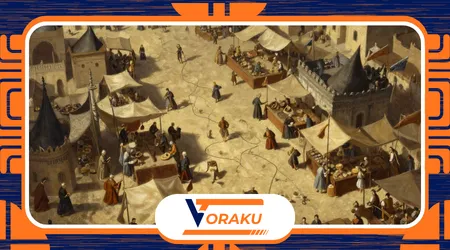
The silent influence of merchants on the rise of empires began not with fanfare or marching legions but in the dim light of a Phoenician warehouse around 800 BCE.
Salt-crusted ledgers tallied shipments of Tyrian purple dye, Lebanese cedar, and delicate glass beads bound for distant courts.
Traders from Tyre and Sidon calculated risks across stormy seas, their quiet agreements quietly knitting together the economic threads that would later bind larger powers.
Chroniclers rarely bothered to name them in the grand tales of conquest.
Yet those networks of credit, ships, and hard-won information moved faster than any army and proved far more resilient.
Standard histories linger on crowns and battlefields while gliding past the caravans that actually fed the troops and filled the treasuries.
There is something unsettling in that omission. Rulers needed wealth and reach; merchants needed safe roads, stable weights, and reliable ports.
In meeting those needs, merchants quietly redrew the map of power.
The silent influence of merchants on the rise of empires rested on this unspoken exchange: protection in return for profit. What shifted afterward was subtle but profound.
Capital began to speak in the chambers where swords once dominated.
Continue reading the text and learn more!
The Road Map
- Why Do Histories Overlook the Merchants Behind the Thrones?
- How Did Ancient Trade Networks Seed the First Empires?
- Venetian Counting Houses and the Shadow Play of Power
- The Hanseatic League: Merchants Who Outmaneuvered Kings
- Comparative Table of Merchant-Driven Empires
- What Lingers in the Modern Supply Chain
- FAQ Editorial
Why Do Histories Overlook the Merchants Behind the Thrones?

A stubborn blind spot runs through the usual timelines.
Textbooks dwell on Alexander’s march or Roman legions yet hurry past the supply lines that sustained them.
Victors, after all, write the chronicles, and victors wear armor or crowns.
Merchants operated best in the background, through family syndicates and whispered counsel rather than public proclamations.
Their strength lay in ledgers, not laurels.
Look closer and the pattern sharpens.
Phoenician traders did not spread their alphabet as a cultural gift. They needed precise records for debts that crossed the Mediterranean.
That script later helped Greek cities forge alliances and conduct business at scale.
Tin from Cornwall, ivory from Africa, cedar from Lebanon—these flows greased the wheels of Bronze Age exchange.
Empires rose on those wheels, but the drivers stayed invisible.
The silent influence of merchants on the rise of empires often hides precisely because it worked so smoothly.
++ Why the French Revolution Did Not End Feudalism Overnight
How Did Ancient Trade Networks Seed the First Empires?
The Silk Road offers a telling case long before any single khan claimed mastery over it.
Sogdian and Persian merchants moved silk, spices, and ideas across deserts too vast for permanent military occupation.
When Mongol forces later swept westward, they did not invent the routes.
They enforced the peace that merchants had long demanded.
Pax Mongolica felt less like pure military triumph and more like a merchant’s dream secured at sword-point.
++ The Untold Story of Women Rulers in Medieval Europe
Rulers quickly learned that taxing steady trade brought more reliable silver than sporadic plunder.
Merchants returned the favor with intelligence, luxury goods, and skilled craftsmen.
The empire expanded because its leaders began weighing the ledger alongside the lance.
There is a quiet irony here: the conquerors who boasted of endless grasslands ended up dependent on the very middlemen they once despised.
++ How Imperial China Managed Power Without a Standing Army
Venetian Counting Houses and the Shadow Play of Power
Step inside a Venetian counting house in the mid-fifteenth century and the delicate dance becomes clear.
Families such as the Contarini kept one set of books for the Doge and another for their private ventures.
They financed galleys laden with spices from Alexandria while quietly lending to Byzantine emperors struggling against the Ottomans.
When Constantinople fell in 1453, Venetian merchants did not mourn the loss. They adjusted their sails and negotiated fresh privileges with the new sultan.
A junior clerk might spend mornings weighing pepper and afternoons drafting dispatches that shaped Senate policy.
His family’s position rested not on ancient bloodlines but on the trust of distant suppliers who extended credit only because the Venetian banner promised safe passage.
That leverage shaped decisions in the Great Council more forcefully than many public orations.
The republic endured because its merchants grasped that empire was ultimately about controlling flows, not merely claiming territory.
The Hanseatic League: Merchants Who Outmaneuvered Kings
Along the Baltic shores, a different experiment took shape.
The Hanseatic League bound dozens of merchant cities through shared profit rather than coronation or kinship. They dominated the grain trade that fed much of northern Europe.
Kings borrowed from them, granted legal exemptions, and sometimes found their ports blockaded until terms improved.
No grand army marched under a Hansa flag, yet principalities adjusted their policies to suit the League’s demands.
The silent influence of merchants on the rise of empires appears here in especially stark relief. The League did not seize land. It seized the rules of trade.
When a ruler needed funds for war or ceremony, Hanseatic agents arrived with capital and conditions that proved difficult to refuse.
Their web of kontors and privileges allowed modest cities to exert influence far beyond their walls.
Power, in this case, flowed through warehouses and ledgers rather than battlements.
Comparative Table of Merchant-Driven Empires
| Empire / Network | Merchant Contribution | Visible Authority | Enduring Impact |
|---|---|---|---|
| Phoenician trade circles | Alphabet, dye, timber fleets | City-state councils | Maritime law and script diffusion |
| Mongol Empire | Secured Silk Road caravans | Khanate military | Eurasian exchange of goods and ideas |
| Venetian Republic | State-backed syndicates and diplomacy | Doge and Senate | Early banking practices and intelligence networks |
| Hanseatic League | Collective credit and boycotts | Confederation of trading cities | Model for commercial leagues and urban autonomy |
| Dutch VOC (early 1600s) | Armed chartered companies | Monopoly charter | Corporate blueprint for later colonial trade |
Each entry marks a distinct bargain between coin and crown.
The table lays bare what grand narratives often soften: the most durable powers learned to heed the language of risk, return, and reliable supply.
What Lingers in the Modern Supply Chain
The underlying choreography has not disappeared. It has simply grown in scale and speed. Container ships today carry the same logic that once filled Venetian galleys.
Large corporations negotiate terms with governments much as the old chartered companies once did, exchanging investment for favorable rules.
The silent influence of merchants on the rise of empires now travels along fiber-optic cables and just-in-time inventories.
Yet the human element persists. A delayed shipment in one port can still ripple into fragile political calculations halfway across the globe.
The ledger may be digital, but the invisible pressures that once guided emperors continue to shape policy in subtle ways.
Frequently Asked Questions
Were merchants ever truly silent, or did they simply prefer the shadows?
They chose the shadows deliberately. Open glory invited heavy taxes and sudden confiscations.
Real influence flowed through private contracts, family networks, and quiet counsel offered in council chambers. Discretion was good business.
Could any empire rise and endure without strong merchant networks?
A few attempted it through pure conquest. Most discovered that plunder eventually ran dry.
Sustainable power required the steady revenue and intelligence that only adaptable trade networks could supply.
How did rising merchant influence affect everyday lives?
It brought wider access to goods and fresh ideas, yet it also sharpened inequalities.
A weaver in northern Europe might suddenly face cheaper imports that undercut local guilds. Gains and losses rarely distributed evenly.
Does the Hanseatic League offer the clearest case of merchant power?
It comes very close. A loose alliance of cities without a standing army managed to dictate terms to kings across northern Europe for centuries.
Few examples illustrate so plainly how capital could bend coronation.
Do today’s global corporations echo the old merchant empires?
The parallel holds weight. They control vital supply routes, bargain with states, and shape regulations through economic leverage rather than direct conquest.
The methods have evolved. The core bargain remains recognizable.
Will future powers still rely on merchant-like networks, or can technology replace them?
Technology speeds the flows but cannot substitute for the trust, local knowledge, and willingness to shoulder risk that merchants have always provided.
Powers that lose flexible commercial connections tend to stiffen and eventually fracture.
The next time a container ship glides into harbor flying a foreign flag, pause for a moment. Empires have always rested on more than banners and borders.
They have rested on the patient calculations made far from any throne—calculations that quietly decide which powers expand, which stagnate, and which eventually slip into the margins of the ledger.
The silent influence of merchants on the rise of empires continues its steady work, one unseen transaction at a time.
++ Venetian Merchants Dominate Trade with the East.
++ The Rise of Merchant Empires.
